


Three women experts in diplomacy, democracy and refugee protection make the case for foreign aid, alliances and the underestimated power of showing up.

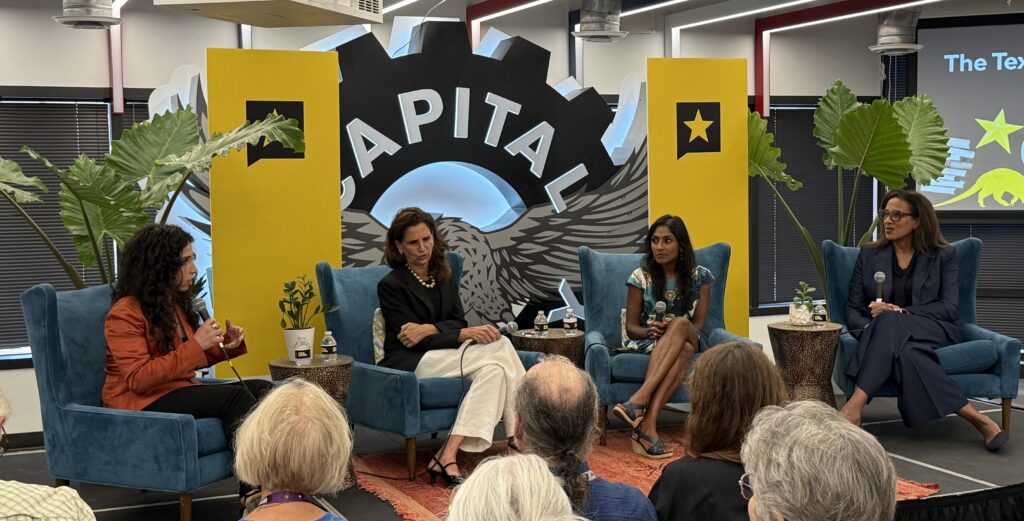
As the Trump administration cuts foreign aid and pulls back from international commitments, what happens to the people and countries that have counted on the United States? And what do Americans stand to lose? A packed room for a panel on the first day of the Texas Tribune Festival with a daunting question: “Who Fills the Void?” suggested many people are trying to make sense of the same thing.
The all-women panel consisted of Elizabeth Kennedy Trudeau, a former diplomat and managing director at the George W. Bush Institute; Nicole Bibbins Sedaca, a fellow at the institute who has worked on democracy and human rights; and Krish O’Mara Vignarajah, president and CEO of the refugee organization Global Refuge; moderated by Carine Hajjar of The Washington Post.

The TribFest discussion took place Thursday, Sept. 24, during the U.N. General Assembly, as the U.S. wages war with Iran, a stream of headlines sound a drumbeat to the November midterms, and early voting already in progress in six states. It’s clear U.S. foreign policy decisions are already reaching voters and shaping their feelings and decisions: Audience members lined up to ask about the war, foreign aid, NATO and the future of U.S. alliances.
The three panelists had different answers to who fills the void: Competitors can gain influence when the U.S. gives up its place at the table. Allies may retreat, too. But in humanitarian work, no one may step in at all, meaning the people who need help are left waiting.
Bibbins Sedaca made the case for U.S. engagement abroad, in terms of both principle and self-interest: American “interests and values are integrated.” Democratically governed countries tend to be more stable and prosperous partners. Preventing disease and persecution abroad matters to the people living through those crises; it also helps make Americans safer.
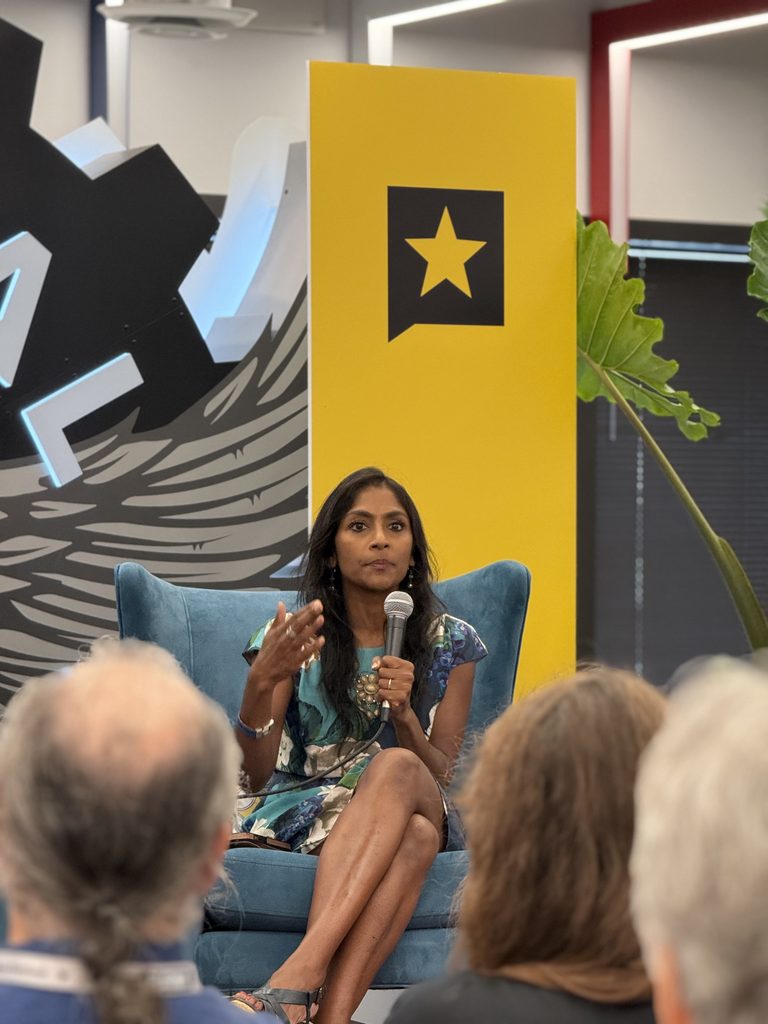
“National security does not end at our borders,” Kennedy Trudeau agreed.
Bibbins Sedaca acknowledged the economic pain many Americans feel and the need to scrutinize how aid is spent. But foreign assistance has typically accounted for just 1 percent of federal spending, and less than that in recent years. She rejected the idea that meeting needs at home requires the U.S. to disengage from the rest of the world.
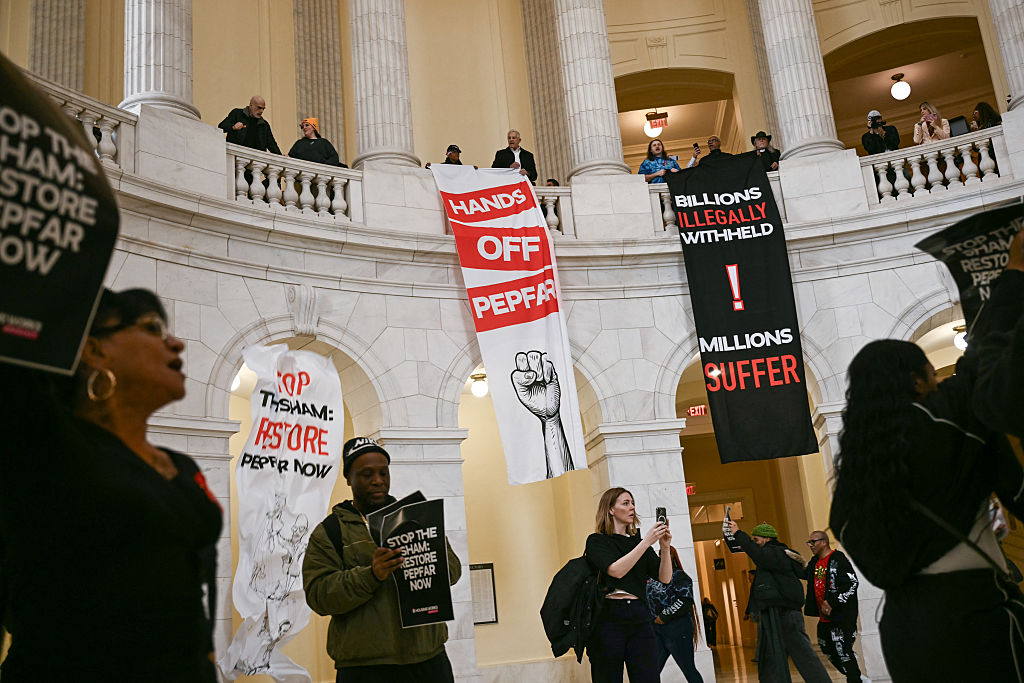
This work also has a bipartisan history. Kennedy Trudeau pointed to PEPFAR, the President’s Emergency Plan for AIDS Relief, launched by George W. Bush. The program has saved more than 26 million lives, according to the State Department. Kennedy Trudeau described its effects beyond the number: children in school, adults able to work and communities able to plan for a future. Countries facing an AIDS crisis also learned that the United States would stand with them.
Vignarajah described refugee resettlement as another commitment once supported by presidents of both parties. It was understood, she said, as both “the right thing to do and the smart thing to do.”
Refugees admitted through the program are screened before arriving in the U.S.; the people shut out of it still need somewhere safe to go.
The Biden administration set a refugee admissions ceiling of 125,000.
The Trump administration initially set the fiscal 2026 ceiling at 7,500, then raised it to 17,500, allocating the additional places to white South Africans. Those numbers are limits, not actual admissions: State Department data through July showed about 10,000 arrivals during the fiscal year, nearly all from South Africa.
All three women experts agreed that today and tomorrow’s problems—pandemics, climate change, displacement and artificial intelligence—are not ones any single country can solve alone.

That is where soft power comes in: the influence a country builds when others trust it, want to work with it and believe it will keep its commitments. Kennedy Trudeau cited alliances, welcoming refugees, international education and the image America projects to the world. That kind of influence can be easy to discount when the administration’s language of strength centers military lethality. But relationships built over decades can achieve things threats cannot.
“America’s better with friends,” Kennedy Trudeau said.
When an audience member asked how the war with Iran could end, Kennedy Trudeau called for a return to talks: “Diplomacy is the only future on this.” Cooperation is a practical tool for confronting crises, not a luxury to consider after they are over.
Vignarajah said she believes the U.S. will eventually come back from this period of retreat. Her uncertainty was whether it will happen soon enough. Alliances and programs may someday be rebuilt. The time lost by people waiting for safety or treatment cannot be restored.