As abortion rights erode across the United States, feminist organizers are looking to Argentina’s Green Wave and other global movements for lessons in solidarity, strategy and mass mobilization.

The United States has long positioned itself as an enlightened exporter of democratic governance, moral correctness and technical expertise. The notion of American exceptionalism—in which the U.S. is thought to possess a distinct character born of its revolutionary history, frontier spirit and democratic structure—dates back to the 1800s and has informed approaches to international development and global governance throughout the 20th century to today.
While the idea of the U.S. as a bastion of moral superiority has always been a myth—evident, for example, in efforts to shield Jim Crow laws from scrutiny in the founding of the United Nations—the overturning of Roe v. Wade is one of the latest reminders of this fallacy, particularly as it pertains to global health and women’s rights. It is also a cautionary tale for the rest of the world about the fragility of reproductive rights.
As states across the U.S. have banned abortion post-Dobbs, advocates and experts here have been forced to look outside of our borders for assistance, recognizing that other nations have recently mobilized to legalize abortion and have much to teach us, particularly those that have done so by enshrining abortion as a human right.
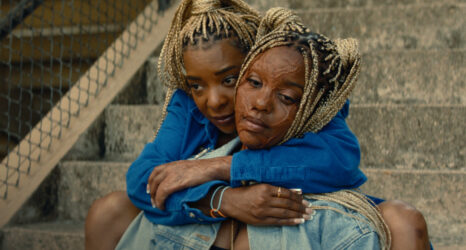
Audience members learned about a pregnancy criminalization case that helped spark the Green Wave in Argentina at a recent event in New Orleans hosted by faculty from Tulane University and co-sponsored by Abortion in America. The event included a screening of the film Belén at a local theater, accompanied by a panel discussion in which advocates from Argentina and Louisiana discussed challenges, strategies and connections across the two contexts.
The film depicts the cruelty and misogynistic violence of a case that unfolded in Argentina in 2014 involving a woman who experienced a miscarriage, was falsely accused of murdering her newborn infant and subsequently imprisoned for several years before being exonerated.
Unfortunately, we don’t need to imagine anything to relate to this story in the United States in 2026.
As one of the panelists, Jamila Johnson of The Lawyering Project and board member of Lift Louisiana noted, pregnancy criminalization is on the rise: At least 416 cases were initiated charging pregnant women with crimes related to pregnancy within the first two years after the Dobbs v. Jackson Women’s Health decision.
As pregnant people in the U.S. are forced to carry pregnancies to term, overcome mounting barriers to care, and confront new forms of pregnancy and pregnancy care criminalization, it becomes even more crucial to look abroad to places where the political trends have recently gone in the other direction.
Panelists from Argentina, representatives from Fundación Mujeres x Mujeres in Tucumán, explained how the legal advocacy surrounding Belén’s court case combined with grassroots organizing and the effective use of protest and symbolism (the green bandana) to fuel a national (and ultimately international) movement of feminist solidarity.
… As we held [the green bandanas] in our hands at the screening of ‘Belén,’ we felt a tangible connection to the power and hope they represent.

Prior to Dobbs, activists informed by the reproductive justice framework successfully mobilized to prevent restrictive legislation and initiatives in their communities, including, for instance, the Trust Black Women campaign in Atlanta in 2011, and the Respect ABQ Women campaign in Albuquerque in 2013.
Since Dobbs, the U.S. has seen several successful mobilizations for abortion rights on the state level.
In states like Missouri and Montana, voters turned out to successfully protect abortion rights in state constitutions.
Other states, such as Kentucky and Kansas, have prevented further restrictions on abortion through ballot initiatives.
However, Louisiana is one of several states in which citizens cannot initiate a ballot measure—which means that despite evidence of public opinion favoring abortion access, a ballot measure is unlikely. Even given the chance, it is unclear whether barriers to voter participation would result in a vote that reflected public opinion.
If a ballot measure is not the answer in every state context, women (and others capable of getting pregnant) in many states need a more expansive movement and/or federal intervention to protect their bodily autonomy and reproductive health.
That’s why we asked ourselves: What was it about the Green Wave that made it so successful across several Latin American countries that had criminalized abortion for decades?

Our panelists from Argentina, Florencia Sabaté and Sofia Gandur, explained that their movement united and fought on multiple fronts: the courts, the streets, the legislature and more.
In the U.S., where abortion access is deeply uneven, and feminist advocacy is shaped by philanthropic structures that produce fragmentation, unity of vision and purpose may be difficult to come by.
Verónica Cruz Sánchez, founder and director of the Mexico-based feminist abortion rights organization, Las Libres, points to solidarity, the mutual support and shared responsibility to work toward a common goal, as the key element. But grassroots solidarity requires courage and trust to bridge differences and take bold action.
The green bandana, absent any one organization’s or company’s logo, provides a symbol of feminist solidarity across national contexts. And as we held them in our hands at the screening of Belén, we felt a tangible connection to the power and hope they represent.
Now, as in many historical moments throughout this nation’s history, American exceptionalism and its accompanying inward focus, will not serve us.
The Green Wave illustrates that feminists and advocates for reproductive freedom beyond U.S. borders have already closed ranks; the task now is for those of us within them to close ranks too.
Look to these trusted groups if you or a loved one needs to know more about reliable abortion care:
- Safe websites to buy abortion medication: Aid Access, Plan C Pills, Abortion Finder, I Need An A
- If you need help affording abortion care, contact an abortion fund near you.
- To protect your digital privacy when planning your abortion, click here.
- For free legal help as a patient or doctor, call If/When/How’s Repro Helpline: 844-868-2812
- For medical advice, contact the Miscarriage & Abortion Hotline: 833-246-2632
- If you need to know the abortion law in your state, look to the Center for Reproductive Rights.