


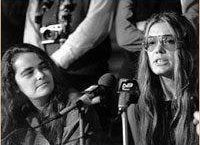
The relationship between feminism and lesbianism has been a frequent subject of speculation in the press ever since this second wave of the struggle for women’s equality began, and the discussion has intensified this year as both the gay and women’s liberation movements have taken on increasingly high profiles.
Search Results for: 1970
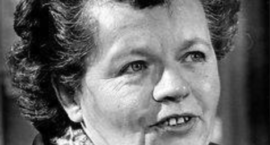
Today in Feminist History: The E.R.A. in the Senate (September 15, 1970)
But in a move that mirrored the kind of bias that still exists, our side was allowed only one day of testimony, despite opponents being given three last week. Fortunately, the witnesses made such great impressions, and made their points so well, that a single day may turn out to be sufficient.

Today in Feminist History: Labor Unions Support the E.R.A. (September 14, 1970)
But at today’s press conference, Dorothy Haener, representing United Auto Workers, noted that laws restricting the amount of weight a woman can lift had only been enforced in regard to keeping women out of high-paying jobs, and brought no benefit to women in minimum-wage jobs such as waitresses. Not only that, domestic workers, among the country’s lowest-paid, have always been exempt from weight-limit and maximum hour restrictions.
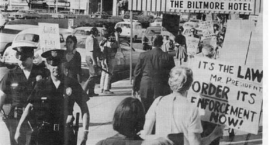
Today in Feminist History: Protesters Demand End to Sex Discrimination in the Workforce (July 30, 1970)
“Effectively, what has happened is that our status as a minority group in the work force has not been reaffirmed. We’ve been excluded from the benefits of Order Four [which deals with affirmative action programs] especially when it covers recruitment. Directives concerning equal employment have been watered down, wording changed from ‘must’ to ‘should.’ There seems to be a lack of interest among government agencies to alleviate the discrimination problem for women.”
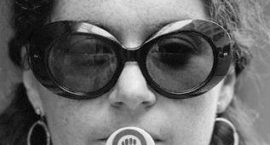
Today in Feminist History: N.O.W. Sues Saloon (June 25, 1970)
A year and a day after N.O.W. activists Karen DeCrow and Faith Seidenberg filed a Federal lawsuit against McSorley’s Old Ale House in Manhattan over its policy of banning women, a judge has ruled that the bar’s 116-year-old “tradition” of discrimination must end.
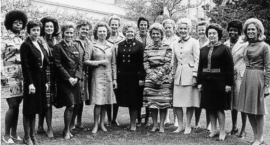
Today in Feminist History: Long Overdue Developments Regarding Equality for Women (June 9, 1970)
Clearly, even as the 50th anniversary of the ratification of the 19th Amendment approaches, a lot of work still needs to be done to achieve full equality for women.
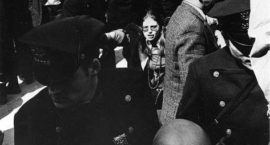
Today in Feminist History: Women Stage Sit-in at NYC’s Grove Press (April 13, 1970)
Grove Press, in New York City, became the third media target of the women’s liberation movement in the past month as activists led by Robin Morgan staged a sit-in today to protest Grove’s sexual exploitation of women in its publications, as well as its union-busting policies.
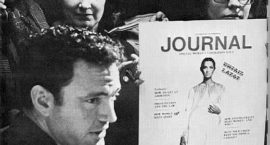
Today in Feminist History: Ladies Home Journal Employees Stage a Sit-In (March 18, 1970)
Just 48 hours after 46 of Newsweek’s women employees announced that they had filed a complaint with the Equal Employment Opportunity Commission charging sexism in their workplace, another and far more radical action took place today against a second mainstream media giant: Ladies Home Journal.
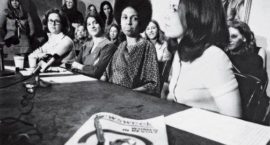
Today in Feminist History: Newsweek’s Own “Women in Revolt” (March 16, 1970)
“There seems to be a gentleman’s agreement at Newsweek that women are researchers and men are writers and the exceptions are few and far between.”
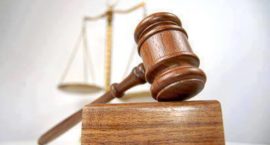
Today in Feminist History: SCOTUS Hears the First Sex Discrimination Case (March 2, 1970)
March 2, 1970: In what is hoped will be a major advance for women’s rights, the Supreme Court has for the first time agreed to hear a case alleging sex […]