Nice Girls Don’t Talk Trash: The Double Standards Still Holding Back Women in Sports

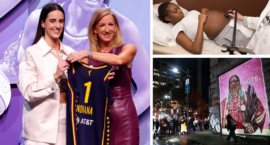
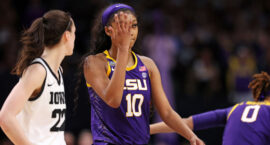
For over a century, women athletes have battled double standards that question their toughness, competitiveness and right to take up space. From early fears that competition would ruin their femininity to modern-day outrage over trash talk and physical play, the message has remained: Be strong, but not too strong. While stars like Caitlin Clark and Angel Reese have shattered records and stereotypes, lingering biases continue to limit how women—especially women of color—are allowed to perform, both on and off the court.

The fight for full inclusion in sports isn’t over; it’s simply entered a new chapter.

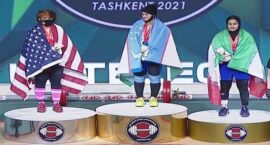
In the 2024 Olympics, Afghan Women Defy the Taliban Ban on Women in Sports

In September 2021—less than a month after the Taliban regained power in Afghanistan—the Taliban banned women and girls from participating in sports.

Three women and three men will represent Afghanistan in the upcoming 2024 Paris Olympics, yet the Taliban has refused to acknowledge the female Afghan athletes playing for their home country.

Kimia Yousofi, one the three Afghan women Olympians, said she will be representing the “stolen dreams and aspirations” of women still under the Taliban’s gender apartheid. 

Weekend Reading on Women’s Representation: The Rise of Women in Sports and Politics; ‘Democracy Works Best When Every Eligible Voter Votes’

Weekend Reading for Women’s Representation is a compilation of stories about women’s representation. 

This week, delve into FairVote’s efforts to champion voter access, discover a new documentary highlighting young women empowered within our political system, celebrate the historic viewership of the women’s NCAA championship game, and explore initiatives taken by some states to address disparities in maternal health for Black women.

The Biggest Threat to Women’s Sports Isn’t Trans Athletes. It’s the Trump Administration’s Failure to Uphold Title IX’s Promise of Equal Opportunity.

The politicians who have spent years claiming to “protect women’s sports” have been remarkably absent when it comes to enforcing the law that actually guarantees women equal athletic opportunities. W

hile the Trump administration has devoted enormous energy to policing transgender participation, Title IX complaints involving unequal opportunities, funding and treatment have languished. The result is a political performance that invokes women athletes while doing little to address the inequities they continue to face.

The real defenders of women’s sports are the athletes themselves.

This month alone, women at Christopher Newport University and California Lutheran University successfully used Title IX to force their schools to reverse decisions that eliminated athletic opportunities for women. Their victories are a reminder of what Title IX was designed to do: expand opportunity, not fuel culture wars.

If we truly care about women’s sports, we should celebrate the athletes and advocates who are making the law’s promise of equality a reality—not those who merely claim to speak in their name.

Women’s Sports Were Built by Letting Girls In

When the Supreme Court upheld West Virginia’s ban on transgender girls participating in girls’ school sports in West Virginia v. B.P.J., it said the ruling was about protecting the safety and fairness of women’s and girls’ sports. I hear that claim against everything I actually lived.

Thirty years ago, in United States v. Virginia, the Supreme Court held that generalizations about “the way women are” cannot justify denying opportunity to women whose talent and capacity place them outside the average description. That principle didn’t just build my generation of athletes. It built a generation of women: the litigators and judges, the surgeons, the CEOs and entrepreneurs, the senators and governors, the police officers and firefighters and fighter pilots, the women who were the first of everything. Every one of those doors was held shut by the same argument Virginia made: Most women wouldn’t want this, most women couldn’t do it.

Women of my generation didn’t fight to be seen as individuals—as athletes, as leaders, as whatever they had it in them to be—only to watch that principle eroded now, in their name and over their objection.

More than half a century ago, this country decided that girls who had been told they didn’t belong on the field belonged there after all. I got to live the proof of that promise. The work now is to keep that promise for every kid who wants to play.