Gloria Steinem
Mar. 25, 1934 – Sept. 2, 2026
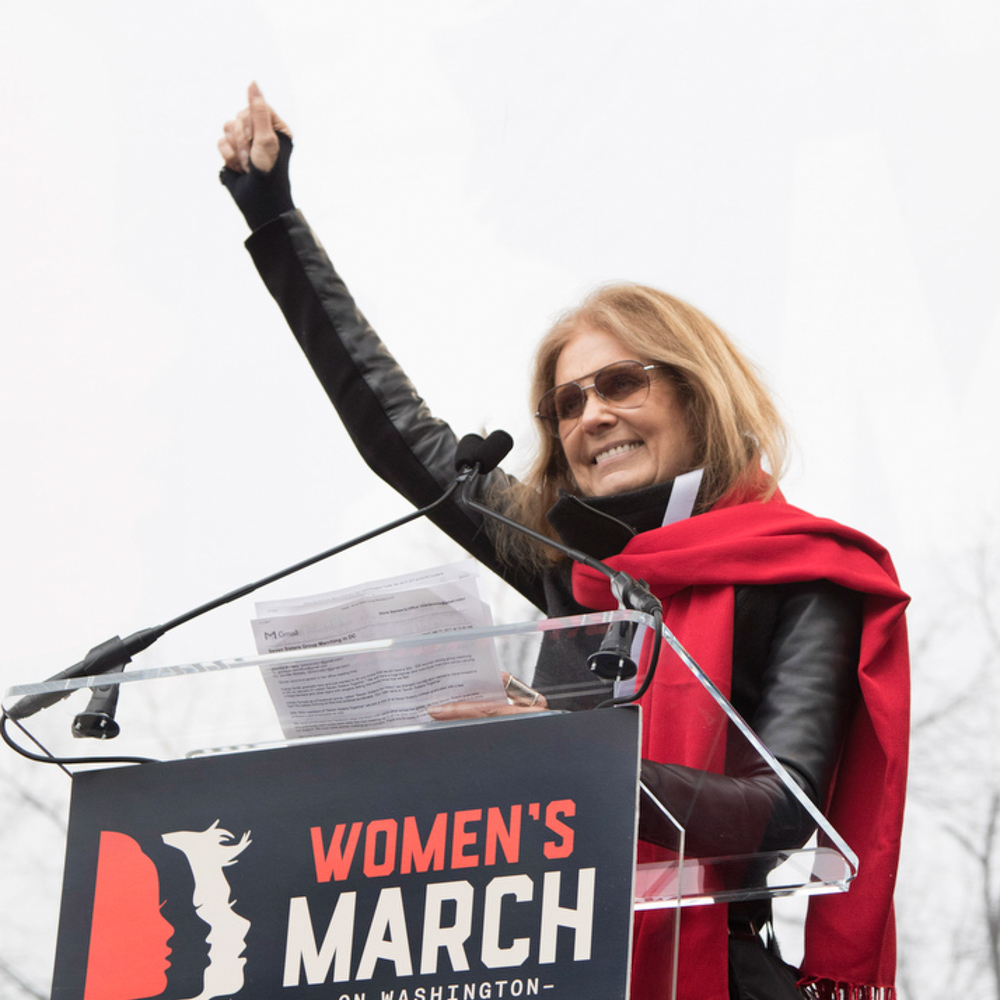

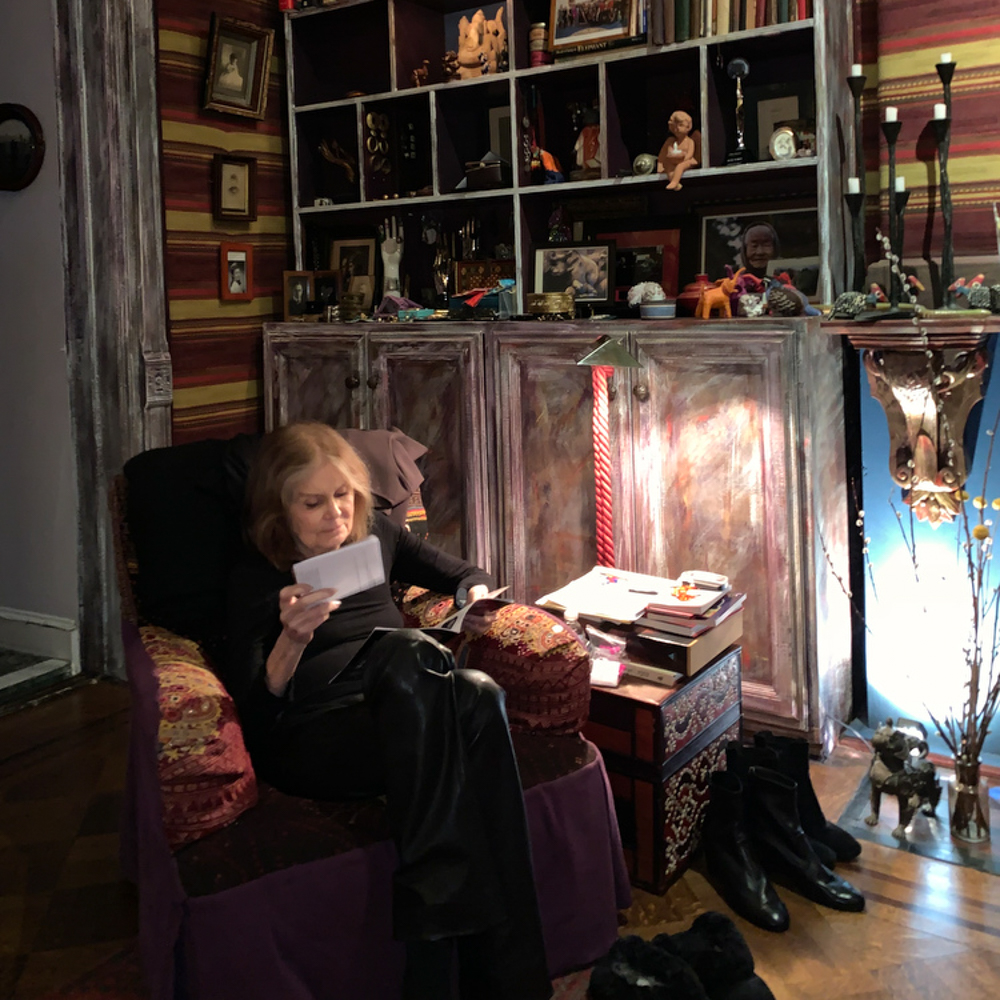


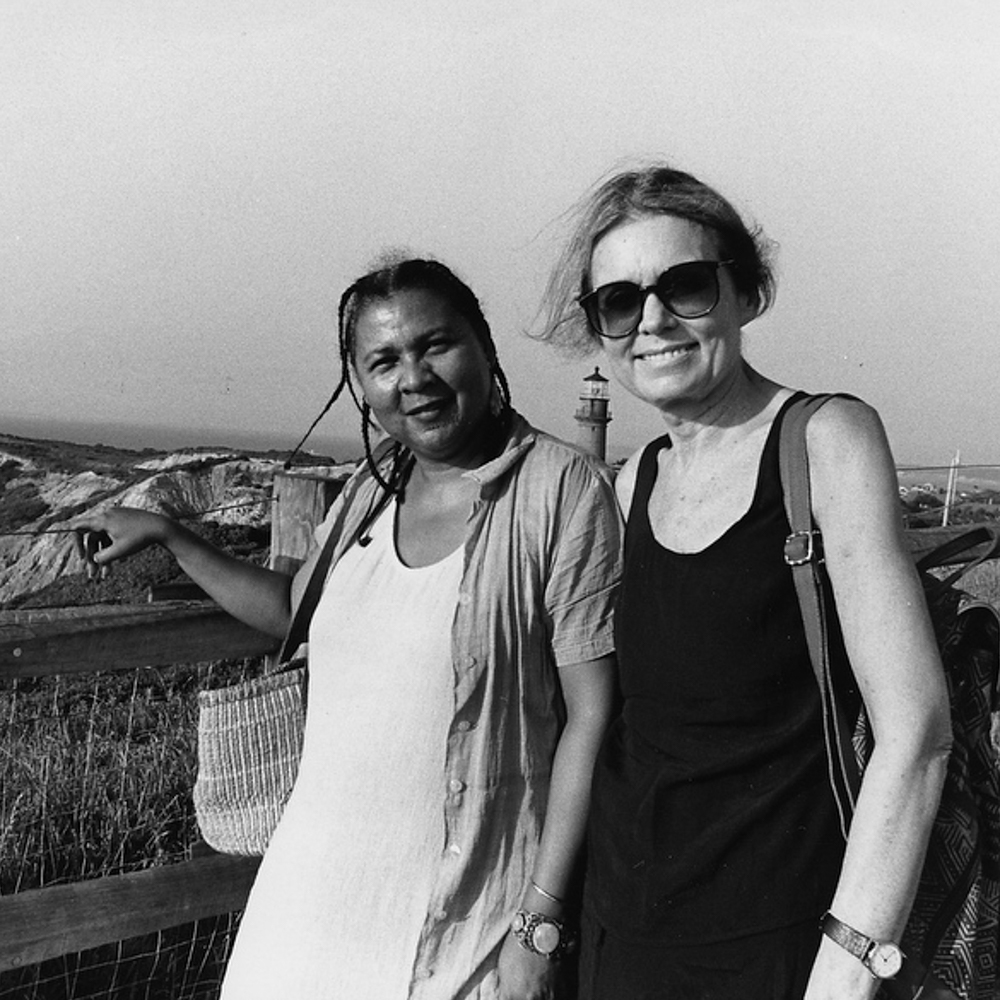


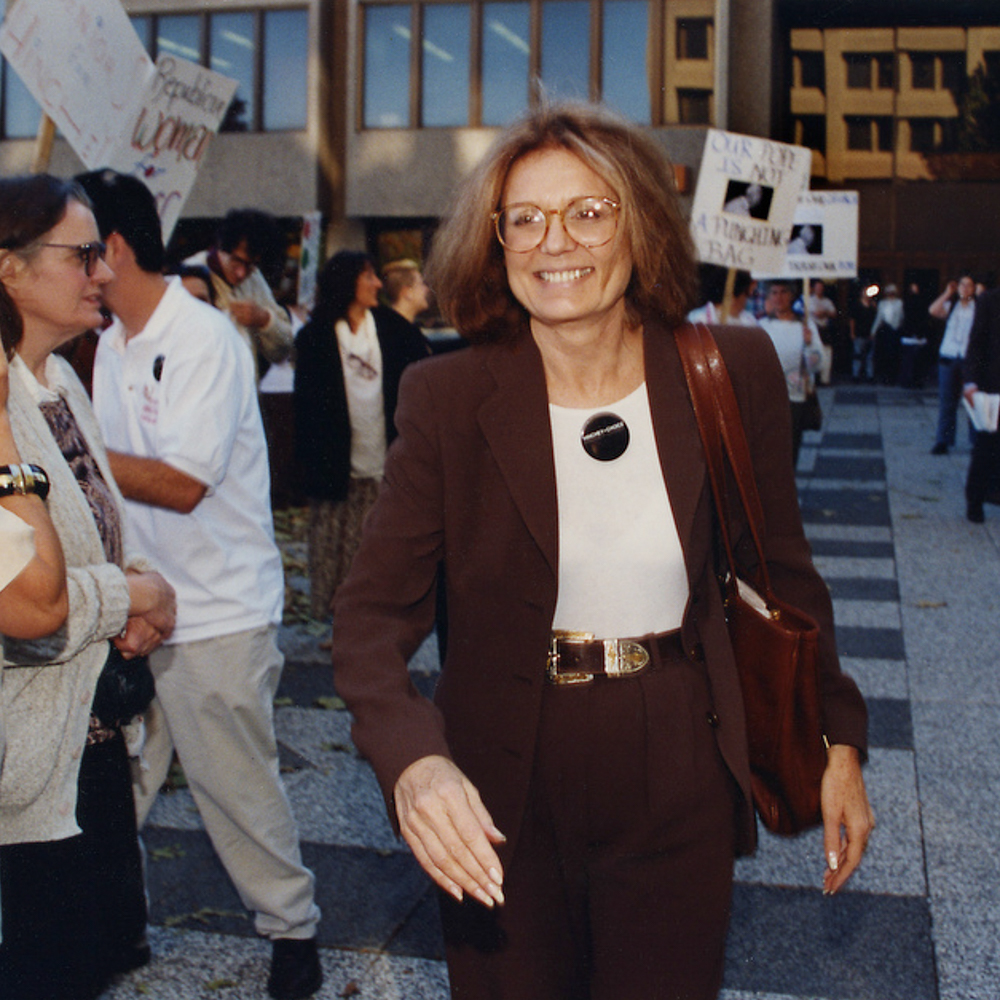

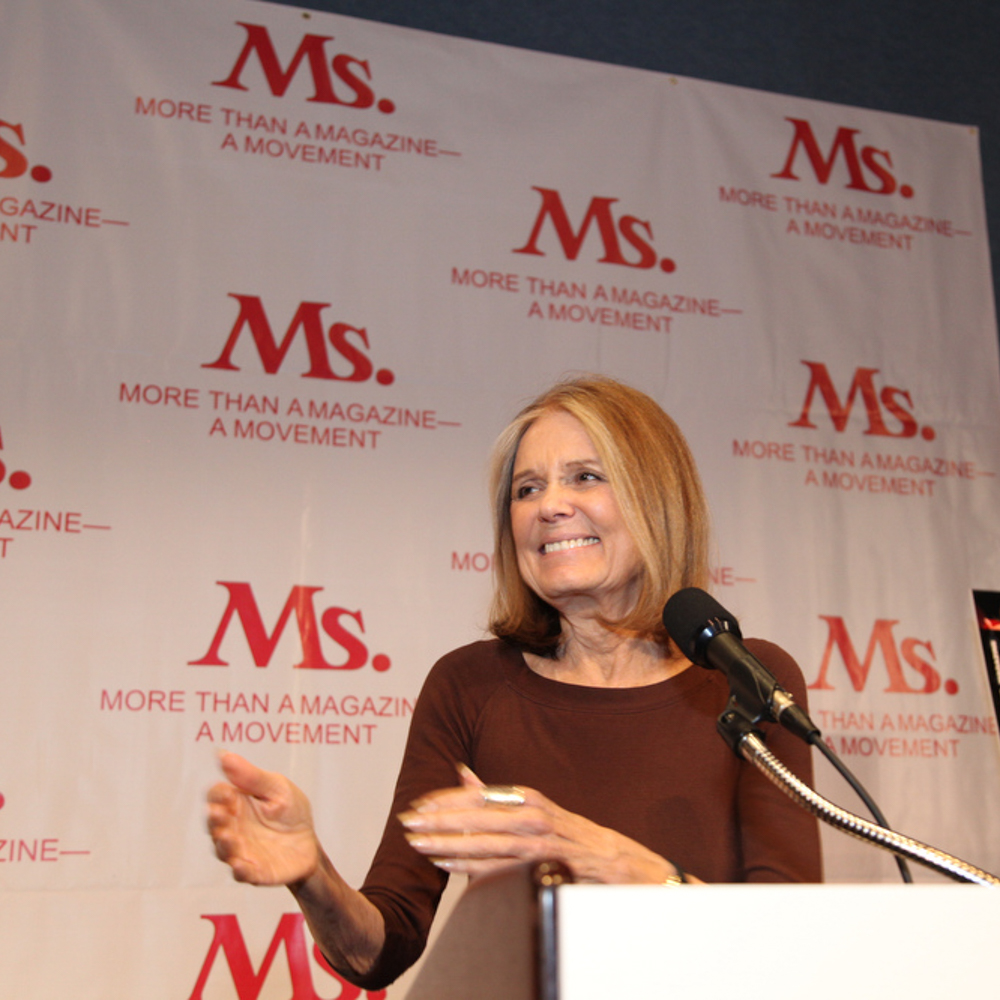
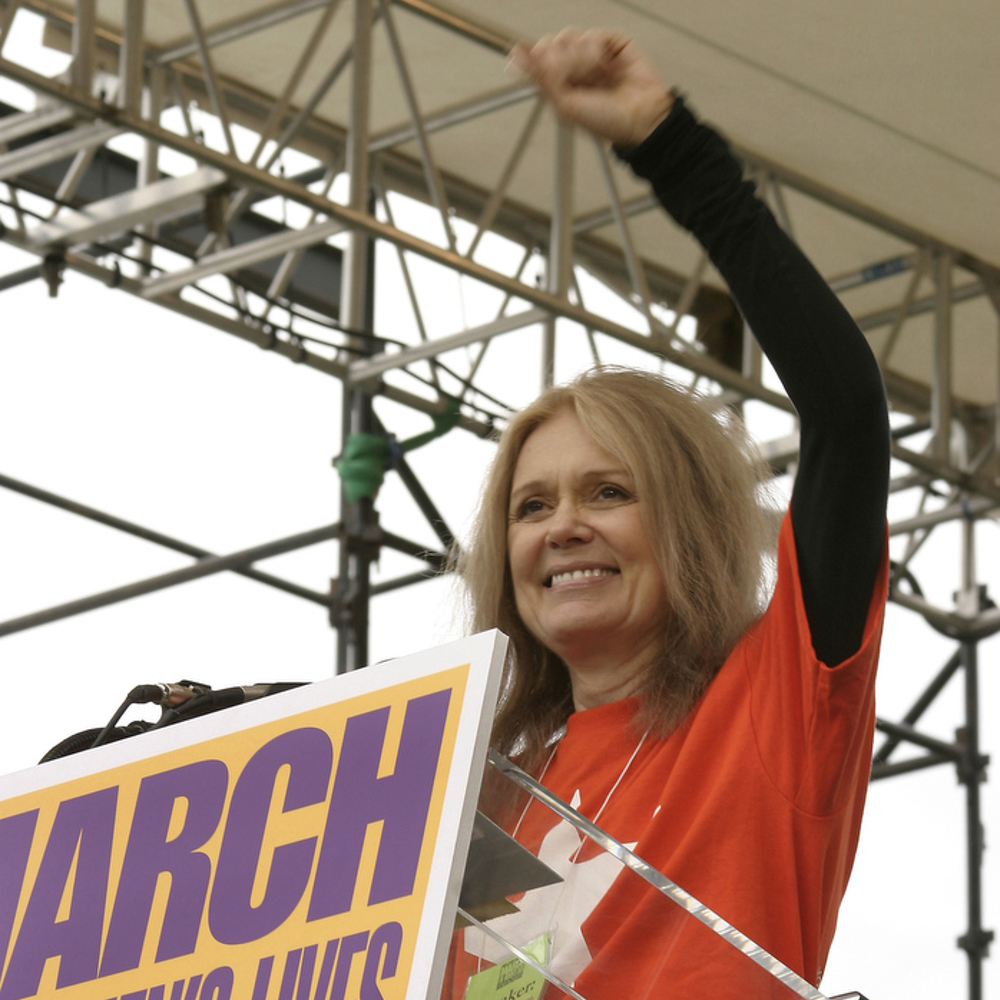


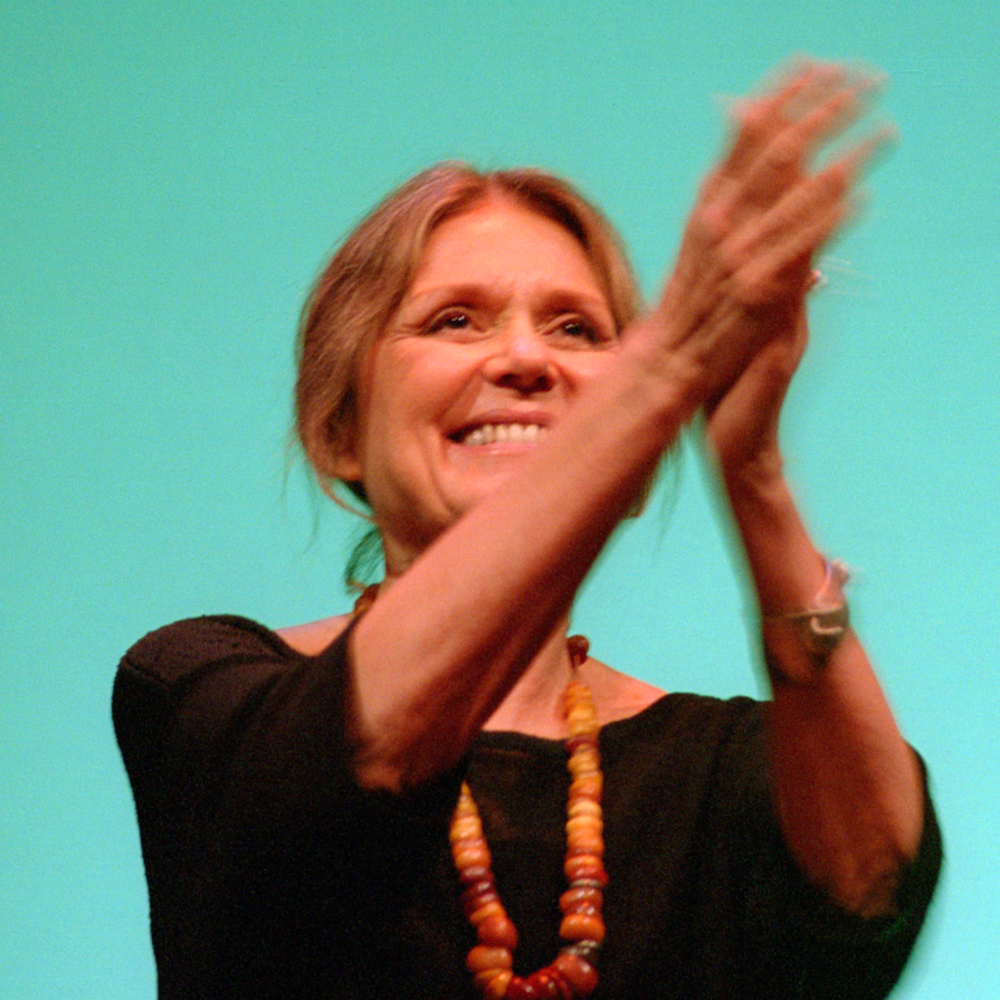


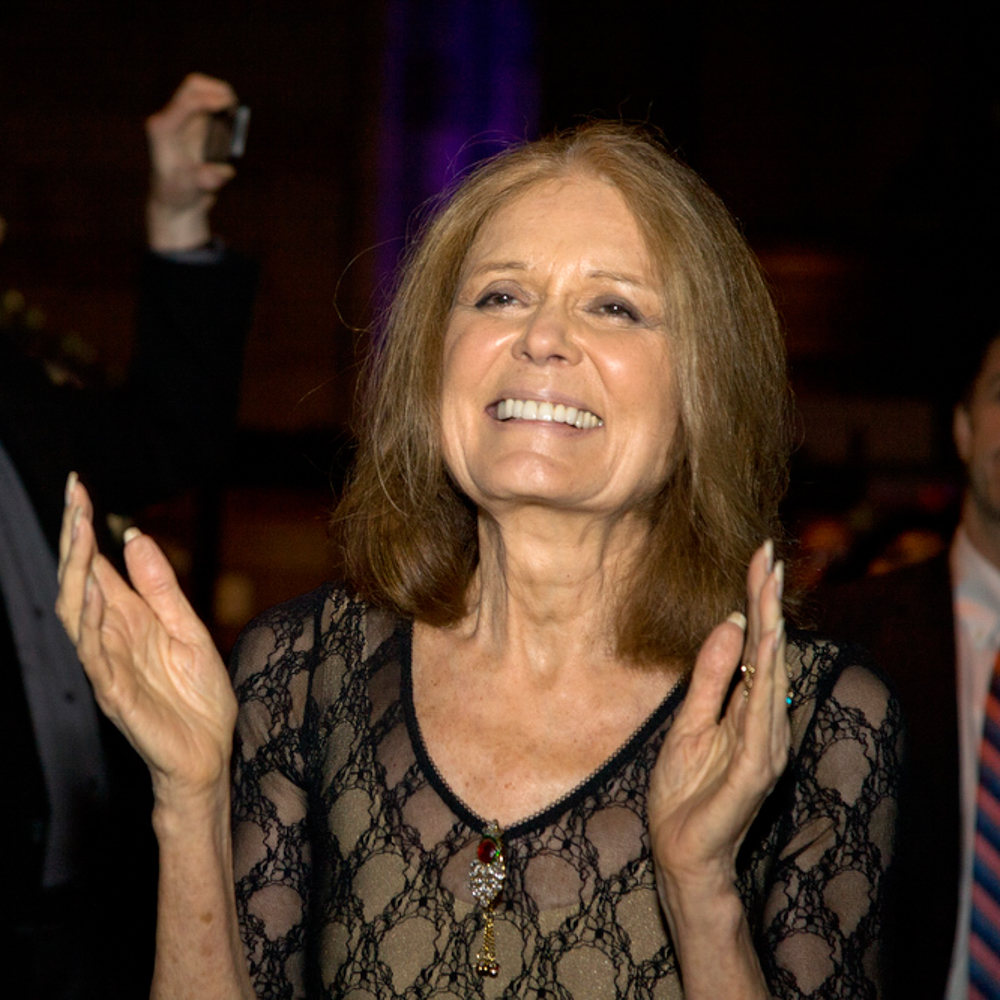

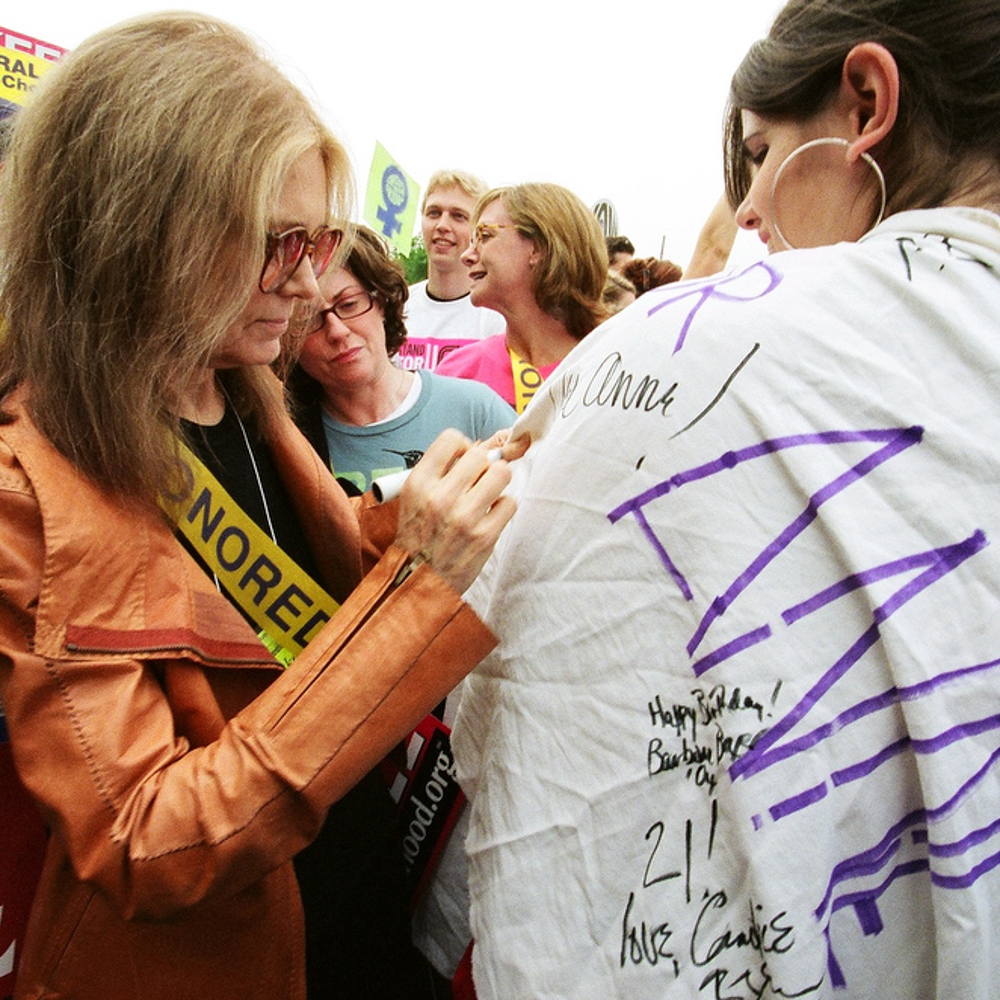
Photo credit: Jenny Warburg
What did Gloria mean to you?
In the days since Gloria’s death, Ms. editors have been flooded with remembrances of how she changed lives—through her words, her work and the deeply personal way she connected with people. Now, we want to hand the microphone to you. Gloria was the people’s feminist. She famously reminded us, “The Constitution does not begin with ‘I, the president.’ It begins with ‘We, the people.’” So we invite you, the people, to help tell the story of her extraordinary feminist legacy. What did Gloria mean to you? Share a memory, reflection or story about how her life and work touched yours.
Gloria showed us what is possible through hope, determination and truth. She told stories and did not stop telling them no matter what. She made me believe my story is worthwhile as well.
Whenever I listen to Gloria in a video, reel or reading her words, I know it is possible – whatever that “it” is.
I am Ms. because of her – not Miss, not Mrs. It’s my choice, my right. All because of her – her vision, her determination, her humor (If men could mensturate – what clever and astute wit) and her love.
We miss you Gloria and you are with us still.
My mom was a single mom working hard to raise three kids. I was always an avid reader and was 10 or 11 when Ms. magazine showed up at our house every month. I loved to read this magazine! I began to speak out about women’s rights and injustices I witnessed. I think everyone around me wondered how I became this way and thought I was different. We lived in a primarily conservative Catholic neighborhood. When I got to high school I encountered sexual harassment and we had no rights at that time. I found strong women to hang with and we would voice our complaints about injustices. We were a strong group of young women who didn’t take any crap from boys! I am now in my 60’s and doing some reflecting on my childhood. Mom recently passed away and I only just realized that Ms. magazine showing up at our door every month gave me the knowledge about women injustice. Thank you Gloria Steinem and Thank you Mom for subscribing to this enlightening, thought provoking magazine.
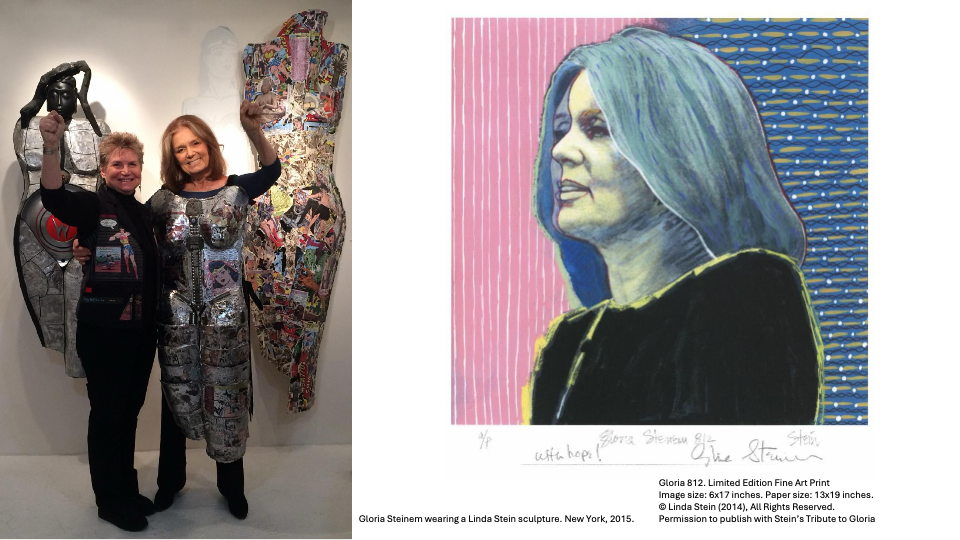
As an honorary board member, Gloria was the first responder to every Have Art Will Travel! (HAWT) for courageous kindness request. HAWT is a non-profit founded by artist Linda Stein. Gloria Steinem visited Linda Stein’s Tribeca studio on many occasions, wore Stein’s Body-Swapping sculpture as an anti-bullying protector, appeared in Stein’s Holocaust Heroes: Fierce Females (H2F2) film, wrote the introduction to the H2F2 book, endorsed Stein’s Bee the Brave Upstander comic book series, and wrote many times for HAWT to inspire folks, including her quote for the Stein 2024 exhibition at the Anita Shapolsky Gallery in Manhattan. Gloria Steinem donated two Stein Knights of Protection sculptures, one for Smith College and one for Rutgers University.
When I told my mom I was writing a series about 100 women who made me, she had one question.
“Gloria Steinem?”
Her voice cracked.
“She changed everything for me. And that changed everything for you.”
Of course I knew that already.
When my mother’s first husband left her with a one-year-old and a newborn, it was her job as a nurse that saved them.
“I just want you girls to have choices,” she always said. “To have choices, you have to be able to take care of yourself.”
My oldest sister is a COO. The next is an HR executive. I am a lawyer.
We never had to wonder whether we could take care ourselves because we inherited our work ethic from our mother and grandmother.
And we inherited our choices from Gloria Steinem.
There have been many important and heartfelt tributes to Gloria since her passing. Her life was an inspiration for the unfinished journey toward full equality for women and girls. But she was also a gift for men.
A few months before she passed, I had the chance to participate in one of her salon events – one focusing on men. It was a somewhat predictable fiasco: some 25 powerful (i.e. celebrity, wealthy for the most part) women and a few men who study or talk about manhood. The women were not particularly inclined toward any generosity to men (understandably, as several mentioned difficult divorces they were going through or had recently gone through). They complained about men not doing their share of the care work, not knowing how to buy a birthday present, the unfair mental load. One asked: Does anyone know a man who even knows how to buy you a present? I sheepishly offered that I thought I was sometimes good at it, but that it took some practice and learning. Maybe, I suggested, we should take the moments to talk to our daughters and sons about the important skill of present-buying.
The few men in the salon were respectfully mostly listening, save for a celebrity divorce attorney man who was mostly selling his services and repeating: get a prenup. Laughter and nods.
It was a classic and somewhat tired example of men’s and women’s interactions playing out before the mostly quiet Gloria. Her energy level, at the age of 92, was understandably much lower than when I had seen her on stage some years before.
But her wit and intellect were very much there. When one of the men in the group said that he participated in martial arts and found that men had no problem touching and showing affection in the context of competitive and contact sport, Gloria quickly jabbed: “That sounds more like repressed homophobia than a true expression of affection.” Touche.
“We badly need to raise our boys more like girls,” she said once. I have quoted her on that a few times in talks I have given or when talking with friends or colleagues. I know more than a few fathers (and mothers) of sons who get nervous about that or bristle when I have reported that to them. Our ideas about gender are so deeply wired in the U.S. (and in most societies) that for a boy to be seen like a girl it is considered emasculating and castrating. In surveys we have carried out with parents in the U.S. the majority worry how their sons will be treated in school if they are not seen as manly. And the consequences are real: physical and verbal bullying, mostly of the homophobic kind.
It seems ridiculous that in 2026 we would have to worry about this. The things Gloria meant by raising our sons to be more like our daughters are fairly normal, and most of us agree with them. That we would teach our sons to listen, to seek help when they need it, to be authentic in their voice and expressing their emotions, to care for others, to do the care work at home (of children and the elderly), to care about our planet. Conservatives and liberals and the rest in the middle can agree with those basic ideas – except when we put the gender labels on them.
Gloria cited research by my organization and others who work in the masculinity space: the research finding that men who hold more rigid, traditionalist views about manhood are more likely to be depressed, to think about suicide, to not seek help when they need it, and to binge drink and harm others. These “man box” ideas that we and many others have studied and discussed are a key reason men die on average nearly five years earlier than women.
The other gift Gloria offered to men is found in something else she said: “We’ll never solve the feminization of power until we solve the masculinity of wealth.” That quote contains multitudes. Equimundo’s research has found how much this generation of young men is striving to get rich before 30, how much the economy feels precarious to them (it is, for all of us) and how much they feel their manhood is associated with their financial success. In a moment when a majority of young men in the U.S. think home ownership is increasingly out of reach (it is), their manhood is one of trying to achieve a wealth or prosperity that is increasingly out of research for men, as it has historically been out of reach for too many women (not to mention lower income men and men of color).
There is much discussion about a crisis of masculinity at the moment. I think Gloria would have agreed with me that masculinity is always about crisis: It’s an idea that can never be achieved and even if you can, it may kill you in the process. It is more often power without heart than heartful power. Our current economic model and model of manhood is leading to no shortage of male insecurity, men’s harm toward others and plenty of male self-harm, not to mention making a whole cadre of online influencers rich as the peddle dubious self-help and protein supplements to men.
Ultimately Gloria saw feminism as humanism. Her simple truth was that if we believe in the innate and undeniable humanity of women and girls, we believe in the innate and undeniable humanity of all of us. And in the process boys and men get to be more caring, more connected, more grounded, and perhaps live longer and love better. In creating a world where women are free of violence and harassment, men and boys live free of violence as well.
I feel glad and lucky that I got to meet her in her living room, to see her wit and generosity. To witness her belief that men are also harmed and constricted by the real and amorphous thing we call manhood. To see her avoiding any simple man-critiquing or point-scoring.
Thank you for your many gifts to women, Gloria, and your gifts to men. I count myself lucky as a man to have raised an empowered daughter in a world where gender equality seems the default, even if there is much to do. Gloria’s voice was part of making that possible. She inspires me as a man, and a human. This part especially: “Empathy is the most radical of human emotions.”
I was a twenty-year-old student at the University of Wisconsin-Oshkosh, and the chairperson of the Speaker Series Committee, a role I accepted with the promise that we’d bring Gloria to lecture on campus. After I introduced her and she spoke to a packed Albee Hall, I walked her to the reception where we mingled and had a photograph taken. In it, I am beaming with joy, standing next to her. I drove Gloria to the Pioneer Inn where she must have invited me in. We talked for hours, smoked Marlboro Reds, and also shared stories about our mothers, who both struggled with depression. At the time, I was trying to manage a full and vibrant college experience while also caring for a mother whose needs were beyond my capabilities. I felt Gloria saw me that night, beneath the trauma. A few weeks later, I received a card from Gloria. In a red felt-tip pen, she told me my courage against the odds would strengthen women, including my mother and her. At 66, I am a psychotherapist, working with women.
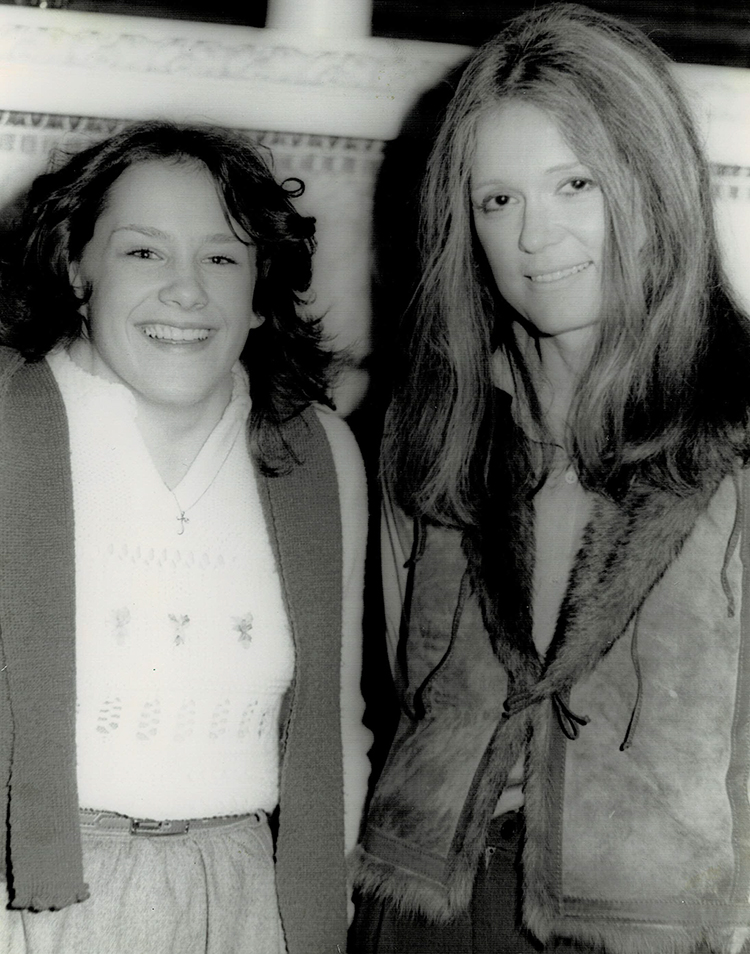
Gloria Steinem was the living embodiment of a kind of beguiling feminism you could never turn away from. She would likely deny that her demeanor was at the center of her strength as a communicator, but she would be wrong. Her unflappable iron fist in a velvet glove style of speaking was her superpower because it drew you in and made you process every single word and when she was done, you were convinced by that delicate alchemy of what is logical and what is empathetic. When I have to persuade people in a meeting, give a speech, or simply address my 21-year-old son’s surprisingly antiquated views about marriage, I ask myself, “How would Gloria say it?”
I first learned about Gloria when I was 17. I came across Ms. magazine with Wendy Davis on the cover. I was immediately drawn to it because I knew about the filibuster Wendy had recently done. I couldn’t believe I found a magazine for women that didn’t have a lot of diet and makeup tips. At the time, I was in recovery from anorexia. I needed inspiration, not to be told how to look “the right way.” My school was going to throw the copy of Ms. away, so I slipped it into my backpack when no one was looking. Gloria Steinem felt like a friend even though we never met. When I felt hope was lost, I would read her work, watch a film about her, or look at her social media posts. She was fearless— she felt the fear, but always continued on. She fought for every group of people treated as less than in our society… It is impossible to quickly summarize who Gloria was and the permanent impact she has left in the world. I will rock all black and my concho belt to celebrate her. I can’t wait to tell my nieces about Gloria Steinem.
I live in India, I am an Indian, and I knew Gloria Steinem mostly through YouTube videos, articles and documentaries that presented her as one of the key figures, perhaps even the central figure of Second-Wave Feminism.
As a woman, I was always drawn to her clarity of thought the most. As someone who mostly knew her from YouTube videos and articles, I loved the way she remained unperturbed and no-nonsense in her answers and in the way she carried herself. The difficulties thrown her way only made her more relentless in her focus, and she accomplished an extraordinary amount of work in her lifetime. For me and for many others, she made feminism cool, relatable, attainable and a way of life, not just a political ideology.
In the end, her greatest legacy may not be the laws that she helped change or the organizations she built; it may be the feeling that she left women with—that things can change, that their voices matter, that when women act together, they can change the world.
Ms. Magazine, designed to be a profit-making and mass-market magazine promoting the cause of women’s equality, was a great achievement. It was not Steinem’s alone; it was a group effort. But it was hugely significant: A friend in North Carolina, when I was teaching at Duke, told me that she’d first encountered the women’s movement when she glanced at a copy of Ms. in a doctor’s waiting room in the late 1970s. Oh, women’s liberation, she thought. What a neat idea!
The Magazine continues and has generated msmagazine.com, for which I love to write, and which covers everything under the feminist sun — including Reproductive Justice, transgender feminisms, contemporary threats to democracy and what misogyny and “gender ideology” have to do with them, etc.
Something nobody knows about Gloria Steinem: My current book project lies at the corner of LGBTQ+ and disability, as well as feminist and legal, history. While researching in the papers of Corbett OToole, a signally important disabled lesbian activist for whom the Jewish feminist who mattered most was wheelchair-using advocate Judith Heumann, rather than Steinem, I found the photo below of a group of wheelchair-using feminists, including Heumann (in glasses), sitting with Steinem in an impromptu meeting during the National Women’s Conference of 1977. (On this, see Marjorie Spruill’s great book, Divided We Stand.)

Photo by Corbett OToole, from the 1977 Women’s Conference, Houston, TX, OToole papers, Hormel Collection, San Francisco Public Library. Image: A woman, recognizably Gloria Steinem (glasses, hair), sits crosslegged on the floor. In a circle around her are 5 women in wheelchairs, one identifiably Center for Independent Living and Disability Rights Education and Defense Fund leader Judith Heumann. They are speaking and writing. She is listening.
I love this photo because Steinem is on the floor, in a gesture of humility, listening closely, apparently totally ready to learn from the disabled women around her, who are apparently making demands, thinking things through, and insisting on the importance of their perspectives. (I have other documentary evidence of the disabled women’s push for recognition at that conference.) This is how she operated. The ability to listen and learn was essential to her ability to stay in the fight for so many years.
(https://feliciakornbluh.substack.com/p/history-teaches-gloria-they-havent?r=1826og&utm_medium=ios&triedRedirect=true)
I was a 24-year-old divorced mother of a two-year-old child when I first heard Gloria speak about the very challenges I was facing: I couldn’t get a credit card or a bank loan or even car insurance without a husband’s signature. I was a full-time college instructor with graduate degrees, and I was being paid less than my male colleagues with the same education and experience. I had known since girlhood in the rural South that life wasn’t a level playing field, but with a strong grandmother and a teacher who encouraged me, I had defied some of the limitations, but there were reminders of the differences for women at nearly every step of the journey. Gloria was speaking out about these barriers to our aspirations as well as legal and economic barriers based on our gender and not on our qualifications, education, experience or ambitions. For many in my generation of women, she was speaking our truth and we were ready for change. Gloria Steinem would write later about this moment of realization:
“The truth will set you free, but first it will piss you off.”
I was both — freed by acknowledging what I was experiencing and frustrated that I, alone, wasn’t able to break through the limitations and angry enough to quit my underpaid teaching position and take a big risk–move to New York to pursue my dream to write and to somehow get involved in this new women’s movement for greater equality.
1971 was the year that the media made Gloria the name and face of the women’s movement in the US by putting her on the cover of “Newsweek”. There were many leaders and writers at the forefront of the movement, but Gloria could articulate the cause in ways that got attention — and yes, she was also attractive in her signature aviator glasses, long hair parted in the middle, hip belts and short shirt (later black pants). Media‘s elevation gave Gloria a bigger sphere of influence, but Gloria was always the first to acknowledge she didn’t lead alone. She brought Florynce Kennedy, Dorothy Pittman, Robin Morgan, Pat Carbine and many others into the spotlight that the media was giving her, but the media tried to create a narrative of competitiveness among the leaders; in part to divide and weaken the impact. We all know this narrative that gives voice to the detractors, the cynics, the competitors for attention; a narrative that, in my opinion, impeded the movement’s progress and one that has held women back for generations. Essentially, the narrative rises from a mindset of scarcity–perpetuating the fear that if one light shines too brightly, others get dimmed, and if the jobs for women are scarce–and they were and are in many places– then women would have to be competitive to get the limited places.
For me, then and now, I reject that narrative–not because I haven’t witnessed it or felt it–but because I have also seen what happens when we shift the story from scarcity and women competing to women connecting, supporting each other, dropping down the ladders for those coming behind us. I’ve seen the abundance of opportunities that emerge when women become each other’s allies as well as mentors. For so many women, Gloria was a role model, a mentor, and an ally, but I understand how challenging it can be for women with power and influence to shift the narrative and to change the very nature of how power is gained or attributed or shared. Gloria often quoted someone whose words also had a profound impact on me: Congresswoman Bella Abzug, who challenged us to change the nature of power rather than allowing power to change the nature of us. I will never stop reminding myself and others of what will change when we do just that.
I knew Gloria as a woman who knew her power and influence and used it intentionally…and in my experience, most often for others. We may not have agreed on every agenda item or policy or action, but I admired her clarity about purpose and acknowledge her impact. From what she said, what she wrote, what she fought for and against, even her choices about what she wore and how she looked—everything about Gloria was purposeful, and influenced millions of other women.
(https://mailchi.mp/patmitchellmedia/reflections-on-a-dangerous-woman?e=9e957d807e)
I can’t stop thinking about Gloria Steinem’s living room. For years, Steinem gathered people in her New York City brownstone and asked them to sit together, without a head of the table, without hierarchy. She called them “Talking Circles.”
She said the practice was inspired in part by Indigenous traditions of gathering in a circle, something Steinem wrote about in her 2015 memoir “My Life on the Road.” As a journalist and author focused on human connection and social health, that part of the book always stayed with me.
“I was struck by how open and accessible she was,” Ann Shoket, CEO of a community of women and nonbinary leaders called TheLi.st, wrote in a LinkedIn post on Wednesday after finding out the feminist icon had died at 92. “She was also deeply real,” said Shoket, who tells me she mingled in Steinem’s living room twice at events held in recent months. “She made us all dream bigger.”
The conversations that took place in those circles would change lives in ways large and small. It’s where plans for Ms. Magazine and the nonprofit Women’s Media Center started to take shape. And frequently, it was the space Steinem offered to organizations like Third Wave, Equality Now and Direct Impact Africa to plan their next steps, marking “turning points” in their work, according to Gloria’s Foundation.
Much of the power of Steinem’s living room was that it cracked open opportunities to lend support, let ideas flow and build trust face-to-face. It fostered moments of welcome connection for decades, most recently in an era when nearly three-quarters of adults spend time with people they care about only twice a month or less, and about two-thirds say they never participate in clubs or organizations.
“Gloria was very interested in intergenerational connection,” Soraya Chemaly, author of “All We Want is Everything” and board member of the Women’s Media Center, tells me. “She listened to young women who sat in her living room, never talking down to them, always validating,” says Chemaly, who estimates that she was a guest in Steinem’s living room nearly a dozen times. “She built community and solidarity in a low-key and comfortable space.”
Gloria’s Foundation has announced that Steinem’s home will continue to be a site for individuals and organizations to gather.
(https://www.cnbc.com/2026/09/04/how-to-gather-and-connect-like-gloria-steinem-says-expert.html)
All this time, I’ve been standing on Gloria Steinem’s shoulders without giving her a thought.
Of course, I knew she was the great feminist writer and activist who fought hard for women’s rights, and looked damn good doing it.
But it wasn’t until I read the brilliant obituary in the New York Times by Katharine Q. Seelye last week that I did the math.
The year that Ms. Magazine, which she co-founded, was first published (1971) was the year I graduated from grade school. As a high school journalist, therefore, there was never a world for me without Ms.
That’s not just Ms. the magazine, but also Ms. the title — the “honorific” that made it clear that women needn’t be defined by their marital status, as in Miss or Mrs. (Steinem didn’t invent the title, but she certainly helped bring it into the mainstream.)
That went hand in hand, I realize now, with my ingrained impression that I could reach for the stars, that there was nothing I couldn’t do.
Despite a traditional upbringing in which my two older brothers had a kind of primacy in the family that I lacked, I never entertained the thought that I couldn’t do something with my life because I was a girl. Or a woman.
And so, when it came time in my journalism career to break a glass ceiling or two, I didn’t agonize. I pushed hard, sometimes through sexist barriers, but not with any lack of self-confidence.
I became the first woman managing editor, and then the first woman editor in chief, of my hometown daily newspaper, The Buffalo News. After that second appointment, I got a big arrangement of flowers from an organization of women lawyers in Buffalo with a card reading, “We hear the sound of shattering glass.”
Later, in 2012, I became the first woman public editor, or ombudswoman, of the New York Times, at a moment when the Times had its first woman executive editor in Jill Abramson.
The progress toward equality for women, much of it led by Steinem and her allies, was fast and inexorable, though not without setbacks.
Before 1974, a single woman in the United States could not reliably get a credit card in her own name. A male relative (maybe a father or brother) would have to co-sign for a single, divorced or widowed woman. That went for getting a bank loan, too.
In 1973 came the Supreme Court’s landmark decision on abortion rights, Roe v. Wade.
And amid that era of great change, I was an impressionable teen, and a student journalist who was named the editor in chief of my high school newspaper. I was hired as a staff reporter in Buffalo in 1980.
The progress that others fought for was simply the water I swam in, rather thoughtlessly. I took a lot for granted.
I was talking about all of this with my friend Annette who knew Steinem well for many years. She asked a pointed question when I observed that, for me, there was never a world without nearly every option available
“Are they available to all now?” she asked. And she’s right. I had the advantage of a middle-class, rather bookish, upbringing, an outstanding education and attentive parents. I had the huge advantage of playing team sports — especially basketball — throughout my girlhood. I always knew that I would go to college.
For women without those advantages — especially for those in poverty or in non-supportive (or abusive) environments — the story is a far less rosy one.
There remains a lot of work to do. There’s still a big pay gap, for example, between men and women. And in this dangerously regressive era for reproductive rights, a great deal to be undone. That’s for all of us to take on.
Still, I’m so grateful to be Steinem’s beneficiary, to stand on her shoulders.
I was moved to tears by the end of the Times obituary, in which Ms. Seelye makes a deft, if subtle, allusion to Massachusetts Senator Elizabeth Warren:
(The feminist) movement was repeatedly declared passé during Ms. Steinem’s lifetime. Nevertheless, she persisted.
“At my age, in this still hierarchical time, people often ask me if I’m ‘passing the torch’” she wrote in “Outrageous Acts and Everyday Rebellions.” “I explain that I’m keeping my torch, thank you very much — and I’m using it to light the torches of others.”
Words to live by.
(https://margaretsullivan.substack.com/p/thank-you-gloria-steinem)
I don’t think I knew how much of an impact she had on my life until I heard she died and was grief-stricken. Then I thought of my intelligent, powerful young niece who has a 10-month-old daughter. She is 26, and I am 43 years older. I don’t think I could have imagined at the ERA rallies I went to in the 70s and the Women’s Studies courses I took and then taught, that women 4 decades younger would hear the same damn thing I heard in political discourse. My niece was raised to be strong, and she promised she would raise her daughter to “kick ass.” I think there’s a part of Gloria in the grief, the anger, and the resolve to keep fighting.
The first and only time I met the late and great Gloria Steinem in person, I was at the annual conference of the National Women’s Studies Association.
It was in November of 2017. Steinem was already in her 80s, and I had settled into a keynote presentation by another feminist icon, the postcolonial feminist scholar Chandra Mohanty. She gave me the critical tools I needed to decenter Western culture and to position the rest of the world in the interests of feminisms. It was the kind of work that built on the feminist foundations laid by women like Steinem.
While engrossed in Mohanty’s lecture, I suddenly received a text pinging from my smart phone. One of the editors at Ms. Magazine with whom I regularly worked as a contributing writer, messaged me in excitement: “Gloria Steinem is at our Ms. Magazine Booth!”
Talk about a real dilemma. Do I walk out of a great lecture by one of my feminist scholar heroes, or do I meet another great feminist icon, one who was already in her elderly years? I weighed the circumstances. Mohanty would continue to attend this annual conference and have other opportunities to lecture, to convene, to even intermingle with the rest of us (and sure enough, it was not long before I had that opportunity to meet with Mohanty in a special group meeting years later). Would I ever get to meet Gloria Steinem outside of this moment?
Quietly and hurriedly, I skipped out on the keynote and made my way to the Ms. Magazine booth at the conference’s Exhibit Hall. I even had one of my magazine issues with me (the one with my cover story on “Beyoncé’s Fierce Feminism” for the spring 2013 issue).
What a moment that was! As I rushed to that booth, there was Gloria Steinem, quite diminutive but even in her 80s her recognizable features and long hair were undeniable. I shyly introduced myself, and she graciously greeted me and even made me feel at ease. Before long, I rediscovered my boldness and asked for her signature on my cover story. I remember our conversation quite well:
“Oh, Beyoncé’s feminism,” she noted approvingly. “I attended her Chime for Change concert. And when she addressed the women and girls in the audience and told us, ‘You are safe here.’ Well, she had me at hello.”
We then continued our conversation about Beyoncé, the significance of her bringing feminism into the mainstream, standing in front of that “feminist” sign at MTV’s Video Music Awards show in 2014. If nothing else, that moment—and my own in writing and naming the pop star’s efforts at women-centered messaging around gender equality—proved the lasting impact of Gloria Steinem and her popularization of feminism, as well as the overall influence of feminist-based media such as Ms. Magazine and its platforms used to champion gender liberation.
I was born in the 1970s, the same decade that Steinem did so much of her impactful work to galvanize the feminist movement: from helping to launch the magazine that featured my cover story, to championing reproductive rights and women’s independence. Because of women like Steinem, I was able to walk on pathways already paved by their bold and courageous fight that made it easier for my generation to matriculate to colleges that offered fields like women’s, gender and sexuality studies where I developed my doctoral scholarship and currently teach as a tenured professor. Because of women like Steinem, I can independently own my own credit cards and bank accounts, and I can also regulate my own reproductive choices (at least until 2022).
For a woman who for much of her time, opted out of marriage until age 66 and chose to remain childfree, Steinem married on her own timetable and demonstrated the independence and autonomy of a woman, beginning with the title “Ms.” that did away with announcing a woman’s single or marital status. And she did all that while maintaining important ties with progressive movements and demonstrating alliances with feminists of all stripes—from defending Black feminists like Angela Davis to befriending Alice Walker and bell hooks, to showing up wherever feminist work was being done.
Gloria Steinem leaves us just at the moment when the pushback against feminism threatens not just women and girls, but all genders and all communities that believe in social justice and equality. So, we grieve, we remember, we evaluate our heroes for their strengths (and sometimes their flaws), but we also move forward with past knowledges and struggles as we learn the necessary lessons their exemplary lives have taught us. The baton has been passed, and we owe it to those coming after us to keep the flame light burning, to persist, to fight, and to live this life for ourselves and for each other.
(https://www.wamc.org/commentary-opinion/2026-09-14/commentary-memories-of-gloria-steinem)
Gloria and the Women’s Movement opened doors for so many women of my generation, and I wouldn’t have had the career I have without her. I chose my first career 10 minutes before the Women’s Movement when career options were so limited. We started college with one set of options, and then doors opened as we were graduating. All of a sudden, education majors went to law school. I was a dental hygienist, and it was a major mismatch for me. I was raised to choose a career so I could support myself if something happened to my husband. Fortunately, I went back to school several times, earned a PhD, and had a long, rewarding career in public health as a professor. I would have never considered a PhD before the Women’s Movement. And when I got divorced, I had my own income. It’s mind-boggling to realize that not that many years ago I would have needed a man to co-sign my credit cards and my home. Thank you, Gloria and RBG!!!! These women did so much for us! Young women need to know this.
The world will never be the same without the GLORIOUS Gloria Steinem.
The superb actor, Ellen Burstyn, just mentioned Gloria’s recent death, giving credit to Gloria and her activism for her rise to fame as an actor.
I will carry Gloria’s work forward by continuing my Ms. magazine subscription, by continuing my membership and activism with NOW, and by treating others with dignity and respect, a concept the current administration seems to have NO idea how to implement.
In 1971, I had just graduated from college and had started teaching girls’ PE and coaching girls’ high school sports (e.g. basketball, volleyball, softball). I began my subscription to Ms. magazine from its beginning. I took solace and inspiration from Gloria Steinem as I worked so hard to get my girls a chance to participate in and benefit from their sporting activities. How hard we had to fight to get gym time, uniforms, rides to games, etc. in those days!! I took my oldest daughter (at the age of 7 or 8) to hear Gloria speak in person. She even got an autograph and a written message from Gloria. We still treasure that piece of paper. Over the years, Gloria taught me and my two daughters how to persevere, respect yourself, and always fight for the rights of others. She was clearly one of the national leaders in the women’s rights movement, and I will never forget her or the impact she had on all of us. I do pledge to continue fighting (always) for my daughters (and now).
I was a senior in high school in the Bronx — an African American young woman watching a press conference on TV — when I first encountered Gloria Steinem. She was sitting alongside Bella Abzug, Flo Kennedy, Joan Baez, Shirley Chisholm, and Coretta Scott King, discussing equality for women. That single broadcast changed something in me.
As a Black woman, I felt Gloria amplify our voices. She gave us permission to reach for our own courage, our grit, our convictions — the belief that our voices needed to be at the table, in the boardrooms, in every room where decisions were made. She taught us how to build strong coalitions, coalitions that didn’t ask us to choose between our race and our gender, but let us show up whole.
Abortion rights. Title IX. A force behind the Anita Hill–Clarence Thomas hearings. Gloria never let her foot off the gas, and because she didn’t, so many movements were able to spring forward — like #MeToo decades later. Our Bodies, Ourselves was an evolution of what we
I woke up this morning to the news that Gloria Steinem had died at 92.
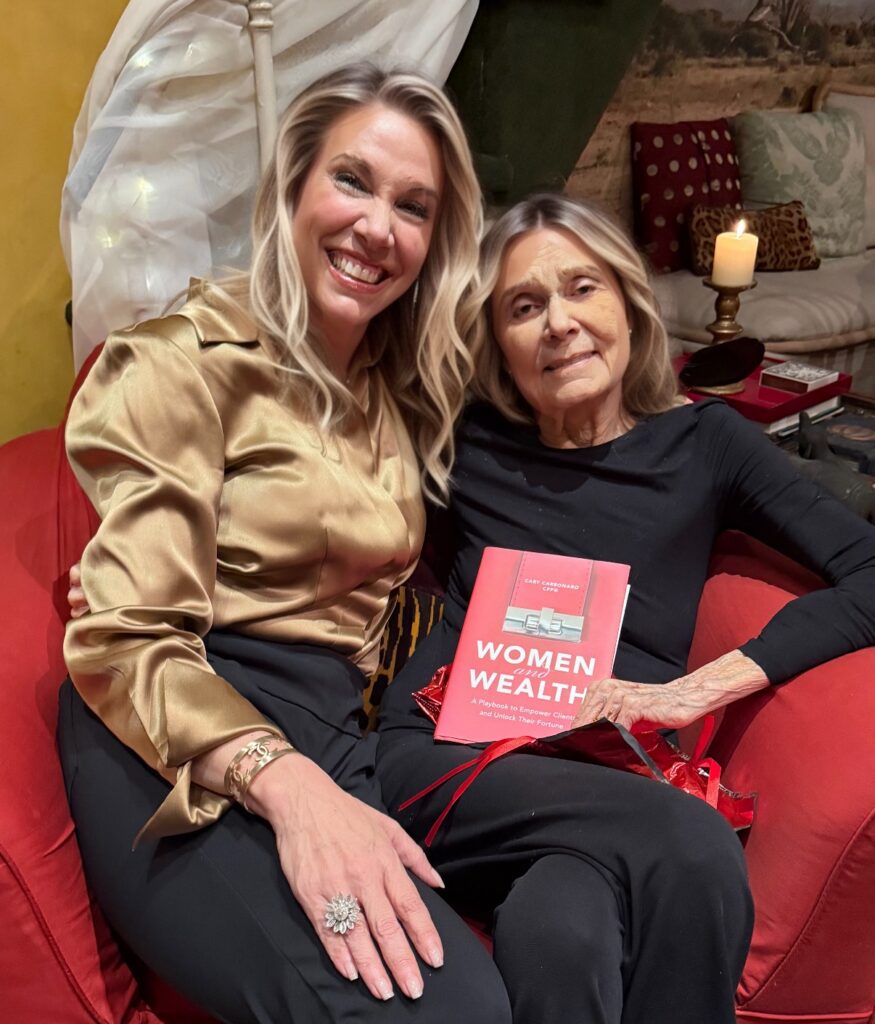
I feel incredibly fortunate that I had the chance to meet her and give her a copy of Women and Wealth. I wrote to her that so much of the work I do today stands on the shoulders of women like her women who fought for women to have a voice, choices and economic power.
And there is a reason I included Gloria’s words in my book on page 75.
“We will never solve the feminization of power until we solve the masculinity of wealth.” Gloria Steinem
That quote captures so much of what I believe. Women having a voice and a seat at the table matters, but economic power matters too. Money gives women choices, independence, and the ability to shape their own lives. Thank you, Gloria! Your light shines in us all!
https://www.linkedin.com/posts/carycarbonarocfp_i-woke-up-this-morning-to-the-news-that-gloria-activity-7501244928505704448-dZNy?utm_source=share&utm_medium=member_desktop&rcm=ACoAAABRHfQBzJdG1wEwSPxGmbPXYTzchZbq0i8
Gloria Steinem has been an inspiration for me since 1972. I was a charter subscriber of Ms. magazine, and I have been subscribed every year since then. I plan to subscribe as long as I live (I’m currently 81).
Gloria encouraged me and all of us to be our best selves. It’s important to keep our eyes open every day!
Gloria meant what Dolly meant: Something magical and sparkly just by being themselves and being advocates for making the world better.
Gloria was bold, beautiful and feminine. She was my Wonder Woman.
(https://www.theguardian.com/books/2026/sep/05/gloria-steinem-tributes-dua-lipa-margaret-atwood-lynda-carter)
Gloria Steinem didn’t just change the conversation, she changed what we believed was possible. She gave generations of women the language for their lives and the courage to claim them. And she reminds me of the spirit behind Bread and Roses: that we fight not only for survival, but for dignity: for a life with both the bread we need and the roses we deserve.
(https://www.theguardian.com/books/2026/sep/05/gloria-steinem-tributes-dua-lipa-margaret-atwood-lynda-carter)
I had the honor of meeting Gloria Steinem when working on a film (The Glorias) about her extraordinary life. Gloria rushed into the meeting wearing her signature silver belt and black tunic. She apologized, with humility, for being late; she was coming from a meeting at the United Nations where she was speaking about the powerful connection between countries being peaceful and equal rights for women. I couldn’t believe she’d been apologetic about being late to a film meeting when she’d been busy addressing an international body about subjects of deep import. But that was Gloria: humble, charming, funny, insightful and concerned about everyone else.
Every time I met with Gloria, she was the most present person in the room. When I say present, I do not mean the kind of charisma that demands attention for the self; I mean that she activated the entire room with the unique quality of her listening. I bonded with her over shared feminist values (which I’d inherited, in part, from her), but also over the act of writing. Many first associate the image of Gloria with her fist raised at a podium, speaking out and marching; what fascinated me as I dove into her history was how she managed to overcome a fear of public speaking because she had more latitude to speak freely at demonstrations than in print.
First and foremost, she began as a writer. She came to speaking later, when the journalistic constraints of the 60s (pre-Ms magazine) barred her from writing about feminist concerns like abortion. This is one of her many enduring lessons: that great leaders are not born with every quality they need, but are created through incredible acts of bravery, shaped by their profound sense of mission. Thank God that we still have her writing and her example as a road map. We need her legacy now more than ever, and though we won’t have her robust and encouraging laughter in the room, we will always have her powerful words.
(https://www.theguardian.com/books/2026/sep/05/gloria-steinem-tributes-dua-lipa-margaret-atwood-lynda-carter)
Gloria Steinem has left us, but countless of her sayings are at hand for us to learn from: “We shall overcome” and “The truth will set you free, but first you will be pissed off” come to mind. But as I comb through her speeches, one from this year feels most urgent. “We only experience real empathy when we are flooded with oxytocin, and it only happens when we’re together,” she said while sitting in her living room, hosting a feminist salon in her 90s. The importance of coming together in person used to be a given, but not now in the age of digitized divide. May we gather in each other’s living rooms and activate empathy salons, united and empowered in honor of Gloria and all the women who have gathered before us.
(https://www.theguardian.com/books/2026/sep/05/gloria-steinem-tributes-dua-lipa-margaret-atwood-lynda-carter)
Gloria is the reason I’m applying for a masters in journalism, without her I would be lost in my life right now. Reading her works made me realize that I could do so much good as a journalist, I know I’ll probably not be as influential as her, but if I do 1/3 of the good Gloria did in my life I would be proud.
To me, Gloria Steinem will always represent hope and optimism. Her determination in the face of all the difficulties that historically marginalized communities encounter inspires me every day. She helped me see how many good people are working to improve the lives of others and that each of us can make a difference. I will do my part to support as many organizations like Ms. magazine as I can while voting for politicians who are also standing up for what’s right. I will forever be grateful to Gloria for all that she gave to us. We were so lucky to have had her.
Gloria taught me that freedom is not an abstraction. It is a girl walking onto a Little League field in the 1990s and learning, in her own bones, how fiercely some people believe she does not belong. It is arriving at college to find the women’s tennis team funded the same as the men’s, not because I had to demand it, but because women before me had fought to make equality ordinary.
I am 45 now. I lead a bureau in New Jersey state government. I hold a mortgage in my own name and live a life of my choosing. Nearly every major marker of my life bears the imprint of Gloria and the women beside and before her.
Tonight, I am writing while women play professional baseball in the inaugural season of a league of their own. An ordinary night, made possible by extraordinary women. You never took the exit, Gloria. You fought until the end. We inherit what you fought to make possible. Now it is our turn to stand up and carry it forward.
Gloria Steinem was born in Toledo, Ohio, just a few hours away from my hometown of Canton, Ohio. Like so many of us, Steinem’s ambitions brought her to New York City, and it was there that her groundbreaking work as an investigative journalist, a second-wave feminist and a brave cultural critic laid the foundation for a generation of women after her. She died on Sept. 2, at the age of 92.
Looking at her life and her work through a Black feminist lens, Steinem’s legacy is a blueprint for giving credit where credit is due. She used her visibility to uplift Black women, and she was vocal about the ways that Black women shaped her politics. She toured with Dorothy Pitman Hughes, famously posing next to her, fist proudly raised in a 1971 issue of Esquire magazine.
She organized alongside civil rights activist Flo Kennedy, and she helped found the National Women’s Political Caucus, with Shirley Chisholm and Fannie Lou Hamer. As founder and longtime editor of Ms. magazine, Steinem created a national platform that published the work of Black literary geniuses like Johnny Tillman, Alice Walker, Angela Davis and many others. Steinem’s understanding that Black women were central to feminist organizing was in tune with a broader political reality.
Research on Black women’s political attitudes found that in 1970, 60 percent of Black women supported efforts to strengthen women’s status, compared with 37 percent of white women. In 1972, 67 percent of Black women expressed sympathy with women’s liberation aspirations, compared with 35 percent of white women. Yet despite Black women’s leadership in this regard, media and institutions around it continued to distribute visibility and authority unevenly.
Steinem rose to prominence in an ecosystem where only a white woman would ever be cast as the movement’s face. Steinem, alongside Black feminists, including Alice Walker, challenged these exclusions even as they persisted within institutions, such as Ms. magazine itself. Her record shows what coalitions can accomplish and the importance of confronting moments when those coalitions fall short.
(https://podcasts.apple.com/us/podcast/intersectionality-matters/id1441348908?i=1000787947344&r=3892)
Gloria Steinem made news when she turned 40 and a reporter remarked: “You don’t look 40!” She responded: “This is what 40 looks like.” I was 27 years old at the time. When I began to get this same comment when mentioning my age, I used Gloria’s exact words. By then her comment was part of the mantra women used to call forth a radical redefinition of women and aging that the on-going Women’s Liberation Movement continues to keep front and center. Just a few months ago I had a birthday and announced my age to a room full of people. Someone called out: “You don’t look 79!” To which I conjured Gloria and answered: “This is what 79 looks like.” Let us channel the force field that is Gloria Steinem.
(https://www.theguardian.com/books/2026/sep/05/gloria-steinem-tributes-dua-lipa-margaret-atwood-lynda-carter)
Sex and the City wouldn’t exist without Gloria Steinem. She gave me and so many other women the courage to question societal norms – and the patriarchy – around what women could do, be and, most of all, think.
(https://www.theguardian.com/books/2026/sep/05/gloria-steinem-tributes-dua-lipa-margaret-atwood-lynda-carter)
Gloria was very generous with her time and her energy, right up until the end. Every time I spoke to her, I heard about another event or trip or cause or organizing event. It’s been said many times and she’s spoken about it herself: she really loved getting people together.
I want people to know that she had a wicked sense of humor. That she was always willing to listen. That she was a joy to be with and didn’t take herself very seriously, but took the world incredibly seriously. And in spite of all of the recent setbacks that we’ve had in America as it relates to women, she was hopeful. She was not deterred.
I see her towering legacy as someone who really lit our way. Someone who told us that words matter – yes, she was such a tall figure in civic service and community organizing and in the women’s movement, but she was first and foremost a writer, and to me her words are what will outlive her for generations. She was intrepid. She made you feel motivated and fired up and made you feel powerful, too. She was not interested in just holding forth. She was interested in listening, as I think all great people are. She cast a long shadow, and I’ll miss her very, very much. It’s a big hole, not only in the world, but in my heart. A very tall tree has fallen in our forest.
(https://www.theguardian.com/books/2026/sep/05/gloria-steinem-tributes-dua-lipa-margaret-atwood-lynda-carter)
Losing Gloria Steinem feels like losing a lighthouse in dark times. But her legacy will live on through the torches she lit inside women of every generation. I am humbled to consider myself one of millions of those torches, shining proudly in her honor. Gloria showed us what it means to use your voice, challenge the systems that diminish women, radically reimagine a more just world – and then have the courage to build it. Her life is a blueprint for the work still ahead of us.
(https://www.theguardian.com/books/2026/sep/05/gloria-steinem-tributes-dua-lipa-margaret-atwood-lynda-carter)
I spent my entire career working to support women’s economic success, helping them access jobs and education, and starting their own businesses through what began as a displaced homemakers program. Gloria Steinem and the entire Ms. Community were mentors, guides, friends, and colleagues throughout. The Ms. Institutes for Women’s Economic Empowerment gave me critical tools, lasting connections, and perspective on how to make a difference. Knowing I was part of this broad, diverse, and dedicated community of feminists gave me the confidence and determination to keep on keeping on for over 40 years. I joined the board of a local economic development organization, one of only a few women, and managed to be elected President of the Board, leading the organization through a difficult period. Building on my experience working with the legislature to create programs to support entrepreneurs, I ran for the state Senate and served for 9 years, four as Majority Leader. Gloria was with me all the way.
I met Gloria in the 1970s when I freelanced for Ms. magazine. We kept in touch during my years as a staff correspondent for Time magazine in Los Angeles.
In one of the first issues of Ms., I read Gloria’s article on gendered language, and it has shaped my life and worldview for over 50 years now. As a member of the Episcopal church, I grew up wanting to be an acolyte but was excluded because I wasn’t a boy. Gloria’s article put words to all the frustration I was experiencing with the gendered Christian doctrine while giving me the courage to extricate myself from a belief system that is all about intellectual and spiritual conformity. Four decades later, while working on a master’s in liberal theology, I discovered feminist theology. Since ordination, my Unitarian Universalist ministry has taken me from a women’s prison chaplaincy to running Wyoming’s only abortion clinic and so much in between. And always, the power of language has been foundational to the work I continue to contribute to our righteous struggle. Gloria Steinem is proof of my belief that the world changes (for the better) one child at a time. I am blessed with a grateful heart.
Gloria Steinem proved to women across the country that we don’t have to wait for power to be handed to us. We can fight for it and build it ourselves. She lit our torches with the belief that “when humans are ranked instead of linked, everyone loses.” She forced revolutionary feminist rights and beliefs into the mainstream. And she opened the door for the next generation of women to live life beyond limits prescribed by gender. Thank you, Gloria Steinem, for providing the guiding light to all who follow in your footsteps in the great fight to build women’s power and the future we deserve.
I was a new teacher, in the early 1970’s. It was customary to print the teacher’s name on the board (in those days it was a blackboard and chalk). I printed Ms. Indursky. All the students as well as my supervisor were baffled. Huh? What’s a Ms.? Are you Miss or Mrs.? I explained, thanks to Ms. Steinem, that my marital status had no bearing on our professional relationship. As far as I know, they are still thinking about that.
After I found out that women could actually become physicians (finally met one in the hospital I trained at as a music therapist in 1982), I then discovered Ms. magazine. I was so inspired by her articles! They totally changed how I looked at the world and my potential. I then went to medical school and became a dermatologist. I am so grateful for her inspiration.
When I heard Gloria Steinem died, I immediately thought of my mother. We met Gloria for the first time together, watching her as a guest on The Tonight Show with Johnny Carson in 1968.
I was fourteen, and my four younger brothers and my father were already asleep. Being an insomniac kid, my mother sometimes let me stay up and keep her company.
As Gloria talked about the Women’s Movement my mom lit up and said, “Oh, she’s GREAT!”
Before she married my father, my mother, Joan, worked as a secretary in Manhattan in the early 1950s. She had plenty of stories.
By 1970 my siblings were all in school, and with money tight, my mother went back to work. Then she’d come home and make dinner.
In 1972 when Gloria said: “Who does the typing? Who does the dishes?” it really hit home — literally. My mother was doing both.
I worked in Manhattan for 40 years, from 1976 to 2016. Because of Gloria’s work, things did change for women in the workplace.
But we all know there’s more work to do.
I discovered “Revolution from Within” when I was 17 years old. Exposed to Gloria’s guidance and wisdom at an early age, I was spared from the agony of having to live out ANY part of my adult life in a way that wasn’t authentic to me. Getting the chance to meet her in person a year later and experiencing her kind and gracious spirit only solidified the admiration and respect I already had for her. Now at age 45, I have spent the last 26 years of my life traveling to all four corners of the world while living and working in six different countries. Gloria taught me all those years ago to never be ashamed of my innate, free-spirited nature, but to embrace it, take pride in it, and never let it go.
Rest in Power, sweet lady.
~Love, Greta
Gloria Steinem was an absolute powerhouse of a woman and a forever inspiration.
I hope that the women in my generation understand how deeply impactful she was to our rights, access, and autonomy. Gloria’s legacy continues to teach us to stand up for what’s right, and make room for others to share their stories. Spending just a few hours with Gloria was an experience that will live deeply in me for the rest of my life, and I feel we are all so lucky to have lived in the same timeline as such a special human.
If we were all a bit more like Gloria, the world would be a brighter place.

I met Gloria twice. The first time was in the summer of 1996, at a medical conference in Boston. (I had no aspirations to be a doctor; my 19-year-old self was there to party with friends.) Much to our surprise and delight, we learned that Gloria Steinem was speaking at the conference. My friends and I knew exactly who Gloria Steinem was, and went up to her in awe and admiration. She not only took this picture with us, but invited me and other young women to a room, where we chatted about our experiences as young Indian Americans. It was special and surreal. The second time I met her was at a book signing years later, in LA. I reminded her of that first encounter, and she remembered it all.
I don’t remember a time when I didn’t know who Gloria Steinem was and all she stood for. She is the public figure I have probably admired most in my life. As my own feminism evolves and becomes more “radical” in this new world order, I still look to her words as guidance and grounding.
I am the daughter of a Czechoslovakian immigrant who learned to read and write English and earned her high school diploma in the U.S. Gloria Steinem’s work helped protect the rights and opportunities that shaped my mother’s life—and mine.
My sister, also Gloria and seven years younger than Steinem, marched alongside Gloria Steinem for women’s rights and also fought for human rights, student welfare and education. She became my role model, showing me how to stand up, speak up and lead. That example shaped my path into social work, community organizing and advocacy, organizing Washington Heights tenants and taking busloads of residents to Albany and Washington, D.C. to demand change.
Gloria Steinem helped create the forum. My sister Gloria showed me how to use my voice. I am proud to carry the torch passed down from the two Glorias in my life—one who helped shape a movement, and one who shaped me. I will carry their lessons forward through organizing, advocacy and helping others use
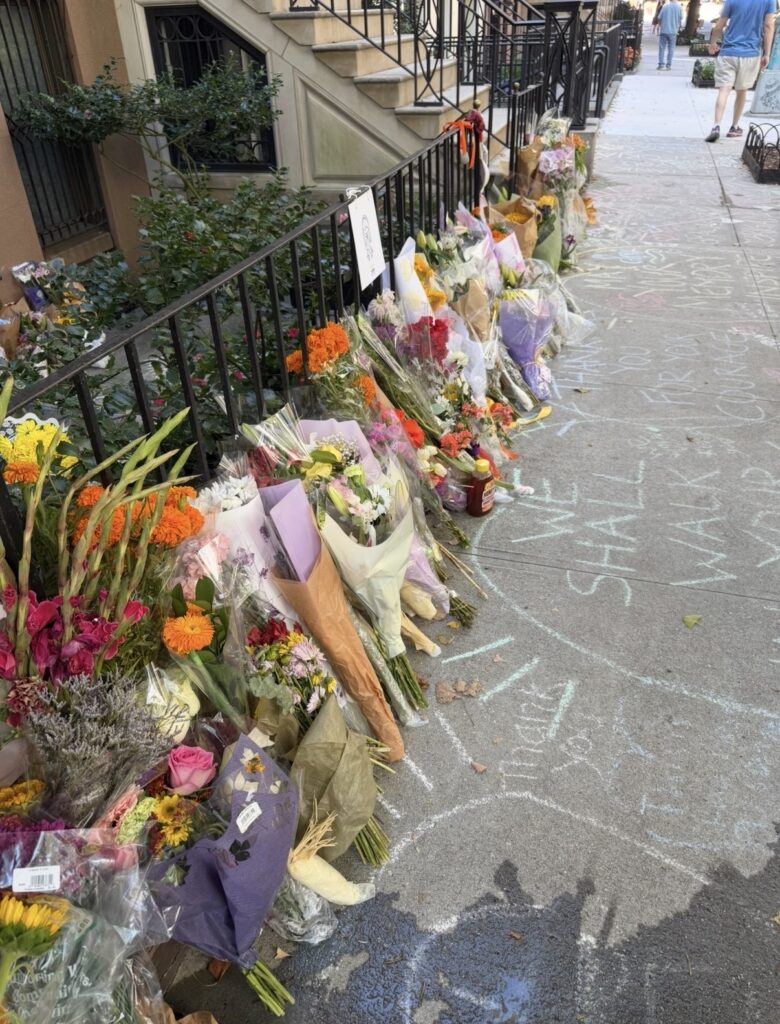
You came along
With a fresh vision
Of what women could do
And why they should do it.
For your courage,
Tenacity,
Vision,
Work with and for
All women
May you rest peacefully.
Thank you, Gloria
(https://www.theguardian.com/books/2026/sep/05/gloria-steinem-tributes-dua-lipa-margaret-atwood-lynda-carter)
Gloria taught a generation how to live with a sense of purpose and justice. She found the good fights and fought them, even in unexpected corners; I discovered only after knowing her for years that she’d once intervened in a case involving my family, advocating for a child-welfare investigator who lost his job after finding a controversial allegation of abuse to be credible. But more than her great fights, Gloria was an example of how to be the best we can be. She was a riot. She was cool. She was sexy. She was a badass. She made no pretense of perfection, and reckoned with mistakes openly. Like a lot of people, I hoped to grow up to be Gloria. I still do.
(https://www.theguardian.com/books/2026/sep/05/gloria-steinem-tributes-dua-lipa-margaret-atwood-lynda-carter)
I am one of countless people who can say that it’s impossible to imagine my life without the activism, vision, and courage of Gloria Steinem. There would have been no Rookie without Ms magazine and its lineage. I am grateful beyond words for her example and encouragement.
(https://www.theguardian.com/books/2026/sep/05/gloria-steinem-tributes-dua-lipa-margaret-atwood-lynda-carter)
Gloria’s works were among the first I encountered as a young girl that challenged me, even at that early age, to think about women, equality, power, and our place in the world. She was a trailblazer, a legend, and a force who changed not only the conversation but the world itself. Her unwavering courage, deep intellect, and commitment to equality opened doors and created possibilities for countless others who came after her. Her voice became part of the framework through which I learned to understand those things, long before I could fully appreciate the magnitude of her impact. Meeting her later in life felt like a full circle – getting the chance to meet someone whose work helped shape, in many ways, the woman and advocate I became. I am profoundly grateful for her life, her work, and the path she forged. She will be deeply missed, but the world is forever changed for the better because she was in it. Her legacy will live on forever.
Gloria showed me that writing, gathering women, listening deeply to their stories, and standing up for their rights could become a sacred life’s work. I admired how she stayed rooted in what she knew was true, even when powerful men dismissed her or wanted her to disappear, and how she used her voice to open doors and make more room for ours. Long before I understood the depth of her influence, her words helped me trust my own knowing and shaped my belief that every woman’s lived experience carries wisdom worthy of being witnessed and heard. So much of what she embodied is now woven through my women’s circles, my writing, and my sacred work as a Book Doula, helping women reclaim their voices, honor the stories stirring within them, and bring those stories into the world. Thank you, Gloria! xxoo