
A new report from PEN America and Consumer Reports urges tech companies to treat online abuse like spam—by proactively filtering harm before it reaches users.


More Than A Magazine, A Movement

Women of color encompass a wide range of racial and ethnic identities of women impacted by racism, colorism and xenophobia. These are Indigenous women, Asian and Pacific Islander women, Latinas and women in the African diaspora. Find stories in this archive related to their varied array of challenges around the world and the strong activist movements they lead.
A new report from PEN America and Consumer Reports urges tech companies to treat online abuse like spam—by proactively filtering harm before it reaches users.

For decades before Trump’s political rise, we fought for women’s equality, advancing one hard-won victory at a time. Reproductive freedom. Economic independence. Workplace equity. Protection from harassment and violence.
In 2022, fewer than 30 percent of Republican men believed women should return to traditional roles. By 2024, that number jumped to 48 percent.
This isn’t just political polarization. This is a fundamental rejection of women’s equality fueled by a sitting president intent on rolling back women’s progress.
Trump’s presidency has unleashed a cultural and political backlash that threatens generations of progress toward women’s equality—demanding a bold, collective response.
Every woman and man who believes in equality can fight back.

“The ICE crisis is a Black issue, too,” said Myeisha Essex of Black Women for Wellness (BWW) at a recent press conference in Los Angeles. Essex was joined by leaders from other Black- and Latino-led grassroots organizations, including the Black Alliance for Just Immigration (BAJI) and the California Black Power Network (CBPN). Together, they warned that Trump’s crackdown threatens the safety and civil rights of immigrants and citizens alike, underscoring the need for solidarity across communities of color—and with allies—amid deepening political and racial divides.
The uncertainty and fear of this political moment intensified last month when the Supreme Court upheld the federal government’s ability to deport immigrants to third-party countries—even when individuals have not had a fair chance to contest removal or raise credible fears of torture or harm. Advocates argue the ruling undercuts due process and erodes bedrock democratic principles, leaving both immigrants and U.S. citizens questioning what rights remain secure.
“We are the ones—Black people, regardless of citizenship—who must define what resilience and resistance look like in this moment,” said Nana Gyamfi, executive director of BAJI. “The first human beings who migrated, allowing people to exist all over this planet, were Black people.”

“Sex work is work,” is an oft-repeated refrain. But who is behind the megaphone? And who is paying the price?
For most women and girls, especially from the Global South (and poor, racialized and displaced women everywhere), the notion that prostitution is freely chosen collapses under scrutiny. More often than not, entering the sex trade is not a choice, but an act of survival under patriarchal and capitalist constraints.
So, who is sex work legalization really for? And what would it mean, for all women, if buying sex were not legal, not normalized, but abolished?
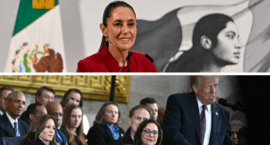
Donald Trump has insisted that he has a “mandate” from voters to peddle his wildly unpopular policies—and, apparently, to stop at nothing to enforce them. But in reality, Americans by and large want a feminist future.
I talked to experts in gender and politics about the promise of a truly representative democracy—and what it will take for feminists to build one. The first episode of the brand-new Ms. podcast Looking Back, Moving Forward digs into the history and future of the feminist fight for both political representation and political power. The experts I spoke to for the episode reminded me that feminists have the power to redefine our democracy—and that rumors of our defeat have been greatly exaggerated.
Listen to the newest Ms. podcast Looking Back, Moving Forward—available on Spotify, Apple Podcasts or wherever you get your podcasts.

Aimee Allison founded She the People to empower more of us to envision an America redefined and inspired by women of color. As its president, she launches and spearheads efforts to demonstrate the political power of women as color and advance racial, economic, and gender justice.
As part of the first episode of the new Ms. Studios podcast Looking Back, Moving Forward, Allison talked to Ms. about her vision for a feminist future, rewriting the American story, and what it will take for us to build a better democracy.
“We stand for something extremely powerful, and we have a legacy of women who came before us that are going to actually show us the way forward.”

On Thursday nights, I walk a few blocks along my neighborhood’s cracked sidewalks to The People’s Market. SNAP is the glue that holds The People’s Market together, where most of the vendors are recipients selling at the market to supplement their incomes.
We’ve long known that the U.S. food system is upside-down. Instead of trying to fix this broken system, Congress is punishing the victims of its malfunctioning and is slashing SNAP to enact tax cuts for the rich.

This Mother’s Day, for the 111th year in a row, families across the nation will gather to celebrate all the love, care and work provided by the mothers in their lives. Woodrow Wilson declared Mother’s Day a federal holiday nearly a year after he established the basis of today’s modern income tax system, allowing him to lower tariff rates on many of the basic necessities American families relied on in 1914.
It is darkly ironic that more than a century later, the Trump administration is attempting to reverse these pro-family policies, while at the same time promoting a pronatalist agenda aimed at creating more mothers and larger families.
Despite promoting motherhood, Trump’s policies threaten the economic stability of the 45 percent of mothers who are primary breadwinners—especially single moms and women of color.

As the Trump administration wages an unlawful assault on civil rights, employers and institutions must resist complicity and stand firm in defending the anti-discrimination laws that remain the backbone of workplace equality—because we all have a stake in the fight against a regime that fosters discrimination and inequity.

The Trump administration earlier this month cut more than $65 million in federal funding for family planning under Title X, the program signed into law by President Richard Nixon that has supported comprehensive family planning and related preventive health services—including contraception, cancer screenings, infertility treatments, pregnancy care and STI testing—for low-income Americans since 1970. The cuts will impact dozens of clinics nationwide, including nine Planned Parenthood affiliates, and leave seven states without any Title X funding—to say nothing of other funding cuts and freezes to social services like Social Security and Medicaid.
In March, Nourbese Flint, president of the national abortion justice organization All* Above All, wrote a piece for Ms. about Republicans’ proposed cuts to Medicaid, which would strip healthcare from millions of Americans, including 40 percent of all pregnant women in the United States. Last week, I spoke with her about the Title X freeze on reproductive healthcare and the long-term effects of these funding cuts, which will put infant and maternal healthcare even more in jeopardy.