The Court’s decision in Mullin v. Doe clears the way for the Trump administration to end Temporary Protected Status for hundreds of thousands of Haitians and thousands of Syrians, while sharply limiting judicial review.
This article focuses on one of two major immigration decisions the Supreme Court issued on June 26. It is adapted from a broader analysis examining both rulings together.
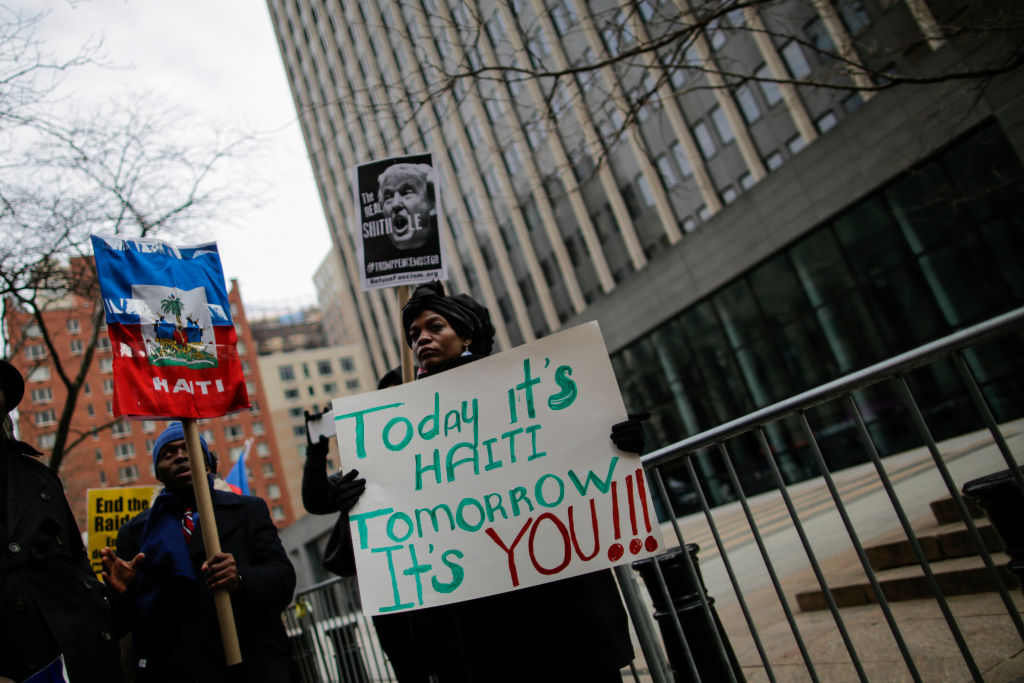
For more than 350,000 Haitians and roughly 6,000 Syrians living legally in the United States under Temporary Protected Status (TPS), the Supreme Court’s decision in Mullin v. Doe is not simply another legal ruling. It is the decision many feared would clear the way for mass deportations.
In a 6-3 ruling, the Court cleared the way for the Trump administration to end TPS for Haitian and Syrian nationals. Although the legal challenges themselves are not over, hundreds of thousands of people who have relied on TPS to live and work legally in the United States now face the immediate possibility of deportation.
Writing for the dissenters, Justice Elena Kagan argued that the majority not only insulated the executive branch from meaningful judicial review, but also brushed aside compelling evidence that anti-Haitian bias may have influenced the administration’s decision. In her view, the Court ignored both the law and the human consequences of allowing the terminations to proceed before those claims could receive full consideration.
The majority framed the dispute as a narrow question of statutory interpretation. The plaintiffs argued that former Homeland Security Secretary Kristi Noem failed to follow the procedures Congress established for terminating TPS. Haitian plaintiffs also argued that the administration’s decision was tainted by racial discrimination, pointing to President Donald Trump’s long history of derogatory remarks about Haitians.
Lower courts agreed the claims deserved closer scrutiny. They temporarily blocked the TPS terminations while the litigation proceeded, finding the plaintiffs were likely to succeed on claims that the administration violated the Administrative Procedure Act and, in Haiti’s case, the Constitution’s guarantee of equal protection.
The majority, however, viewed the dispute through a much narrower lens.
Instead, the Supreme Court focused almost exclusively on whether federal courts have the authority to review TPS termination decisions at all.
That distinction became the foundation of the Court’s decision.
The majority based its analysis almost exclusively on whether courts have jurisdiction to review the discretionary determination to terminate TPS, even if the challenge is to the underlying process rather than the decision.
The distinction matters, as the TPS statute contains a provision that excludes TPS classification or terminations from judicial review, which means that challenges must arise from some other violation of the law, such as a constitutional challenge or administrative process violations.
In this case, in contrast to Mullin v. Al Otro Lado, the majority adopted a broad definition of “determination” to include any aspect of the decision-making process, thus completely insulating a TPS determination from review.
The more stunning conclusion, however, is that the Haitian plaintiffs have not demonstrated a case for racial discrimination. Alito concludes that the president’s attacks on Haitians are likely race-neutral because he opposes TPS altogether and the nationals receiving TPS are a very diverse group.
Justice Elena Kagan, writing for the dissenters, is having none of this.
She first rebuts the majority’s decision to bar judicial review, noting that wrapping everything about the TPS process into the concept of a determination is contrary to the plain meaning of the word and to the Court’s past opinions involving the term. (It is also contrary to the majority’s approach in Al Otro Lado.)
But Kagan saves her most scathing criticism for the majority’s casual rejection of the idea that President Trump’s attacks on Haitians are racist:
“The evidence they have offered includes statements by the President so repellent and racially inflected that the majority declines to put them in print. (Indeed, one measure of the President’s way of speaking about Haitians is to compare it with the majority’s, which is unfailingly respectful.) So here are some of those statements …”
Kagan includes a long list of the president’s derogatory comments about Haitians, including the time he infamously wondered why America only takes people from places like Somalia and Haiti, rather than Norway and Sweden.
She continues,
“The majority briefly replies that those remarks are not ‘overtly racial,’ but it is hard to know what that means. Haitians are Black. (Norwegians and Swedes not so much.) The references—of filth, disease and primitiveness—are shot through with racial stereotypes and tropes. It is hard to imagine the statements being made today of any White community. No very ‘sensitive inquiry,’ is needed to see them for what they are; judges, as we often say, are ‘not required to exhibit a naiveté from which ordinary citizens are free.’ The statements fairly shout, in their racial undertones and overtones alike, that race entered into the President’s resolve to remove Haitians from this country.”
Such statements, she concludes, are more than enough for the Haitian plaintiffs to bring their constitutional claim and to have a good chance to win on the merits. That is enough to keep the injunction against deportation in place.
Moreover, the majority’s failure to examine or acknowledge the impact of rapid deportation of 350,000 Haitians and 6,000 Syrians would have on individual lives and across communities demonstrates a lack of reflection regarding the true cost of insulating government action from judicial review.
For Kagan, the case is about more than Temporary Protected Status. It is about whether courts will meaningfully review executive action when hundreds of thousands of lives hang in the balance. In Mullin v. Doe, she argues, the majority answered that question by expanding executive power while narrowing the judiciary’s role—a decision whose consequences will be felt well beyond this case.
Related reading: This analysis focuses on Mullin v. Doe. Read Giovagnoli’s broader analysis examining both immigration decisions issued the same day here.