


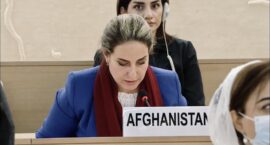
Since the Taliban’s return to power in August 2021, Afghan women and girls have been progressively removed from almost every sphere of public life. Girls are banned from secondary and higher education. Women are excluded from most employment, face severe restrictions on movement and have been rendered legally invisible. Institutions responsible for protecting women’s rights have been dismantled.
In early December, the international Permanent Peoples’ Tribunal in The Hague presented its verdict on the situation of women and girls in Afghanistan. Two days later, on Dec. 13, the French Senate convened a high-level colloquium titled “No Peace Without Women: Their Representation in Diplomatic, Military and Political Bodies.”
Together, these two forums—one judicial-moral, the other parliamentary-political—converged on a stark conclusion: The exclusion of Afghan women is systematic, intentional and state-imposed. At the same time, they exposed a critical gap in international law, one with far-reaching implications for the United Nations system, international accountability mechanisms and the global women, peace and security agenda.