FIFA’s historic recognition of Afghanistan’s women’s refugee football team marks a rare international rebuke of Taliban efforts to erase women from public life.
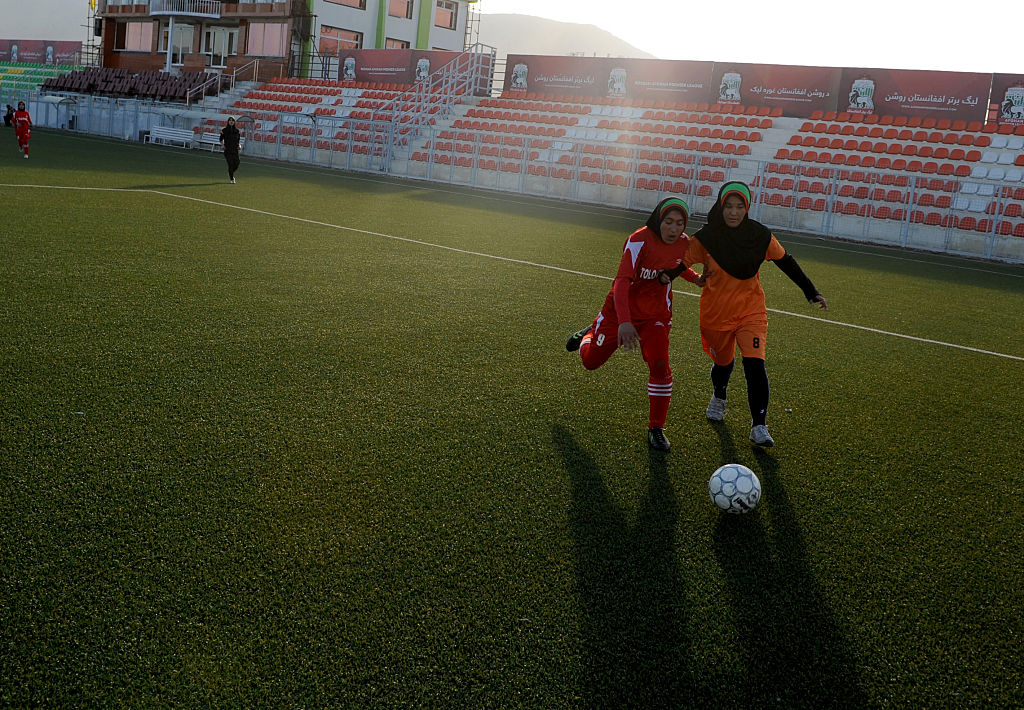
For the first time since the Taliban’s return to power in 2021 that forced Afghan women athletes into exile, Afghanistan’s women’s refugee football team has officially been granted recognition to compete in international tournaments under FIFA. This decision marks a rare and meaningful victory for Afghan women, whose rights, education and participation in public life have been systematically erased under Taliban rule for the past five years.
The FIFA Council announced the team formerly known as Afghan Women United will now be recognized as the Afghanistan women’s football team, allowing the players to compete in international competitions despite the Taliban-controlled Afghan Football Federation refusing to acknowledge women’s sports.
The ruling is significant not only for the sport itself and the players, but for what it represents politically and symbolically. Since returning to power, the Taliban have banned women and girls from nearly every aspect of public life, including education, employment and athletics. Women’s sports were shut down entirely in 2021, forcing many female athletes to flee the country out of fear of persecution.
Under normal FIFA regulations, national teams must be recognized by their country’s official football federation in order to compete internationally. However, FIFA voted to amend its rules in order to allow the Afghan refugees to participate despite the Taliban-controlled federation refusing to recognize them.
FIFA president Gianni Infantino described the decision as an effort to support athletes who are prevented from competing because of circumstances beyond their control. “We are proud of the beautiful journey initiated by Afghan Women United,” Infantino said in a statement, adding that FIFA hopes the initiative can support other teams facing similar exclusion.
The decision follows years of advocacy from Afghan players, activists and human rights organizations.
Former Afghanistan women’s national team captain Khalida Popal, who has become one of the most prominent voices advocating for displaced Afghan athletes, said the ruling came after years of being told Afghan women would never be allowed to represent their country again. “For five years, we were told the Afghanistan women’s national team could never compete again because the men who took our country would not allow it.” She said the decision not only changes the future for Afghan women athletes, but also ensures that no other national team has to endure similar exclusion.
The newly recognized team is made up of Afghan refugee players now scattered across Australia, Europe, and the United States after fleeing Afghanistan following the Taliban takeover. Last year, the team competed in the FIFA Unites tournament in Morocco, where they placed third after facing Chad, Tunisia and Libya, including a 7-0 victory against Libya in their final match.
… We have played under many names—as refugees, as Afghan Women United, and as guests of other clubs—but in our hearts, we were always the national team.
Nazia Ali
The players are now expected to participate in future international competitions and could potentially enter qualification for the 2028 Olympic Games in Los Angeles.
For many Afghan women, the moment carries meaning far beyond World Cup football. It serves as a reminder that despite years of repression, Afghan girls and women have not abandoned their ambitions, talents or dreams. Even after being pushed out of schools, workplaces, stadiums and public life, they continue to fight for spaces where they can exist freely and represent themselves on the world stage.
Nazia Ali, an Australia-based player on the team, reflected on the emotional significance of once again being able to represent Afghanistan officially. “For the last few years, we have played under many names—as refugees, as Afghan Women United, and as guests of other clubs—but in our hearts, we were always the national team.”
Human rights advocates have also praised FIFA’s decision as an important precedent. Minky Worden, director of global initiatives at Human Rights Watch, said FIFA had finally “closed the loophole” that allowed Taliban discrimination against women athletes to extend onto the international stage. She added that the move should serve as a model for how international sports organizations respond when athletes are excluded on the basis of gender, ethnicity or beliefs.
At a time when Afghan girls remain banned from secondary schools and universities, this victory underscores what Afghan women have continued to prove over the last four years, which is that when given the opportunity, they pursue excellence, leadership, education and achievement. The success and perseverance of these athletes stand in direct contrast to the Taliban’s exhaustive attempts to erase women from public life.
Afghan girls were never meant to have their dreams confined by walls, decrees or fear of retaliation. They were meant to study, compete, lead and build futures for themselves and their communities. This historic recognition by FIFA is a victory for a deserving football team, and furthermore, a reminder to the world that Afghan women continue to resist every attempt to silence them. Their determination is proof that their rights, education and freedom must not only be defended but fully restored.