‘Lone Star Three’: How Three UT Austin Students Paved the Way for Birth Control Access in 1960s Texas

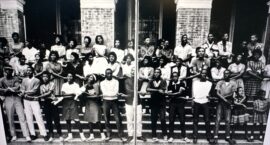
In 1969 Victoria Foe, Judy Smith and Barbara Hines were students at the University of Texas in Austin when Smith invited Foe and Hines to attend women’s liberation meetings at her house. Their discussions led them to start a campus Birth Control Information Center and eventually evolved into an underground network that helped women access safe abortion at a time when it was illegal in Texas. 

Their activism would eventually extend far beyond their university campus, planting the seeds for Roe v. Wade, the landmark Supreme Court decision that would legalize abortion in the U.S. Not until 1965 did birth control in the U.S. become legal for married women. Not until 1972 did it become legal for anyone, married or unmarried, to access birth control.

A new documentary, Lone Star Three, directed by Karen Stirgwolt, tells the story of the women who formed the underground networks that allowed young women to access reproductive care in Texas in the days leading up to Roe v. Wade. Ms. recently spoke with Foe and Hines (Smith passed away in 2013), and archivist Alice Embree, about their activism from the 1960s to the present moment.

FAQs About the SAVE America Act and Its Impact on Voters

As the SAVE America Act moves through Congress and outside groups mobilize on both sides, confusion about what the bill would actually require has fueled misinformation and political spin. If passed, the legislation would require Americans to show a passport or birth certificate to register to vote—adding a new layer of federal documentation requirements that could block millions of eligible voters. Supporters describe it as a simple measure; critics warn it would create sweeping new barriers at the registration stage.

More than 21 million Americans don’t have ready access to those documents. Married women who have changed their names could face mismatched records. And the bill rests on a premise that researchers have repeatedly debunked: widespread noncitizen voting.

To cut through the noise, Ms. has put together this guide to the SAVE America Act, answering common questions about what it would do and how it could affect your right to vote, including: Does a Real ID count? What if I can’t find my passport? And why are Trump and Republicans pushing so hard for this bill?

War on Women Report: Kentucky Woman Arrested for Miscarriage; Kansas Anti-Trans Bill Takes Effect; Polls Show Most U.S. Women Disapprove of Trump

MAGA Republicans are back in the White House, and Project 2025 is their guide—the right-wing plan to turn back the clock on women’s rights, remove abortion access, and force women into roles as wives and mothers in the “ideal, natural family structure.” We know an empowered female electorate is essential to democracy. That’s why day after day, we stay vigilant in our goals to dismantle patriarchy at every turn. We are watching, and we refuse to go back. This is the War on Women Report.

Since our last report:
—Texas Attorney General Ken Paxton is suing Delaware abortion provider Debra Lynch, who operates the organization Her Safe Harbor, for allegedly mailing abortion pills into Texas.
—More than a year after seeking medical help for a miscarriage, Deann and Charles Bennett, a young couple in Booneville, Ky., have been arrested for alleged “reckless homicide.”
—Trump’s Department of Justice used the Freedom of Access to Clinic Entrances (FACE) Act, intended to protect abortion clinics from harassment, to prosecute journalist Don Lemon for attending an anti-ICE protest.
—The Trump administration withdrew a Biden-era rule that required pharmacies receiving federal funding to carry and dispense mifepristone, misoprostol and methotrexate.
—Arkansas’ near-total abortion ban is facing its first legal challenge since Dobbs
—Some good news from Cleveland: The Cleveland City Council passed Tanisha’s Law, creating a Community Crisis Response department to respond to non-violent mental health emergencies with trained, unarmed crisis teams.
—In a landmark victory for survivor accountability, an Arizona jury in Phoenix has ordered Uber to pay $8.5 million to Jaylynn Dean.
—Also in Arizona: Judge Gregory Como struck down several abortion restrictions, ruling them unconstitutional.

… and more.

How to Find Your Nearest No Kings Protest on March 28

On Saturday, March 28, the third round of No Kings will take place in cities and towns across the United States. The protest comes in response to the Trump administration’s recent crackdowns on immigration and Immigration and Customs Enforcement (ICE)’s systemic violations of proper law enforcement procedures. The organizers are optimistic that millions of Americans will take part in demonstrations, marches and rallies, and predict it will be the largest nonviolent protest in American history. 

To find a protest close to you, No Kings has created a map to locate a nearby protest site.

The protest’s flagship event will be hosted in Minneapolis and Saint Paul, Minnesota’s Twin Cities.

The Next Phase of the Abortion Wars: Targeting Pills, Helpers and Patients

The first year of Trump’s second term marked major blows for reproductive healthcare. Medicaid funding cuts forced about 50 Planned Parenthood clinics to close throughout the U.S. and blocked 1.1 million Planned Parenthood patients on Medicaid from using their insurance to pay for reproductive healthcare. Twenty-three independent abortion clinics throughout the country also shut down in 2025.

Now, at the start of 2026, there are only nine states where it is possible to get a legal abortion with no restrictions.

Four years after the Supreme Court’s Dobbs decision overturned Roe, here are some of the key ways states are pushing harder than ever to end any access to abortion.

Independent Clinics Still Provide Most U.S. Abortions

2025 was a year marked by attacks on reproductive freedom, including a staggering wave of forced Planned Parenthood closures. About 50 of Planned Parenthood’s 600 locations have shut down as of December, largely due to last year’s combined loss of Title X funds and Medicaid reimbursements.

In the midst of these closures, independent abortion clinics continue to play a crucial role in the abortion access landscape. Even before last year’s Planned Parenthood cuts, independent clinics provided most U.S. abortions, offering care to women in big cities and rural healthcare deserts alike. In 2025, independent clinics provided 58 percent of U.S. abortions, compared to 38 percent through Planned Parenthood (and 3 and 1 percent through hospitals and doctors’ offices, respectively), according to the annual Communities Need Clinics report from Abortion Care Network (ACN), released in December.

‘We Will Not Be Sidelined Again’: Survivors Respond After DOJ Releases Epstein Files With Unredacted Names and Personal Details

The Department of Justice has released more than 3 million pages of records related to Jeffrey Epstein. For decades, survivors have begged for answers and accountability. But they say the latest tranche of documents—many containing unredacted names, contact information and identifying details—have left them retraumatized, exposed and furious.

Some describe the release as careless. Others call it deliberate. Many say it confirms what they have long believed: that survivors are still not being centered, protected or heard.

Read survivors’ reactions, in their own words.

“My sister Maria Farmer filed a lawsuit against the government for negligence in this case, and really as I see it this is just further examples of that—of the ways that we have not been protected and that DOJ has not done their job.”

“I can’t help but wonder why the DOJ has once again failed us. Again. It feels like they’re ignoring our need for protection, especially when they’ve taken the time to redact the names of powerful individuals … but not ours. This double standard makes it even harder for us to trust them.”

War on Women Report: Meta Removes Abortion-Related Accounts; Louisiana Tries to Extradite California Abortion Provider; Fatal ICE Shootings

MAGA Republicans are back in the White House, and Project 2025 is their guide—the right-wing plan to turn back the clock on women’s rights, remove abortion access, and force women into roles as wives and mothers in the “ideal, natural family structure.” We know an empowered female electorate is essential to democracy. That’s why day after day, we stay vigilant in our goals to dismantle patriarchy at every turn. We are watching, and we refuse to go back. This is the War on Women Report.

Since our last report:
—Kentucky Attorney General Russell Coleman has tried to remove pro-abortion ads from Mayday Health, an organization that shares information about abortion pills, birth control and gender-affirming care.
—The FDA withdrew a rule requiring cosmetics companies to test their products made with talc for asbestos, alarming public health advocates.
—Two Pennsylvania hospitals told the state they may not provide emergency contraception to sexual assault survivors because of religious objections.
—Some good news out of Wyoming: The state’s supreme court started the new year by striking down Wyoming’s two abortion bans.

… and more.

She Was an Antiabortion Poster Child. Now She’s a Reproductive Freedom Activist.

At the age of 15, Charlotte Isenberg took to social media to process complicated feelings about a miscarriage after alleged sexual abuse. That was what first brought her to the attention of antiabortion groups.

“Almost immediately, anti-abortion actors threaded a narrative for me between my grief, my miscarriage and anti-abortion sentiment. I clung to it with desperation,” Isenberg wrote.

Feeling isolated from peers due to both her traumatic experiences and the COVID-19 pandemic, Isenberg found a sense of belonging in these online spaces.

But in May 2024, at age 20, Isenberg says her birth control failed, and she became pregnant for the second time. The timing was devastating: She was unemployed, without stable housing or transportation, and preparing to relocate for college—the first in her family to access higher education. 

When she couldn’t find adequate support for her unplanned pregnancy, Isenberg scheduled an appointment at her local Planned Parenthood for an abortion consultation, unsure of what she would ultimately decide. Another prominent antiabortion activist, one of Isenberg’s best friends in the movement, found out about her appointment; she and other members of the group intervened aggressively.

Despite this pressure, Isenberg was able to make the decision that was best for her and her body. Since her own abortion, she’s become a reproductive freedom activist, educating others about extremist antiabortion tactics and promoting systemic protections for people navigating reproductive healthcare.