Roe v. Wade was only half the story. A new short documentary spotlights the case that made abortion rights real in practice.

On June 24, 2026, we’ll reach the fourth anniversary of the Supreme Court’s Dobbs v. Jackson decision that overturned Roe v. Wade. This year, which would have been Roe’s 53rd anniversary, also coincides with the United States’ 250th, reminding us that while the U.S. has been independent since 1776, American women are still far from having full rights and power over our own bodies.
Roe v. Wade, which passed in 1973 and stood for 49 years, gets most of the credit for establishing the national right to abortion. Many people think of Roe as the first big bookend ushering in the right to abortion in the U.S., with Dobbs as the other bookend taking that right away again.
However, Roe wasn’t the only groundbreaking case that paved the way for abortion rights in the U.S.
Doe v. Bolton, Roe v. Wade’s lesser-known companion case, was argued before the Supreme Court in 1973 the same day as Roe and was equally crucial to abortion rights in the United States.

While Roe established the constitutional right to abortion, Doe—argued by Atlanta attorney Margie Pitts Hames—helped ensure that the right was actually accessible, by striking down restrictive Georgia rules on who could obtain an abortion and under what conditions.
The Other Roe, a new short (16 minutes) documentary that debuted at the Santa Barbara International Film Festival in February, tells the story of Doe v. Bolton and how Hames argued the case and expanded women’s access to reproductive healthcare across the country at a time when few women were practicing law.
… We need to really start investigating our rights and taking them seriously, fighting for them, really understanding what they mean and the power they hold, and that our ability to live in a free society is a fragile thing.
Wendy Eley Jackson
Doe overturned the restrictive abortion laws in Georgia at the time (which allowed abortion only in very limited circumstances and required the procedure to be approved in writing by three physicians), giving medical professionals and facilities the authority to perform safe abortions.
“A lot of people have never even heard of [Doe v. Bolton],” Donia Hames Robinson, Margie Pitt Hames’ daughter, told Ms. in a recent interview, along with Wendy Eley Jackson, The Other Roe’s director, and abortion-rights activist Ann Rose, an executive producer for the film.
“There’s a sister case, and the only folks who really know that are lawyers or judges, so we’re trying to educate them.”

Even though Hames had frequent media appearances in the 1970s, Robinson, Jackson and Rose struggled to find footage of her speaking or even more general information about Doe v. Bolton while they were working on the film. They were startled to find no preserved interviews with either Hames or Sarah Weddington, the attorney who argued Roe v. Wade at just 26 years old, from January 1973, when the Supreme Court decided the two cases.
“We’re trying to raise consciousness, but we’re also trying to slowly dig into what else is being hidden,” Robinson explained. “We don’t want our side of the story—the truth, what actually happened—to be ignored. So we’re trying to let people know before it gets all erased.”

Even in the abortion activism community, few people know about Doe.
“I used to own and run abortion clinics, so I know clinic owners and people all over the country, and very few of them have heard,” Rose said. “I go to national meetings, and I say, ‘Doe is a companion case to Roe v. Wade,’ and they’re like, ‘What?’”
Why did Roe v. Wade become ingrained in the public conscience while Doe v. Bolton went largely ignored? “Inside legal circles, Roe was seen as the opinion and laid out the constitutional doctrine, while Doe clarifies implementation,” Jackson said. “Scholars and courts cited Roe more often because it articulated the broader reasoning without getting into more of a micro look.”
Pro-abortion and antiabortion activists alike quickly latched onto Roe as a symbol of abortion’s being made legal in the U.S., and the case provided both a tangible sign of how far the abortion-rights movement had come and a target for the antiabortion movement’s “Overturn Roe” rallying cry.
“Human memory prefers stories with one turning point, one decision and one name, and they capitalized on that,” Jackson said.
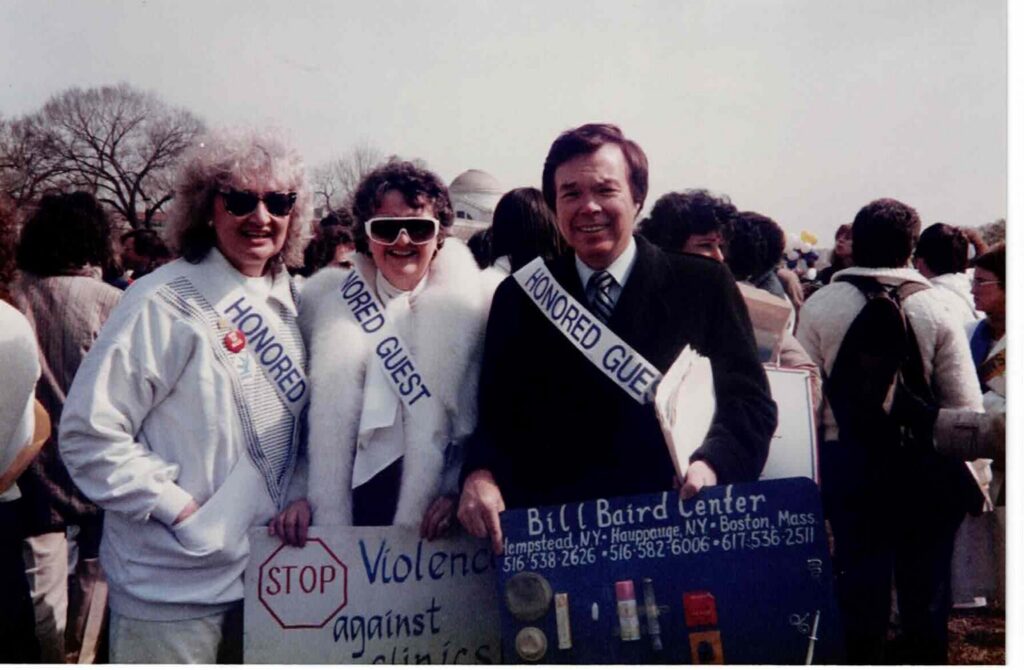
Still, Doe v. Bolton was distinct from Roe v. Wade in a couple of key ways. While Roe v. Wade had a single plaintiff, Norma McCorvey, Doe v. Bolton was a class-action lawsuit representing 24 plaintiffs, including “Mary Doe” (Sandra Cano) and doctors, nurses, sociologists and even a priest. Having so many plaintiffs from several different backgrounds allowed Hames to offer an expanded definition of reproductive health that encapsulated physical health, mental health, emotional health and financial health, all considerations in a woman’s decision to have an abortion.
Unlike Roe, which protected abortion up to six months of pregnancy, the Supreme Court ruled in Doe that a woman could have an abortion up until birth in order to protect her health, which the Court defined as “all factors—physical, emotional, psychological, familial, and the woman’s age—relevant to the well-being of the patient.”
While Roe v. Wade focused on making abortion legal, Doe v. Bolton sought to eliminate many common barriers to abortion access, including the fear of running out of time once abortion stops being legal in a particular state.
“What’s the point of having rights you can’t implement?” said Jackson, paraphrasing Feminist Majority Foundation president and Ms. publisher Ellie Smeal, one of the experts and activists interviewed in the documentary.
Doe was crucial for the way it not only made abortion legal along with Roe but clarified what this new legality would realistically look like. When it comes to abortion laws, clarity is essential; today, in states such as Texas, the vague language of the abortion bans put women’s lives at risk.
“I’m so happy that the documentary is getting the word out there in the world because I think that one thing the documentary shows is that Roe, as important as it was, did not cover everything, which is why it’s so important that Doe v. Bolton was argued at the same time, just to focus on the implementation as well as just having the right,” Robinson said. “Especially being a class-action lawsuit that represented so many different people, really is able to represent how many people abortion affects in so many different ways.”

These days, The Other Roe is making rounds in the film festival circuit, including heading to the San Luis Obispo International Film Festival this month.
“We’re trying to expand the conversation, get the younger generations really engaged, because, frankly, I don’t know how I got half my rights,” said Jackson, who said she’s frustrated that now, in 2026, her daughters don’t have the same rights she grew up with. “It’s kind of a time right now, with a lot going on, where we need to really start investigating our rights and taking them seriously, fighting for them, really understanding what they mean and the power they hold, and that our ability to live in a free society is a fragile thing. It’s important for us to understand our rights and the community that we live in so we can make the choices that we want to have to build the society that we’re looking for.”
The Other Roe’s trailer is available here, and upcoming screenings and other events are listed on the film’s website.