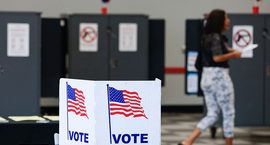
This year’s midterm elections have the power to dramatically alter representation in the current Republican-leaning Congress: All 435 congressional seats in the U.S. House are up for grabs, as is two-thirds of the Senate. Public health, women’s health, abortion access, the cost of living, healthcare affordability, immigration justice and a host of other issues hang in the balance.
However, the Trump administration is working to quietly disrupt voting this November, from firing the remaining U.S. Election Assistance Commission (EAC) members, to continuing to challenge the legality of mail-in ballots and lobby the Supreme Court to do Trump’s bidding—part of an ongoing effort to expand federal control over election administration ahead of the midterms.
“There’s just this onslaught that’s coming from the administration itself, and then the judiciary,” Celina Stewart, CEO of the League of Women Voters, told Ms. “I don’t think it gives people a lot of confidence that [the Supreme Court justices] understand how important voting rights are … You can see the erosion on the Court as they move toward supporting the administration more and moving away from public discourse and public opinion.”
Thursday, Aug. 6, will mark the 61st anniversary of the Voting Rights Act, first passed in 1965 under President Lyndon B. Johnson to prohibit racial discrimination in voting. Congress passed the VRA in order to end post-Civil War and Jim Crow-era voter disenfranchisement, especially in southern states, by prohibiting “literacy tests,” mass voter challenges and other techniques states were using to stop Black Americans from voting.
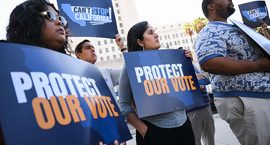
On Saturday, Aug. 8, the League of Women Voters is leading a nationwide “Unite and Rise for Voting Rights” Day of Action to commemorate the VRA’s anniversary and call attention to SCOTUS’ attempt to decimate it. The Day of Action will also bring together League of Women Voters chapters and partner organizations across the country to lead hundreds of events with the goal of mobilizing voters before November’s midterms.
The Day of Action is part of the League’s Unite and Rise 8.5 initiative, started in 2025, which hopes to engage 8.5 million U.S. voters before November’s midterms—10 percent of the 89.2 million who did not vote in the 2024 presidential election.
And on the VRA’s anniversary on Thursday, Aug. 6, the League will host a virtual rally.