President Donald Trump is intensifying pressure on Senate Republicans to pass the SAVE America Act before Congress leaves for its August recess.
This story is updated regularly as Congress and the Trump administration continue efforts to enact the SAVE America Act.

Update July 28, 2026: Trump is publicly urging Senate Majority Leader John Thune (R-S.D.) to keep lawmakers in Washington until the SAVE America Act reaches his desk, writing on Truth Social that Thune should not allow senators to “leave town” for recess until they approve the legislation—or, failing that, abolish the filibuster so Republicans can pass it with a simple majority.
The legislation would create new barriers to voting for millions of eligible Americans: especially married women, military families, students, disabled voters and naturalized citizens.
The House approved a budget framework (colloquially known as “Budget Reconciliation 3.0“) last week that included the SAVE America Act. It now heads to the Senate. Reconciliation bills are not subject to the Senate filibuster, meaning they only need a simple majority to pass—but Republican leaders have acknowledged they do not even have the 50 votes needed to advance the House-passed budget resolution. Senate Majority Leader Thune said he is willing to pursue the bill if a viable path emerges, but “the facts don’t change” without additional Republican support.
Senate Republicans have tried this before: Only a month ago, the Senate parliamentarian concluded that voting restrictions do not qualify for reconciliation because they are not budgetary, casting doubt on whether the strategy can succeed without Republicans taking the extraordinary step of disregarding longstanding Senate procedure.
The U.S. House of Representatives began its annual five-week summer recess on July 24 and is scheduled to return on Aug. 31. The Senate is also departing for its break after this week, with plans to be out of session from Aug. 7 through Sept. 14. Republicans face a narrow window to move on the legislation before national attention shifts to funding the federal government and the 2026 midterm elections. Senate leaders must also contend with a Sept. 30 government funding deadline, further squeezing the legislative calendar.
Republicans Are Betting the Fifth Time’s the Charm for the SAVE Act
Update, July 22, 2026: House Republicans are making another push to advance the SAVE America Act—not as a standalone bill, but by incorporating key provisions into a budget reconciliation package that could bypass a Senate filibuster. The proposal includes roughly $10 billion for a federal grant program designed to encourage states to adopt voting restrictions modeled on the SAVE America Act, which would require Americans to provide proof of citizenship, such as a passport or birth certificate, to register to vote.
More than 21 million Americans don’t have ready access to those documents, and married women who have changed their names will face additional hurdles if their birth certificates no longer match their legal names. And all of it is aimed at combating a problem—widespread noncitizen voting—that election officials and researchers have repeatedly debunked.
House GOP leaders this week narrowly advanced a procedural vote to move the package forward despite resistance from fiscal conservatives, but the measure still faces significant hurdles, including questions over whether its election provisions comply with Senate reconciliation rules.

After failing to advance in the Senate four separate times in two years and drawing opposition from members of their own party, Republicans are once again attempting to resurrect the SAVE America Act (an even more extreme version of the original SAVE Act).
The renewed push comes at the insistence of President Donald Trump, who has made the legislation one of his top priorities. Last month, Trump delayed signing a bipartisan housing package—a bill many Republican elected officials up for reelection in November hope to campaign on—while demanding that Congress first pass the SAVE America Act. (The bill, the 21st Century ROAD to Housing Act, aims to lower housing costs and boost home supply; it will pass regardless of Trump’s holding it ransom, since it has veto-proof, bipartisan majority support.)

Now, desperate House Republicans are searching for yet another legislative vehicle to move the measure. “The president has [the SAVE America] as a top priority, and so do I,” House Speaker Mike Johnson told Fox News’ Shannon Bream on Sunday. “We passed it three times in the House.” (It’s actually four: The very first version of the SAVE Act passed in the House in April 2025 but failed to advance in the Senate amid broad opposition.)
“We’re going to try one more time on a budget reconciliation bill, and I think that will be the way to get it through the Senate, and finally, to the president’s desk.”
Johnson claims he plans to tack SAVE onto the budget reconciliation package, in which Congress sets overall spending and revenue targets for the year—despite the Senate parliamentarian already having blocked this exact move last month: During the “vote-a-rama” on a different reconciliation bill, Sen. Lindsey Graham (R-S.C.) offered the SAVE Act as an amendment. The parliamentarian Elizabeth MacDonough determined the legislation could not be included because it violated the Byrd Rule, limiting the reconciliation process (which requires only a simple majority to pass) to provisions related to federal spending and revenue. MacDonough deemed the bill’s core provisions—requiring proof of citizenship to register to vote and imposing new voter registration requirements—as election policy, not budget policy.

The SAVE America Act would create significant new barriers for eligible citizens who do not have easy access to the required documents. About eight in 10 women change their names after marriage; under this potential law, they would need to navigate additional documentation requirements to prove both their identity and citizenship when registering or updating their voter registration. Students, military families, naturalized citizens, voters with disabilities, Americans who have recently moved and trans Americans who have changed their names will also face new hurdles.
The more U.S. voters learn about those practical consequences, the less they support the legislation: While the bill initially enjoys broad support when described simply as requiring proof of citizenship to vote, support falls into the mid-40 percent range (and net opposition) once voters learn that Americans would need to produce documents such as passports or birth certificates to register or update their registration, and that many eligible voters could encounter new obstacles, according to a recent Navigator Research poll.
Republican Sen. Thom Thillis said his colleagues pushing the SAVE Act “know it’s dead, and so all this is theater.”
The House is in a district work period this week. Monday, July 13, they’ll be back in person in Washington. Expect some SAVE Act theater.
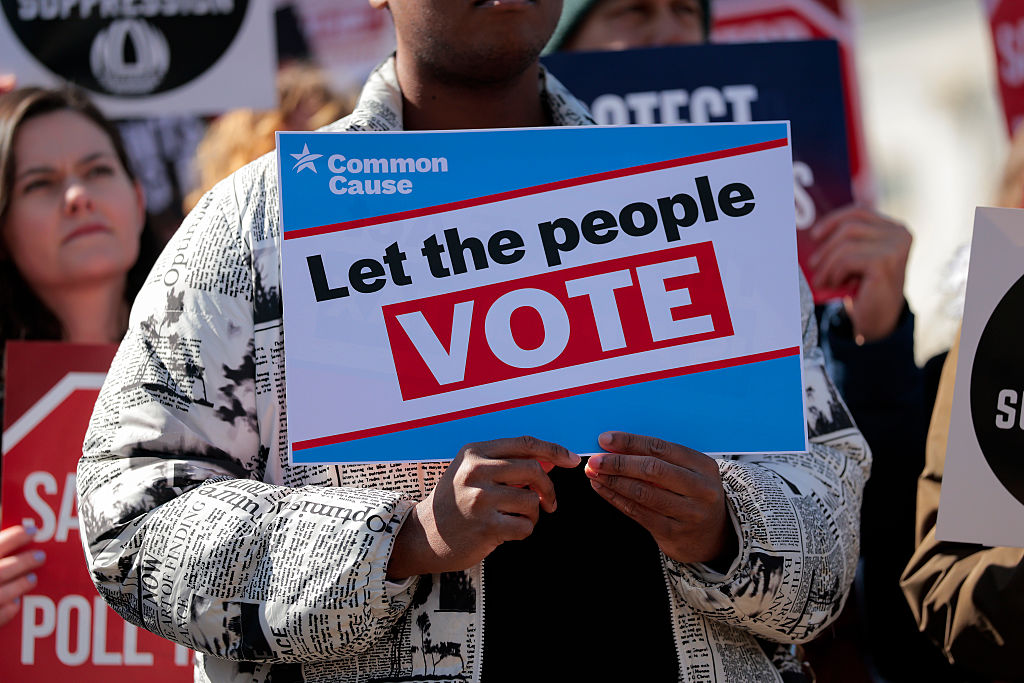
Tell Your Elected Officials You Oppose the SAVE America Act
If you want to weigh in on the SAVE America Act, call the U.S. Capitol switchboard and ask to be connected to their offices.
- From the D.C. area: Dial 202‑224‑3121
- Toll‑free from anywhere in the U.S.: Dial 888‑355‑3588
- TTY (for hearing impaired): 202‑225‑0114
When you call:
- Tell the operator the name of your senator(s) or representative and that you’d like to speak with their office (or leave a message with a staffer).
- Identify yourself as a constituent. (Your name and city/ZIP help.)
- Briefly state your position; for example: “I oppose the SAVE Act because it would make it harder for eligible citizens to register and vote.”
- Ask that your view be recorded in their system and, if possible, that you receive a response.
You can also find your members’ direct office numbers and web contact forms at house.gov (for the House) and senate.gov (for the Senate).
Ensure work like this article continues
At Ms., we believe the stories that shape women’s lives deserve serious, sustained coverage. That’s why, since 1972, we’ve reported on gender, politics, democracy, reproductive freedom, economic justice and culture long before the mainstream press caught up. Our journalism remains independent because it is funded by readers—not advertisers, corporations or billionaires. If this story mattered to you, please consider supporting Ms. by making a tax-deductible donation, becoming a member to receive a magazine subscription, or gifting a membership to a friend. Your support helps ensure that feminist journalism not only survives, but thrives.