States Already Enacting Harmful SAVE Act Policies, Requiring Proof of Citizenship to Vote

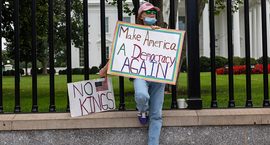
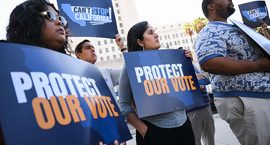
Congressional Republicans are once again prioritizing the SAVE Act, legislation that would force Americans to show documents like a passport or birth certificate to register to vote. The House has already passed yet another version of the bill, but so far it has stalled in the Senate.

If the SAVE Act becomes law, it would block millions of eligible American citizens from voting.

As the Senate considers the SAVE Act, state legislatures are advancing similar “show-your-papers” policies. Florida, South Dakota and Utah have enacted similar laws in recent weeks. Other states that already have similar laws have experienced the difficulties of implementing them.

Including Arizona, which has had a proof-of-citizenship requirement for over 20 years, five states will have a show-your-papers requirement for all voters for the 2026 midterms: Arizona, New Hampshire, South Dakota, Utah and Wyoming. A sixth state, Louisiana, has one on the books that it has not yet implemented.

That’s a lot of strain on the election system to solve a problem that doesn’t exist. The U.S. Senate would be wise not to inflict those obstacles on every election official nationwide.

A Government for Big Tobacco and Bigger Families

The Department of Health and Human Services (HHS) made multiple headlines last week—starting with the apparent implosion of Dr. Marty Makary’s tenure as Food and Drug Administration commissioner. But beneath the chaos lies something more troubling: a federal health apparatus increasingly shaped by antiabortion pressure campaigns, pronatalist messaging and culture-war governance masquerading as public policy.

From the Supreme Court fight over mifepristone access to the Trump administration’s bizarre new moms.gov initiative—complete with links to antiabortion crisis pregnancy centers and rhetoric about Americans being “under-babied”—the week offered a revealing snapshot of where U.S. health policy is headed. Meanwhile, flavored vape approvals for Big Tobacco sailed through the FDA, even as reproductive healthcare access remains under constant attack.

Chaos may be Trump’s currency, but the throughline here is ideology: rewarding conservative allies, policing reproductive autonomy and repackaging motherhood as a nationalist project while offering little meaningful material support to actual families.

The Supreme Court Keeps Mifepristone Available by Mail as Litigation Continues

The mifepristone case that has landed on the Supreme Court’s shadow docket is the new face of conservative efforts to impose a nationwide ban on abortion.

It’s possible that the Court is close and needs a little more time to reach a decision. There has been some thought it might set the case for argument on the merits as early as next month, or more realistically, next term, and decide it on the merits quickly, at least as courts count time.

But given the political weight of the issue in a midterm election year, the Court could also return to its history with mifepristone: kicking the can down the road. That’s what they did when the Texas case, Alliance for Hippocratic Medicine v. FDA, came before it in June 2024, deciding that the plaintiffs lacked standing and dismissing the case, instead of ruling on the substantive issue.

The Supreme Court Preserved Mail-Order Abortion Pills—for Now. Julie Kay Says Providers Are Still Preparing.

Thursday, May 14, at 5 p.m. ET, the Supreme Court’s temporary stay in the mifepristone case is set to expire, once again leaving abortion providers, patients and advocates waiting to see whether the Court will extend the pause, or allow the Fifth Circuit’s restrictions on mifepristone to take effect.

If the Court does nothing, the lower-court ruling could snap back into place, threatening mail-order and telemedicine access to mifepristone, one of the two drugs commonly used in medication abortion.

But abortion rights advocates say the story does not end there. Telemedicine abortion networks, shield-law protections, advance provision and community-based access have already reshaped abortion care in the post-Dobbs landscape—and those systems are continuing to evolve.

Julie F. Kay, a human rights lawyer and founder and executive director of Reproductive Futures, has spent years working at the intersection of reproductive rights, telemedicine abortion and shield-law protections. She co-founded the Abortion Coalition for Telemedicine, challenged Ireland’s abortion ban before the European Court of Human Rights, and co-authored Controlling Women: What We Must Do Now to Save Reproductive Freedom.

There Is Danger in Silence: How to Mobilize Your Friends and Neighbors Into an ‘I Will Not Be Quiet’ Chapter

In 2016, just after Donald Trump was elected to his first term, a small group of women gathered in a Brooklyn apartment to talk through what they had been afraid to say out loud. Sitting cross-legged on the floor, balancing mugs in their hands, they created a space not for debate, but for listening. What emerged from those conversations became —a growing network of talking circles designed to help people find their voice in uncertain political times.

“It felt like a dam had been broken, and all this fear and anger was pouring out into the open,” said co-founder Adrianne Wright. “But underneath all of that noise, I noticed that there was something else: this impenetrable silence. It was a silence of people who didn’t feel safe enough to say I don’t really know, or I don’t know everything about this topic.” Over time, the circles expanded across the country, from Seattle to Atlanta, creating spaces where people could process political fear, connect with others and channel those conversations into action—from voter outreach to rallies supporting survivors of gender-based violence.

Wright says the idea behind the circles is rooted in a long history of collective organizing. “From Black churches during the Civil Rights Movement, to women’s groups in the 1960s, these spaces helped people name what they were living through and turn that into collective action,” she explained. “There’s a real pattern there: When people are given the space to speak truthfully about their lives, movements begin.” Today, the organization encourages anyone to start a local chapter using its free toolkit. “If we don’t feel like we belong, we can’t speak up,” Wright said, “and if we don’t speak up, it’s very hard for us to realize our power.”

The Fifth Circuit Proves Abortion Is on the Ballot this November

A highlight of being in Ireland has been following the local news, especially the robust abortion beat: Irish lawmakers have been waging a loud fight to expand abortion rights—in particular, to ensure unnecessary waiting periods don’t impede access to care.

Breaking headlines from the United States were a dark juxtaposition.

The U.S. is one of only four nations worldwide actively rolling back reproductive rights.

And now we’re threatened with yet another fight: The Fifth Circuit Court of Appeals issued a ruling late last week aiming to create the most significant setback to abortion access since the Supreme Court’s Dobbs v. Jackson Women’s Health Organization decision four years ago.

The three-member panel, two of whom are Trump appointees, blocked a 2023 FDA policy allowing mifepristone to be prescribed by telehealth providers and delivered by mail—a decision that applies to all states, whether abortion is legal or not, and where voters have mobilized to pass ballot measures and enshrine reproductive rights in their state constitutions.

This Fifth Circuit ruling is not the final word on the case. The two pharmaceutical companies that make mifepristone, Danco and GenBioPro, immediately filed an emergency appeal to the Supreme Court. On Monday, Justice Samuel Alito announced an administrative stay through May 11, meaning the decision is on hold until at least then, while the justices review the appeal and decide whether the medically unnecessary in-person dispensing requirements can be reimposed for the duration of the litigation.

In the spirit of the fighting Irish, readers should take heart that the community of U.S. abortion providers, advocates and support networks “have shown amazing resilience and tenacity since the Dobbs decision,” according to Kelly Baden of Guttmacher. “They will continue to do what they can do to ensure that everyone, regardless of where they live, can access the abortion care they need.”

So, for now, our citizen mobilization strategy must be twofold: Support those who directly deliver those services and get ready to get loud. The abortion fight shows that access to healthcare, the integrity of science, the rules of democracy, and the right to bodily autonomy are not only all interconnected, but they are all on the ballot this November.

Tennessee Tries to Silence Women Nearly Killed by Its Abortion Ban: ‘We Will Have Our Day in Court,’ Pledges Lead Plaintiff

Tennessee was supposed to face nine women in court on April 27 in a closely watched trial over the state’s abortion ban—women who say they were denied emergency care, forced to flee the state for abortions, or pushed to the brink of death after suffering catastrophic pregnancy complications. After waiting nearly three years to testify publicly about what happened to them, the plaintiffs were prepared to finally take the stand.

Then, less than two business days before the trial was set to begin, Tennessee Attorney General Jonathan Skrmetti (yes, the same Skrmetti whose name is now attached to the Supreme Court’s landmark anti-trans healthcare ruling) filed an appeal invoking a newly enacted state law which prevents Tennesseans from suing over any state law that harms them. The move stripped the court of jurisdiction over the case, abruptly halting the proceedings and potentially delaying the trial for months or years.

“We should be in court today standing up to Tennessee’s abortion ban,” the Center for Reproductive Rights said in a statement after the cancellation. “These women deserve their day in court. But Tennessee politicians refuse to listen.”

Among the plaintiffs is Allie Phillips, who says she was forced to travel to New York for an abortion after learning her fetus had a fatal diagnosis and that continuing the pregnancy put her own life at risk. By the time she arrived for care, she learned the fetus had already died in utero, placing her at heightened risk of infection and blood clots.

Phillips shares her story and reaction to the canceled trial, in her own words.

“I would have testified about how I would have risked my future fertility and my life if I had stayed pregnant in Tennessee. … I already had a 6-year-old daughter, Adalie, to raise. She needed me to live and be her mom. …

“We’re appealing. We don’t know how it will take but even if it’s five years, we will have our day in court. I’m not going anywhere.”

Virginia Just Became the First Southern State With Both Paid Leave and Paid Sick Time

Advocates fought for paid leave in Virginia for more than eight years. The state’s former governor, Glenn Youngkin, vetoed paid leave bills two years in a row.

But the story changed when Gov. Abigail Spanberger (D) took office in January 2026.

She not only called on the Legislature to pass these policies, but campaigned on paid leave as a core part of her platform. She also included paid leave as part of her plan to build “an economy where every Virginian can earn a good living, afford to take care of their families, and know they’ll have a secure retirement.” With the support of a strong coalition, Virginia’s Legislature responded by once again passing paid sick time and paid family and medical leave legislation.

Each year, American families lose $22.5 billion in wages due to a lack of paid leave. At a time when families are already struggling with rising costs of gas, groceries and housing, this is money that they cannot afford to go without.

Women Attorneys General Are Not Backing Down

In the wake of Dobbs v. Jackson Women’s Health Organization, there have been concerted efforts in states across the country and by the Trump administration to further limit access to abortion, but also to reproductive healthcare access and rights more broadly.

These efforts have not gone unchecked. A coalition of Democratic state attorneys general across the country have been working in concert to counteract many of these measures and to protect access to reproductive healthcare within their states—through enacting safe harbor or shield laws, defending state laws and constitutional provisions providing residents with the right to provide and obtain abortions, and filing lawsuits against the Trump administration and other states where necessary, to name a few.

Within this coalition, another pattern emerges: the role of Democratic women attorneys general fighting back against efforts to undermine reproductive justice. This group of attorneys general includes Vermont AG Charity Clark, Arizona AG Kris Mayes, Delaware AG Kathy Jennings, Massachusetts AG Andrea Campbell and Michigan AG Dana Nessel.

Inside Trump’s Effort to ‘Take Over’ the Midterm Election

In the final weeks of the 2020 election, as Donald Trump’s false claims of fraud intensified, a small group of federal officials found themselves in a windowless room at the Justice Department confronting a question that could test the limits of American democracy: Had the vote really been hacked?

The answer, delivered by cybersecurity experts and backed by the FBI, was clear: No. What had happened in Antrim County, Mich., was a clerical error, not a conspiracy.

Attorney General William Barr understood the truth, and also the cost of telling it. Days later, he would resign.

That moment—one of many in which career officials resisted pressure to overturn the election—helped preserve the outcome of the 2020 vote.

But as reporting shows, the people and institutional guardrails that held the line then have largely disappeared. Across the Justice Department, Homeland Security and beyond, dozens of officials have been pushed out or reassigned, replaced by loyalists—many with ties to efforts to reverse the last election—now positioned to influence how future ones are run.

With the 2026 midterms approaching and Trump openly calling for Republicans to “take over” the elections, experts warn the system faces an unprecedented stress test. What was once a series of last-minute efforts to overturn results has evolved into something more systematic: a reshaping of the federal government itself, one that some fear is designed to ensure elections go the president’s way.