For months now, hundreds of active and caring friends and supporters have been writing and calling us with a version of the same question: In addition to sending money, what else can I actually do?
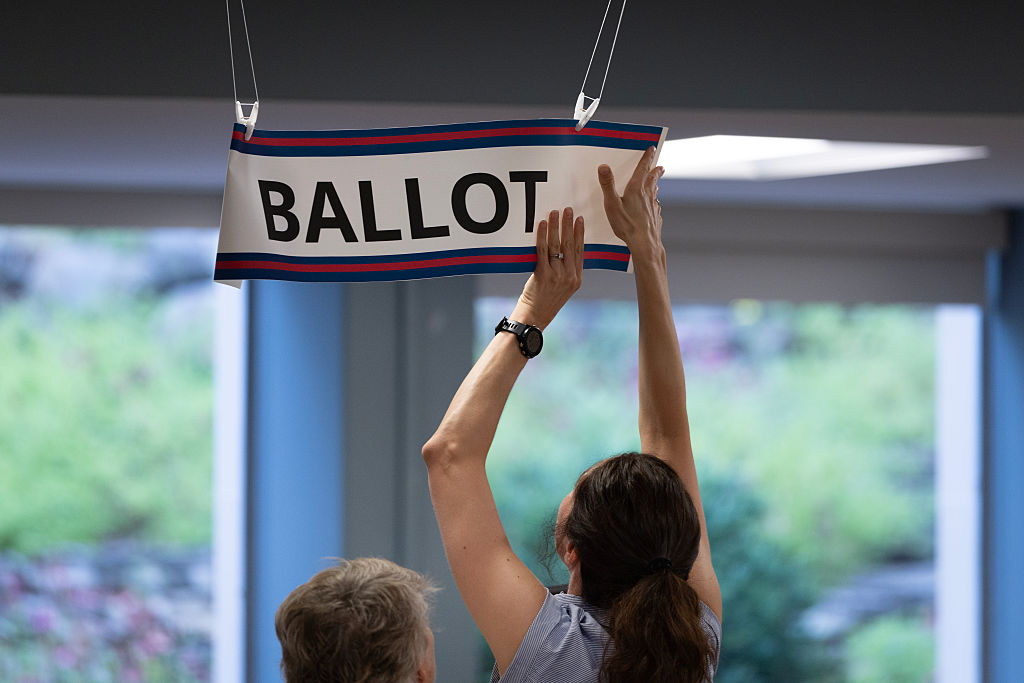
Here’s one suggestion—and it may be the most useful thing you can do between now and Tuesday, Nov. 3: Show up as a poll worker, and get your friends to show up too.
I won’t bother cataloging what Trump and his Republican enablers are doing to make voting harder. You already know. Their plans are public, the lawsuits are filed, and every week brings a new purge, a new ID rule, a new obstacle. Naming it out loud has become its own genre. For too many, it has also become an excuse to simply complain, but not do much about it.
Here’s what naming and complaining doesn’t do: It doesn’t staff a precinct. And right now, precincts are short-staffed almost everywhere.
The shortage is the suppression.
You don’t need a conspiracy to keep people from voting. You need a shortage of trained, committed citizens at the check-in table. When counties can’t find enough poll workers, they consolidate precincts and close others—creating what election officials now call “voting deserts,” concentrated in rural, low-income, and Black and brown communities, where a five-minute walk to the polls becomes a 40-minute drive.
Understaffed precincts mean slower check-ins, fewer working scanners and longer lines. The hourly worker who can’t leave a shift, the parent with no childcare, the elderly or disabled voter—they are the ones who give up and go home.
And a skeleton crew of rushed, undertrained workers is exactly the condition that turns an honest mistake—a delayed opening, a misplaced ballot tray—into viral “proof of fraud” blasted across Trump’s Truth Social and Fox News by 9 a.m. on Election Day.
When counties can’t find enough poll workers, they consolidate precincts and close others …
Meanwhile, the people who have quietly run American elections for decades—retirees, many of them older Americans—are stepping down, worn out by harassment and threats they never signed up for. That is not a staffing hiccup. That is institutional memory walking out the door, precinct by precinct.
So here is what I’m asking you to do. Two things—and neither one costs a dime.
- Become a poll worker. It pays (amounts vary by location), the training is provided, and you don’t need to be an expert in anything. You need to be someone who shows up. Ms. readers can use Power the Polls to find where and how to sign up in their own communities.
- Put your inbox and your social media to work. Everyone reading this has email and probably a social media account. Send this article to your friends. Point them to our Power the Polls page. It takes less time to write that message than it took you to read this one.
You can do this alongside organized voter-mobilization efforts, or entirely on your own, in your own town. Either way, you are helping protect the basic machinery of democracy at a moment when that machinery is under extraordinary strain.
We’ll keep calling out this war on women. But calling it out is not the same as helping to end it.
The voter standing in a four-hour line in a shuttered-precinct district does not need our concern. She needs someone at the check-in table who showed up.
Let that someone be you—and your friends.
Sign up to be a poll worker through Power the Polls.
Ensure work like this article continues
At Ms., we believe the stories that shape women’s lives deserve serious, sustained coverage. That’s why, since 1972, we’ve reported on gender, politics, democracy, reproductive freedom, economic justice and culture long before the mainstream press caught up. Our journalism remains independent because it is funded by readers—not advertisers, corporations or billionaires. If this story mattered to you, please consider supporting Ms. by making a tax-deductible donation, becoming a member to receive a magazine subscription, or gifting a membership to a friend. Your support helps ensure that feminist journalism not only survives, but thrives.