

Keeping Score: Pennsylvania ERA Secures Abortion Rights Win; Civil Rights Groups Investigate Trump Admin Delays in Childcare Payments; Senate Upholds Near-Total VA Abortion Ban

In every issue of Ms., we track research on our progress in the fight for equality, catalogue can’t-miss quotes from feminist voices and keep tabs on the feminist movement’s many milestones. We’re Keeping Score online, too—in this biweekly roundup.

This week:
—In a landmark ruling shaped by Pennsylvania’s ERA, a state court struck down a decades-old ban on using Medicaid funds for abortion.
—Trump continued to attack voting rights, threatening mail-in ballots and moving towards a nationalized registration database full of errors.
—An estimated 8 million people attended the latest “No Kings” protests.
—A Michigan court ruled that the state’s Pregnancy Exclusion law, which prevents providers from honoring pregnant women’s documented end-of-life decisions, violates a voter-approved 2022 constitutional amendment.
—A federal judge blocked RFK Jr.’s changes to routine vaccination schedules.
—The Supreme Court ruled against Colorado’s ban on dangerous “conversion therapy” for LGBTQ youth.
—Housing markets are declining in states with abortion bans as young people leave or avoid those areas.
—Senators demand the Trump Administration release lifesaving Title X funding.
—Twenty-five states received a failing grade on access to sexual and reproductive healthcare.
—High levels of contamination were found in braiding hair.
—Women are driven away from coaching college sports by pay inequities and other systemic barriers.

… and more.

Silence Should Never Be the Price of Progress

Dolores Huerta’s revelation lays bare a painful truth too many women already know: Silence is often the price of progress.

For generations, women—especially women of color—have been expected to absorb harm to uphold institutions, movements and powerful men. “La lucha” is always supposed to come first. Huerta was forced to carry that burden alone for decades.

This dynamic is not unique to one movement or one moment. It is embedded in the very structures that shape our society. Women are told, implicitly and explicitly, that speaking out will jeopardize the greater good. That calling attention to harm, even violence, will derail progress. And so many stay quiet, carrying the weight alone, believing their silence is necessary for something bigger than themselves.

I’ve witnessed this reality firsthand, in my own family, in workplaces, and in the stories women share when they finally feel safe enough to speak.

We cannot continue to treat harm as collateral damage in the pursuit of progress. Movements rooted in social justice must also practice it internally. That starts with listening to survivors without judgment, creating environments where speaking out is met with support rather than skepticism, and recognizing that accountability strengthens movements—it does not weaken them.

A future where women are not asked to sacrifice their dignity for progress is not just possible—it is necessary.

From Dolores Huerta to Cynthia Richie Terrell, Celebrating the Birthdays of the Women Keeping Movements Alive

Weekend Reading on Women’s Representation is a compilation of stories about women’s representation in politics, on boards, in sports and entertainment, in judicial offices and in the private sector in the U.S. and around the world—with a little gardening and goodwill mixed in for refreshment!

This week:
—Chris Taylor wins her race for Wisconsin Supreme Court.
—Emily Gregory flips a Florida House seat in Trump’s backyard.
—New data says that women could definitely win the 2028 presidential election.

… and more.

The War on Our Bodies Is a War on Democracy

It is essential to zero in on abortion rights and the array of attacks happening in real time throughout this country. The headlines may not always be above the fold, but that doesn’t make the reality any less dire—not for the people whose health and lives are at risk, and not for what it says about and means for the health of our democracy.

After all, the fight for bodily autonomy is one and the same as the fight for the body politic.

Women Make Our Movements Powerful. They Shouldn’t Have to Suffer in Silence.

New York Times investigation released this week broke news of shocking sexual abuse allegations against labor leader César Chávez—from two women who were young teenagers at the time, and from Dolores Huerta, our long-time Ms. advisor, Feminist Majority Foundation (publisher of Ms.) board member, friend, and feminist and labor icon who co-founded the United Farm Workers with Chávez.

In fighting the culture that makes these actions not only possible, but permissible—and that encourages women like Huerta to remain silent for over 60 years—we must consider the role of men.

Men, argues Ms. contributor Jackson Katz, are essential to shifting the narrative. In describing the case of Gisèle Pelicot, a woman who had been secretly drugged by her husband and set up to be raped by dozens of men over a 10-year period, Katz mentions the evocative nickname the case acquired in French media reports: Monsieur Tout-le-monde. Mr. Everyman. 

If the 50 men who assaulted Pelicot were just “ordinary men” (“many were married and had kids. They were blue- and white-collar workers: a restaurant manager, nurse, computer technician, prison guard, firefighter, journalist, soldier,” Katz writes), then consequently, every man has a role to play in dismantling systemic violence against women.

A Movement Responds: Leaders Rally Around Dolores Huerta After Chávez Allegations

In the wake of a New York Times investigation detailing allegations of sexual abuse by labor leader Cesar Chavez—including testimony from Dolores Huerta—a chorus of feminist leaders, organizers and advocates are rallying around Huerta, centering her story and the broader truths it reveals. 

“She birthed children he forced into her womb. She convinced herself to endure it alone to free others. My God, this grief I howl.”

“She’s always been an icon, an inspiration, and a shero. Today, in her 90s she continues to lead by speaking out. Her voice probably ensured that others’ stories were told.”

“It feels both fitting and just that the holiday bearing his name be revised to Farmworkers Day—El Día del Campesino—and that every boulevard, park, and street honor Dolores Huerta instead.”

“We need to investigate why so many women who are the heartbeats of our movements are made to pay so dearly and are failed by the community so deeply.”

A Reckoning Long Overdue: Dolores Huerta’s Moment of Truth Must Also Be Ours

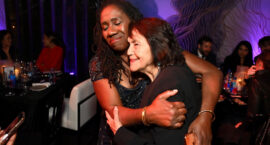
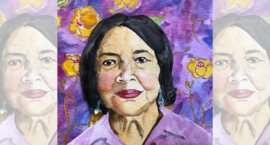
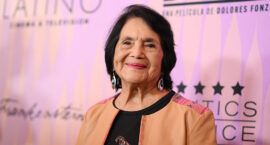
Civil rights icon Dolores Huerta has shared a devastating truth she carried alone for 60 years: that her closest colleague, mentor, boss and the internationally revered face of the farmworker movement, César Chávez, sexually abused her. As she approaches her 96th birthday, and in the wake of a New York Times investigation revealing that she was not alone—that Chávez also preyed upon other young women, including underage girls—Dolores made the painful, courageous decision that she could no longer keep this secret.

Across Latino, immigrant, labor, civil rights and farmworker communities—and far beyond—hearts broke and jaws dropped. César Chávez had ascended to the pinnacle of untouchable legend. And from that height, there was a long, painful fall.

There will be many debates about what comes next: what to do with the written history, the plazas, streets, schools, parks and holidays that bear Chávez’s name; how to reconcile the image so many of us learned with the disturbing portrait described by Dolores and the other survivors. I will leave the deeper historical reckoning to others.

But it feels both fitting and just that the holiday bearing his name be revised to Farmworkers Day—El Día del Campesino—and that every boulevard, park and street honor Dolores Huerta instead.

Keeping Score: Trump Attacks Iran, Pressures Senate Republicans to Pass ‘Show Your Papers’ Voter Registration Bill; States Expand Access to Childcare and Paid Leave

In every issue of Ms., we track research on our progress in the fight for equality, catalogue can’t-miss quotes from feminist voices and keep tabs on the feminist movement’s many milestones. We’re Keeping Score online, too—in this biweekly roundup.

This week:
—Dolores Huerta breaks her silence at 96: “I have never identified myself as a victim, but I now understand that I am a survivor.”
—Trump pressures Senate Republicans to pass the SAVE America Act, a “show your papers” policy that would require U.S. citizens to show a passport or birth certificate in order to register to vote.
—A performative personnel exchange at DHS: from Kristi Noem … to Markwayne Mullin?
—The U.S. and Israel launched strikes on Iran, killing at least 1,332 people.
—March 10 is Abortion Provider Appreciation Day.
—DHS Secretary Kristi Noem was fired, as ICE reports 32 deaths in detention facilities in 2025.
—Access to early prenatal care is declining in the U.S., especially in states with abortion bans.
—A record one-third of American workers not have access to government-mandated paid leave.
—The U.S. deported a gay woman to Morocco, where her sexuality is illegal and she faces violence from her family.
—Texas Attorney General Ken Paxton claimed gender-affirming mental healthcare for trans youth is “child abuse.”
—New Mexico and New York take steps towards free universal childcare.
—Jessie Buckley took home the Academy Award for Best Actress in a Leading Role for her role in Hamnet. The film was directed by Chloé Zhao, one of nine women to ever be nominated for the award of Best Director and the only woman nominated this year.

… and more.

In Her Own Words: Dolores Huerta on Surviving Abuse, Speaking Out at 96 and Honoring the Movement Beyond One Man

In the wake of newly reported sexual abuse allegations against labor leader César Chávez, our hearts are with our long-time Ms. advisor, Feminist Majority Foundation (publisher of Ms.) board member, friend, and feminist and labor icon Dolores Huerta. The fact that she felt she had to bear this in silence speaks to the layers of harm that women who suffer sexual assault must bear.

In the wake of going public for the first time, Huerta writes, “I have never identified myself as a victim, but I now understand that I am a survivor—of violence, of sexual abuse, of domineering men who saw me, and other women, as property, or things to control.”

“The knowledge that he hurt young girls sickens me. My heart aches for everyone who suffered alone and in silence for years. There are no words strong enough to condemn those deplorable actions that he did. César’s actions do not reflect the values of our community and our movement.”

The Ms. Q&A With Democracy Defenders Norm Eisen, Skye Perryman and Jennifer Rubin

In the middle of an accelerating democratic crisis, and a year defined by sweeping attacks on women’s rights, the Feminist Majority Foundation, publisher of Ms. magazine, gathered in Los Angeles to honor some of the most formidable leaders on the front lines of resistance. At the Nov. 18 Global Women’s Rights Awards, journalists, lawyers, artists, organizers, litigators, community activists and movement strategists came together to celebrate what I call the “essential trifecta” for defeating authoritarianism: the law, the press and culture.

We recognized The Contrarian’s Jennifer Rubin and Norm Eisen for building an independent media platform willing to call out authoritarianism plainly; Democracy Forward president and CEO Skye Perryman for her organization’s record-breaking wave of legal challenges against the Trump administration; and the creative team behind the Broadway hit Liberation—playwright Bess Wohl, director Whitney White, and former Ms. writer and editor Lisa Cronin Wohl—for reminding audiences that storytelling is itself a democratic act.

“The number one tool that autocratic actors use to try to consolidate power and take away power from the people, is to convince people that they have no power,” said Perryman. “Their toolbox is one of isolation. They want you to feel alone.”

“I grew up miles from here, family hamburger stand,” said Eisen, “and now to be here, to have this opportunity with my colleagues to fight for this democracy that took my country, and my parents. … When my mother was living, she loved to say the Nazis took us out of Czechoslovakia on cattle cars, and my son flew back on Air Force One. So, how can I not be hopeful?”