‘Liberation’ Opens on Broadway—And Ms. Magazine Is at Its Heart

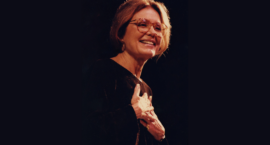
The feminist revolution has taken center stage. Liberation, written by Bess Wohl and directed by Whitney White, officially opened on Broadway on Oct. 28, 2025, at the James Earl Jones Theatre, following a critically acclaimed Off-Broadway run earlier this year.

In an interview with Vogue, Wohl said she was inspired by her mother’s work as an editor at Ms.: “The arc of history is so much longer than we realize. Already in 1970 women were feeling frustrated, like, ‘When is this gonna happen?’ … And I think that that urgency really powers so much of the story of the play.”

Rest in Power: Robert Redford, an Unlikely but Iconic Ally

Robert Redford, who died Sept. 16 at 89, was more than a Hollywood legend—he was also a man unafraid to stand with women.

In October 1975, Redford appeared—back turned, jeans and T-shirt on—with a rolled-up copy of Ms. tucked into his pocket for our “Special Issue on Men.” The image, art-directed by Bea Feitler, became one of the magazine’s most iconic covers, making a simple but bold statement: Women’s rights are a men’s issue too.

That appearance wasn’t a one-off. Redford consistently used his platform to support social justice, environmental causes, LGBTQ+ rights, and women’s voices in film—including through his Sundance Institute, which opened doors for countless underrepresented filmmakers. He welcomed the #MeToo and Time’s Up movements as a long-overdue tipping point, insisting that men’s role was to listen.

Memory, Medicine and Law: Reflecting on the 20th Anniversary of Hurricane Katrina @ Washington, D.C., Sept. 11-13

This fall marks 20 years since Hurricane Katrina devastated New Orleans and the Gulf Coast, leaving more than 1,800 people dead and hundreds of thousands displaced. Katrina was not just a natural disaster—it was a political, legal and public health catastrophe that exposed deep inequities in the United States. Women, low-income communities and communities of color were hit hardest, and the failures of government response left lasting scars that continue to shape policy and memory today.

To reflect on these legacies, Georgetown University will host a three-day symposium, “Memory, Medicine and Law: Reflecting on the 20th Anniversary of Hurricane Katrina,” from Sept. 11-13, 2025, at its Capitol Campus and adjoining Law Center, located at 125 E Street NW in Washington, D.C.

The symposium is free and open to the public, but registration is required.

Women’s Equality Day: Celebrate the Victories. Confront the Backlash.

Tuesday, Aug. 26, marks 104 years since the 19th Amendment was certified, recognizing women’s constitutional right to vote. But anniversaries like Women’s Equality Day are not just about looking back. They remind us of unfinished business.

The proposed SAVE Act threatens to make voting harder for students, married women, low-income voters and communities of color. Dark money is flooding state races aimed at rolling back abortion access, LGBTQ+ protections and civil rights. And without congressional recognition of the ERA, gender equality remains absent from the Constitution.

But wins are possible.

In the Fall Issue of Ms. Magazine: Abortion’s Foes Turn Deadly

The work of advocating for abortion rights has always been dangerous. But under the second Trump administration, which has enabled antiabortion lawmakers and vigilantes through policies and rhetoric, that danger has escalated dramatically, as state Rep. Melissa Hortman’s murder proves.

In our Fall issue, we delve into the motivations behind the shootings, and talk to the people who are trying to prevent further violence.

Here’s what else you’ll find in the Fall issue:

—a deep dive into how the Trump administration’s immigration policies are impacting families across the country—and advocates’ visions for a more just future.
—a visit to Syria’s “village of women,” which offers Kurdish women a refuge—one they’ll fight to protect.
—investigating how the Medicaid and SNAP cuts in the Republican budget bill will impact women and children.

U.S.-Funded Contraceptives Meant for Crisis Zones Are Headed for the Furnace—Unless Congress Acts

Nearly $10 million worth of U.S.-funded contraceptives—purchased to support women in some of the most desperate places on Earth—are currently sitting in a Belgian warehouse, slated for destruction. The supplies include long-acting contraceptives such as implants and IUDs, as well as birth control pills, many of which remain sealed, viable and do not expire until 2031.

According to advocates, there are qualified organizations—including the United Nations Population Fund (UNFPA) and MSI Reproductive Choices—prepared to accept and distribute the supplies at no additional cost to the U.S. government. But Secretary of State Marco Rubio, appointed earlier this year, has not authorized their release.

In response, Sens. Jeanne Shaheen (D-N.H.) and Brian Schatz (D-Hawaii) have introduced legislation to stop the destruction. The Saving Lives and Taxpayer Dollars Act would require the contraceptives to be released for their intended humanitarian use and prohibit incineration of still-viable medical supplies.

Advocates are urging members of the public to call or email their senators and representatives to demand they pressure the State Department to release the contraceptives, not destroy them.

Supreme Court Allows States to Exclude Reproductive Health Clinics From Medicaid

In a landmark decision released Thursday morning, the U.S. Supreme Court ruled 6-3 in favor of South Carolina in Medina v. Planned Parenthood, granting states the authority to exclude reproductive health clinics from their Medicaid programs—even when those clinics provide essential care such as cancer screenings, birth control and STI testing. This decision could embolden Republican-led states to “defund” Planned Parenthood across the country.

Still Naming the Problem: HBO Documentary ‘Dear Ms.’ Celebrates the Radical Origins—and Ongoing Impact—of Ms. Magazine

The new documentary Dear Ms.: A Revolution in Print, celebrating the trailblazing history and enduring impact of Ms. magazine, premiered at the Tribeca Film Festival in June and is available to stream on HBO Max beginning Wednesday, July 2, at 9 p.m. ET/PT.

We are thrilled for the film’s release and the opportunity for millions more people to experience the story and legacy of the magazine. Ms. is more than a magazine—it’s a movement. And it’s crucial we continue to build an intergenerational, intersectional and diverse feminist coalition for the road ahead—because, as the film reminds us, we’re “at this crossroads moment for feminism, journalism and American values.”

Complete Ms. Magazine Archive Now Available Digitally—Free to Students, Educators and Activists Through University and Public Libraries

For the first time ever, every issue of Ms. magazine—from its historic debut in 1972 to today—is available in a fully digitized, searchable, high-resolution format. The newly launched Ms. Magazine Archive offers unprecedented digital access to over five decades of feminist journalism, activism and scholarship.

This groundbreaking collection is set to transform how feminism and social change are taught and studied. With its extensive coverage of gender justice movements—past and present—the Ms. archive provides rich, accessible content and a powerful set of pedagogical tools for courses in women’s and gender studies, history, political science, media studies, journalism and more.

The Corporations That Turned Their Backs on Hungry Children

Today, the U.S. House of Representatives passed a reconciliation bill so cruel, it defies belief: slashing nearly $300 billion from SNAP, our country’s most vital nutrition program, and gutting Medicaid—ripping food from the mouths of children and care from the hands of those who need it most.

Eleven major American corporations—companies that proudly trumpet their “partnerships to end hunger” in PR campaigns and glossy reports—endorsed the Republican bill that will increase hunger and suffering for millions of American families.