Dolores Huerta’s revelation lays bare a painful truth: Too often, women—especially women of color—are expected to carry harm in silence to protect movements. Real progress demands breaking that cycle.

Dolores Huerta’s recent revelation about the sexual violence committed by César Chávez is heartbreaking. This devastating development isn’t upsetting because of what it means for Chávez’s legacy but because Huerta was forced to carry that burden alone for so long to protect a larger movement. Her truth has resurfaced painful memories for many survivors of sexual violence and exploitation.
More importantly, Dolores Huerta’s story underscores a reality too many women know: Silence is often the price of progress.
For generations, women—especially women of color—have been expected to absorb harm to uphold institutions, movements and powerful men. “La lucha” is always supposed to come first. So, while many men in leadership positions are elevated and idolized, women are sidelined, enduring harassment, assault and discrimination in silence for fear of retaliation or being labeled “difficult.”
Huerta’s experience reflects a broader pattern of sacrifice demanded of women whose contributions are just as essential, yet too often undervalued or erased.
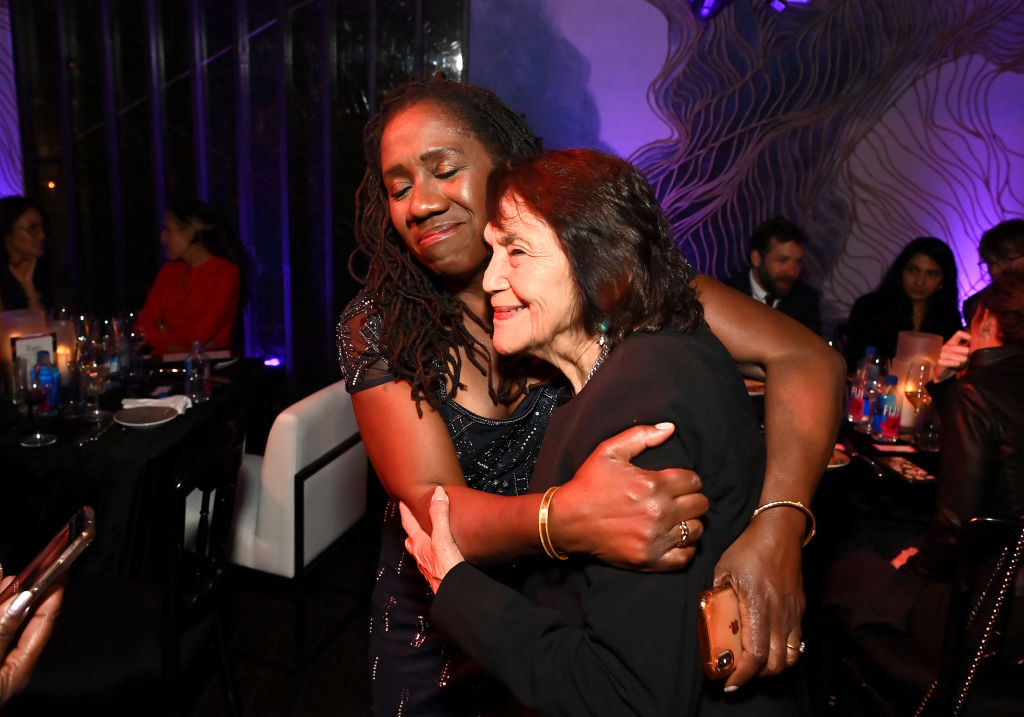
This dynamic is not unique to one movement or moment in history. It is embedded in the very structures that shape our society. Women are told, implicitly and explicitly, that speaking out will jeopardize the greater good. They’re taught that calling attention to harm and even violence will derail progress. And so many of us stay quiet, carrying the weight alone, believing that our silence is necessary for something bigger than ourselves.
I’ve witnessed this reality firsthand in my own family. My mother, who worked her way up in the finance industry, often reminded me, “Hijita, you have to work extra hard to prove yourself in this world.” She was often overlooked for promotions and subjected to comments that revealed both racism and sexism.
When my mom finally received a long-overdue promotion, a white male colleague told her, “Wow, Patricia, congrats, the Latinas I’ve encountered are cleaners, so your family must be proud.” That moment remained with me all these years. It reflects the constant racist stereotypes Latinas face, and the pressure to prove our worth in spaces that were never designed with us in mind.
These experiences are both individual indignities and symptoms of a broader culture that devalues women—specifically women of color—while protecting those who hold power.
Statistics show that nearly one in five Black women are survivors of rape, and 41 percent of Black women experience sexual coercion and other forms of unwanted sexual contact.
Research also shows that over half of Hispanic women have experienced sexual violence other than rape in their lifetime, and 77 percent of Latina women who were surveyed stated that sexual harassment was a major problem in the workplace.
Huerta’s story also exposes the deep-rooted machismo that allows abuse to go unchecked. As reported, many in Chávez’s inner circle were aware of predatory behavior that should have raised red flags—yet no one intervened. He was seen as too important to the movement and too essential as a figurehead and symbol. So, it was far simpler to look the other way than to risk destabilizing what he represented and the important achievements that were made for the movement.
We’ve seen this sad pattern before. From powerful political figures to high-profile perpetrators like Jeffrey Epstein, systems protect abusers and their networks, prioritizing reputation and influence over accountability and justice. The message is crystal clear: Power can shield wrongdoing, and silence can sustain it.
But it doesn’t have to be this way. We must confront the normalization of an abusive and exploitative culture directly. We cannot continue to idolize men who harm women and girls simply because of their influence, position or contributions. We cannot continue to treat harm as collateral damage in the pursuit of progress. Movements rooted in social justice must also practice it internally. Otherwise, they risk replicating the very inequities they seek to dismantle.
That starts with listening to survivors and without judgment. This means creating safe environments where speaking out is met with support rather than skepticism, where accountability is seen as strengthening a movement, rather than weakening it. And this requires us to rethink what leadership truly looks like. It is not just about vision or impact; it is about integrity, responsibility and the courage to do what is right, even when difficult.
As a Latina, I’ve heard stories like Dolores Huerta’s time and time again, especially in my work at a human rights organization working to end gender-based violence. And while the reality of these tales is indeed painful, I remain hopeful. Because each time a brave survivor speaks out, it chips away at the normalization of a culture of silence that has protected perpetrators and shielded harm for far too long.
It is not too late to build something better: a future where women are not asked to sacrifice their dignity for progress. A future where girls can grow up free from violence to pursue their dreams without fear. A future where movements and society truly embody the values they claim to uphold.
That is the world we should all be fighting for, one where no girl or woman has to carry the burden of silence alone.