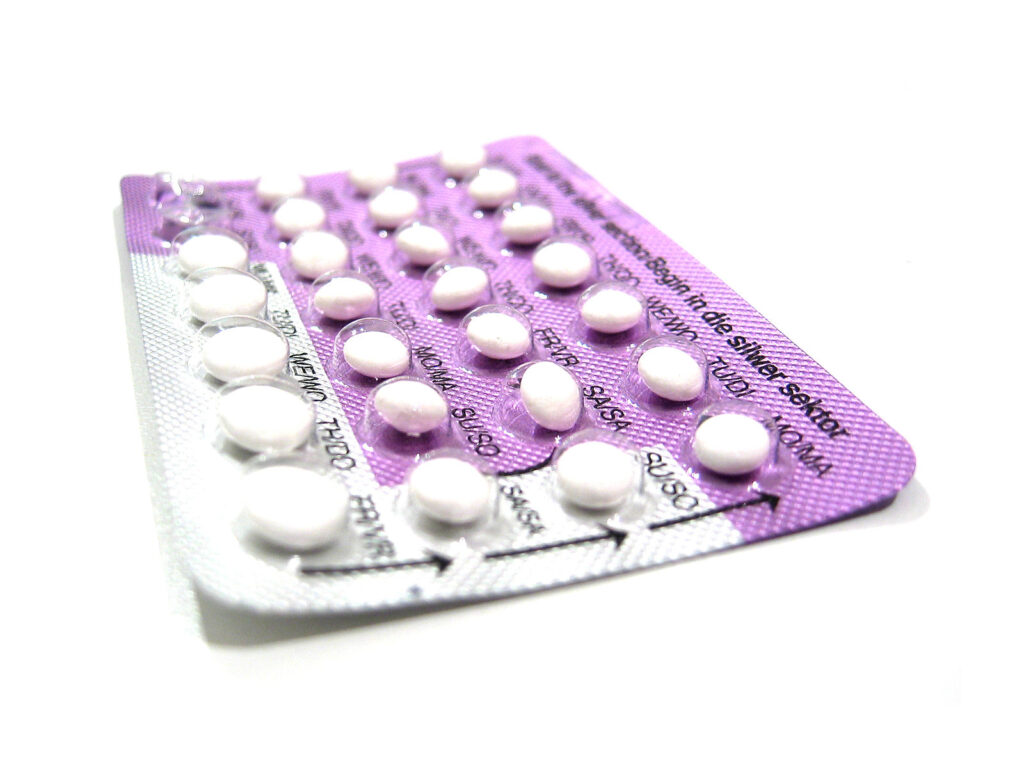
Just How Safe is Yaz? Women Need to Know!

The oral contraceptive Yasmin was released in 2001 by the pharmaceutical company Bayer, followed by Yaz in 2006. They differ from other birth control pills in the synthetic progesterone they utilize, drospirenone, which is marketed as less likely to cause weight gain and bloating than other birth control pills. Yaz soon became the most popular birth control pill in the U.S., due in part to a widespread advertising campaign promoting the drug as what the New York Times dubbed “a quality of life treatment,” claiming it could also clear up acne, prevent bloating and ease the depression and anxiety associated with both PMS and the controversial condition of PMDD. It prevents pregnancy at the same rate of effectiveness as all other oral contraceptives.

In 2009, the FDA requested that Bayer distribute a corrective advertisement to counter its aggressively screened commercials that were said to be making misleading assertions about the capabilities of the drug, promoting it for unapproved uses and making light of the more serious health risks (such as blood clots). However, in 2010 the drug remained the second-best-selling Bayer product, bringing in $1.5 billion in sales.

As of January 2012, there are approximately 10,000 lawsuits against Bayer by women who have suffered blood clots and by the families of those women who have died whilst taking Yaz or Yasmin. It is considered the most complained-about drug on the Internet, with thousands of women voicing concerns in online forums and support groups over health issues both physical and emotional. Jane Bennett and Alexandra Pope, authors of The Pill: Are You Sure It’s for You?, characterize many of these problems as “quality-of-life-threatening.” I have written extensively on my own experience with Yasmin in my blog, Sweetening the Pill, and for the UK Independent and have been quoted in Fabulous magazine the Washington Post

Two studies conducted with funding from Bayer revealed that Yaz and Yasmin held no higher risk of blood clots than other birth control pills. However, last month it was revealed that five other studies undertaken independent of Bayer suggested a 50-to-75 percent increased risk of clots for those taking these birth control pills in comparison to others. A former FDA commissioner, David Kessler, charged that Bayer deliberately withheld data about this early on in order to push through the drugs’ approvals. In response, the FDA called an advisory committee to evaluate the safety of birth control pills containing drospirenone. The decision had the potential to cause the drugs to be pulled off the market, but the panel voted by a four-person margin that the drugs’ benefit outweighed the risks.

Yet a government watchdog group, the Project on Government Oversight (POGO), conducted an independent investigation that revealed three of the advisors on the FDA panel had research or other financial ties to Bayer. A fourth advisor was connected to manufacturing the generic version of these pills. All four voted for Yaz and Yasmin to continue to be prescribed by doctors. POGO asked the FDA that a new advisory committee be brought together to make another assessment.

Should these developments impact women’s perspective on the birth control pill? Should we consider that use of the Pill for pregnancy prevention, let alone acne or PMS, is still today, as women’s health activist Barbara Seaman wrote in her 1969 book The Doctors’ Case Against the Pill, “like tinkering with nuclear bombs to fight off the common cold”?

Says Ms. blogger Elizabeth Kissling, professor of communication and women’s and gender studies at Eastern Washington University and past president of the Society for Menstrual Cycle Research:

I’m surprised there has not been a broader call for more research, or wider public discussions of the risks of this pill. When a drug company is withholding data and 10,000 lawsuits are pending, more than research is needed. I can’t help but wonder why we’re not seeing Congressional hearings–akin to the 1970 Nelson Pill Hearings–again, and more of an outcry from both physicians and patients.

Much of the media coverage of these recent developments and research was quick to assert the unimportance of women’s concerns. It was repeatedly reported that, when compared to the risk of blood clot development associated with pregnancy, the risk produced by taking any oral contraceptive–including Yasmin or Yaz–is of little concern. This is misleading in that it suggests there are only two states in which young women can choose to live: on birth control pills or pregnant. The fear has been voiced that any discussion of the negative impact of the Pill will prompt women to come off of it and fall unintentionally pregnant. No coverage that this writer has read discussed a comparison with non-hormonal contraceptive alternatives–which, of course, hold no increased risk of blood clots. Some of these alternatives are just as effective in preventing pregnancy as oral contraceptives, and others are more so.

According to Laura Wershler, veteran pro-choice sexual and reproductive health advocate and board director of the Canadian Federation for Sexual Health,

We need to reframe the idea that hormonal birth control is the gold standard of contraception. If women are quitting the Pill, and they have every right to do so, and they are not using alternative methods of birth control effectively, that’s proof positive that what we are teaching about contraception is incomplete and ineffective. If we make the Pill the ‘right’ choice, then why should we be upset when women stop taking it and get pregnant?

It is often claimed within news stories that the Pill “regulates” a woman’s menstrual cycle, when it, in fact, stops and replaces the cycle. All of this propaganda for the Pill is extremely misleading, and it further breeds a lack of confidence to know that Bayer paid women’s magazines to advocate for Yaz. Such actions blind women to their choices and to understanding how their bodies work. There is much research that supports the health benefits of consistent (typically monthly) ovulation, which can be found through the Centre for Menstrual Cycle and Ovulation Research.

The absence of education in body literacy is a major factor in unwanted pregnancies. However, this lack of education is beneficial to some: It helps sustain the billion-dollar profits of pharmaceutical companies.

Photo is the cover of The Pill: Are You Sure It’s for You?

Comments

  1. http://menstruationresearch.org/2012/02/13/why-cant-we-criticize-the-pill/

    Today, the Society for Menstrual Cycle Research posted my piece entitled ‘Why can’t we criticize the Pill?’ – I am very glad Ms. magazine is supporting critical and honest discussion of our birth control choices, especially in the current climate.

    • Yes, thanks Holly and MS magazine. I think it’s a very positive sign for women and girls that we are talking more about problems with the pill and true informed choice. Given that we need contraception for decades of our life information, education and genuine choice are crucial for womens’ health and wellbeing rather than a one-size-fits-all approach.

  2. I am a DES daughter, and because of that was never able to take any form of birth control pill. These days it is moot point for me, as I would be considered “post menopausal.” However I have a daughter, age 27 – and many of my friends are either young enough to be concerned about this or else have daughters that are young enough to need to know. Thank you for looking out for the health of women! Three cheers AND a standing O!

  3. Interesting, I stopped taking Yasmin about 5 yrs ago. Didn’t like how it made me feel. I’m fit and usually feel great, but while taking it, my legs felt sort of heavy and full. As if circulation was compromised.

  4. Holly Grigg-Spall says:

    http://sweeteningthepill.blogspot.com/2012/03/could-furor-over-contraception-spark.html

    Laura Wershler and I have spent the last couple of weeks putting together a considered and practical response to the current birth control furor. Here that is. It’s a guide for women who are fed up with being dismissed from the debate.

  5. Hi. Do you care to share some of this on our new Yasmin & Yaz Blog??
    http://www.yasminandyaz.blogspot.com

    Would love to have this information on there.

    xo

  6. So many young women have injuries from yaz. My heart goes out to a mother who has lost a daughter from a Yaz related stroke or Heart attack. Yazbirthcontrolpillshelpline is here for you

  7. The World Health Organization has classified all types of “The Pill” (estrogen-progestogen oral contraceptives) as Group 1 Carcinogens for quite awhile, and severe blood clots are a frequent side-effect. Early prototypes of “The Pill” in the late ’50s caused many women to die.

    There are natural, safer, more medically advanced alternatives to “The Pill,” e.g., Natural Family Planning. Spread the word!

  8. April Tyler says:

    I am tired of everyone ONLY sharing the horrible experiences while taking Yaz. I have been on Yaz for 7 wonderful years. Yaz has been an excellent medication for me. I have Poly Cystic Ovarian Syndrome and my periods were never regular and lasted up to 10 days producing severe blood clots and cramps that would make me curl into a fetal position at anytime during my periods. Since being on Yaz, I have not had any cysts and I have only had 3 periods in these wonderful 7 years. Before I found Yaz, I was BEGGING my Gynocologist to remove my ovaries to stop these problems. If you are scared of the medication, don’t take it. For those people Yaz works for, it is a real blessing.

    • Holly Grigg-Spall says:

      Thanks April, I’m happy for you. The thing is, I want to speak to those women out there who are on these very popular contraceptives and have no idea they might be causing them physical and emotional health problems. I had a terrible experience on Yasmin and it took me two years to realize it was the pill causing the issues. Some women lose much longer, and much more – their partners, their jobs. Most information on hormonal contraceptives is biased to the positive. This makes it very hard for women to believe their pill might be the root of their suffering and prolongs that suffering. With Yaz and Yasmin – some women even become suicidal. So, thank you for sharing your story, but I do believe it is important to counteract the push of the advertising, doctors, friends, society in general with a pushback that provides more information.

  9. Hi I started using yaz in 2009 a month bf my wedding,my doc said nothing to me he just prescribed the pills to me,I used the for year and it was perfect,then stopped aft a year to start a family.I just went back on them and I’m very worried about the bloots clots,bcos I had them bf in 2003.I’m havin burning feeling on my left side close to the breast.and I have missed two months periods and I’m still waiting I always take the white pills so that I can have periods every month.nw I’m worried nd this symthom is the same one I had my clots my heart was beating three times faster than a normal heart back in 2003 and I’m only 25 yrs old.wat should I do pls help.

  10. I stopped taking Yaz before the publicized lawsuits brought attention to the higher risk of strokes and blood clots associated with it. I suffered what I thought was tinntitus or an ear infection because of the pounding in my ears; I was having dizzy spells and moments of blurred vision. Truly, until I went to the doctor to have my ear checked only to discover my blood pressure was through the roof, I would never have thought to connect these symptoms to high blood pressure. I had suffered high blood pressure late in my 2nd pregnancy (not before or after– and was monitored for 6 months after baby was born), was healthy and in good shape, and moderately young (37). Of course, I ignored these symptoms for months, not recognizing their danger (arrogantly thinking that because I looked “healthy” and followed “healthy” eating practices that I, indeed, was). The general practitioner who checked my blood pressure didn’t even suggest going off the pill even though I’d said I was taking Yaz. In my own research I read a more general warning that birth control pills can cause high blood pressure and stopped taking Yaz. Within a week, my blood pressure dropped from 160/110ish readings to 110/70ish readings. I look back at the symptoms I was suffering and feel quite fortunate I didn’t have a stroke. I was showing signs that many victims showed. Before Yaz, I used various birth control pills to successfully control my fertility for more than a decade. As a result, it did not occur to me to connect this pill to these symptoms. My concern now is what might the long term effects of Yaz be and/or what did my reaction to Yaz indicate about my overall health (cardiac, circulatory, etc.)?
    The pill is marketed by many doctors as harmless. For many, it very well may be. It’s convenient. But it’s convenience seems to be keeping science from developing other reliable, non-hormonal methods of birth control that may be safer for all, especially for women looking to control their fertility for 20-30 years.
    My non-hormonal birth control came with my husband’s vasectomy: a great option for us at this point in our lives. But I’d really like my two daughters to have broader and safer birth control options to manage their own fertility.

  11. hi,i just had my loop removed and when i went to my gynea he said i have some sumthing like ovaries problem and he prescribed YAZ FOR ME SO NOW READING ALL THIS STORIES THAT MAKES ME SCARED TO EVEN TRY THE PILL AND THE WAY HE EXPLAIN TO ME,HE SAID IT WILL CLEAN MY OVARIES PLZ HELP WHAT MUST I DO?VERY CONFUSED RYT NOW.

  12. I started taking Yaz in January of 2009, I was 16yrs old. The reason I started taking yaz is because I had just introduced my parents to my (still current) boyfriend and my mother wanted us to be careful whilst sexually active! I am now a few months from turning 21, so I was on Yaz for just over 4 and a bit yrs – during this I feel like I can say that I’ve been on one heck of an emotional rollercoaster.

    My Dr prescribed me for yaz, as I did have irregular periods – we thought this was due to me being slightly overweight possibly with PCOS (Poly Cystic Ovarian Syndrome). I was extremely active always running, swimming or rowing. I had no issues taking yaz, I thought it was great – I felt empowered, that in a way I too was taking responsibility for being sexually active, not just relying on my boyfriend to use protection. In 2010, (my final year of high school) I started to become increasingly insecure about my appearance. Sometimes after a long run or a rowing race I found it so difficult to breathe, even hours afterwards. I already had pre-existing anxiety issues which had been a lifelong problem my parents and I had dealt with, with medication and therapy – but my anxiety had never reached the height it did when I was on Yaz. My doctor didn’t think there was anything to worry about, she didn’t sense anything wrong, even though my mother especially had noticed my happy-go-lucky, bubbly disposition disappear from about 6months into taking yaz.

    I went off to college in 2011 (I believe at the height of my anxiety) at a time that was meant to be one of the most exciting times of my life I was far from it. I found when I was alone in my room at college I would become so upset to the extent I use to hold my breath until I would pass out, I’d think about all the different ways I could kill myself or hurt myself that would lead to death. I use to drive home on the weekends and sometimes I would have to pull over on the side of the road because I’d been hysterically fighting with myself not to drive into a centre barrier or off the road. I clearly knew this behavior was not normal but I just didn’t care. By this stage I was failing all of my subjects at college. 2 months of feeling and acting like this – my boyfriend surprised me and came to visit me at college. He now says he had never seen anyone look so un life like. He took one look at me and started packing my bags. He drove me straight home and together my mother and i went straight to my doctors.

    Again my doctor denied it had nothing to do with yaz but the “transition” of going to college. Even though my mother had printed of all of these reports, articles on yaz and the affects inclu strokes, heart attacks, blood clots, depression etc – my Dr still denied it. Instead i was put on a high dosage of anti-depressant that also worked as an anxiety med. This had absolutely no affect of me. My mood didn’t change i would still cry hysterically or I’d be angry.

    Finally, after 2 months of no change and becoming worse in the sense I’d tried to kill myself twice and been admitted to hospital once, my mother throughout EVERY yaz prescription & packet and I continued on the anti depressant. Within 3wks I slowly – was coming out of this emotional black hole I had been in for almost a 6months. It was August 2011 and I finally almost felt like i was myself again. (by this time i had a new doctor). He had seen 5 other patients on yaz go through the same type of emotional rollercoaster with NOTHING to have encouraged it on.

    I Stopped taking the anti depressants by April 2012 (Now a year on). My doctor and I decided on trialing going back on yaz, but instead this time i had to keep a diary and i had regular check up of my moods etc. I was on it for about 6months, before I found out I was pregnant (my boyfriend and i have always used condoms). NO ONE TELLS YOU IN SEX EDUCATION AT SCHOOL YOU STILL HAVE A 1/400 CHANCE OF FALLING PREGNANT EVEN WHEN DOING THE RIGHT THINGS.

    I felt and still do feel this was the second time yaz had failed me. I currently take no birth control pills. I don’t think i ever will after my experiences with yaz. I am very happy and confident in the person I am today. I’m so lucky to have such a supportive family, boyfriend and friends that have stood by me through this.
    I stand strong and confident when I say Yaz ruined & wiped 2 and half years of my life.

  13. Kimberley says:

    I have been on yaz for 3 months and just recently got switched to yaz flex yesterday so that it’s easier for me to remember takin it on time etc. by my doctor. I told her about what’s been happening in the last month or so, and she just gave me a cream for rashes etc.

    BUT I am seriously concerned as to if what I am experiencing is normal or not, I may be over reacting, I was put on this pill to regulate and lighten my period and also for my acne, it has helped alot but since I just got put on yaz flex and it’s the same thing, in the last month or so I have been experiencing an extremely itchy face, I have been finding it hard in times to breath and I’m very shortened in breath, it’s starting to scare me alot, my heartbeat is irregular and I feel extremely light headed I have been also experiencing horrifying migraines and headaches, I’m only 15 I may just need more understanding to what is happening if it is normal, somehow I feel it’s not please help :,(

    • Kimberly – you need to go back to your doctor as soon as possible. This isn’t normal and you likely need to be taken off Yaz and have everything checked out. The irregular heartbeat, shortness of breath, migraines are all signs of negative side effects of the drug and could suggest serious underlying health issues. Please let your parents know and speak to your doctor immediately.

  14. Please check out my recent update on this story for the Society for Menstrual Cycle Research blog, re:Cycling:

    http://menstruationresearch.org/2013/05/09/yaz-and-yasmin-back-in-the-spotlight/

Speak Your Mind

*