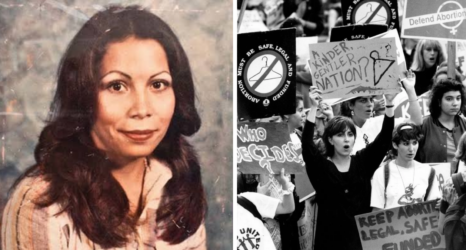
Community networks offer confidential, trauma-informed support to survivors of domestic violence and abuse, including those navigating controlling partners while seeking abortion access outside the formal healthcare system.
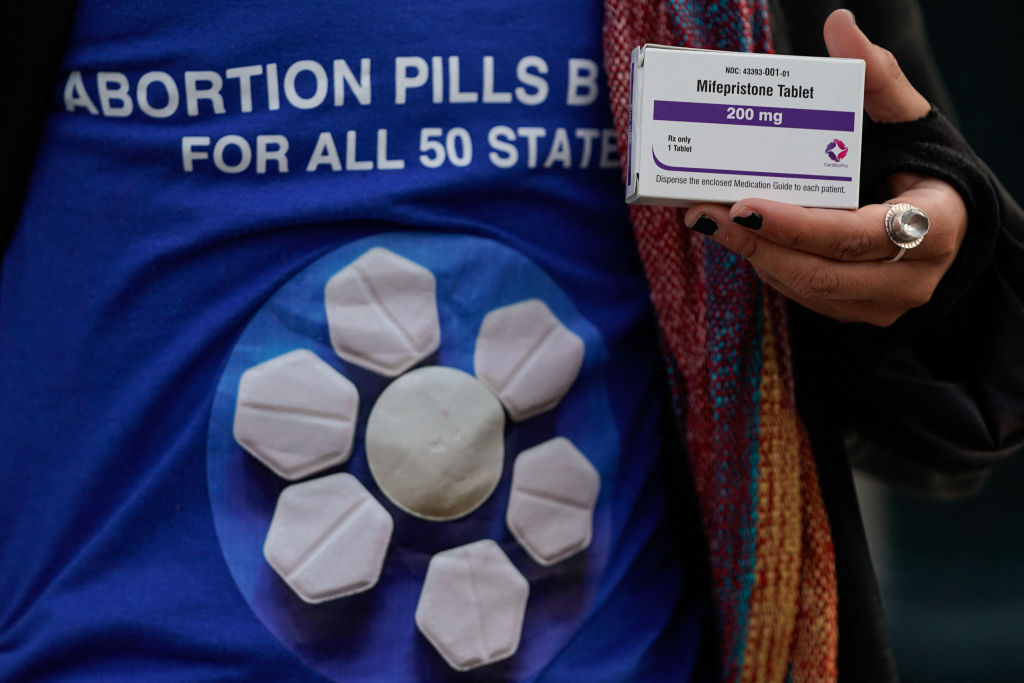
One quarter of U.S. women aged 18 to 49 live in states banning abortion entirely, and many more reside in states that ban abortion between six and 12 weeks. Even if you can travel to a state that allows abortion, the average cost is between $500 and $800 for medication abortion and ranges from $600 to over $2,000 for procedural abortion. For many, this cost is insurmountable: The median emergency savings for Americans is $500.
While some telehealth abortion providers are now serving states with bans and restrictions and offer sliding scale fee structures, many abortion seekers still find engaging with the healthcare system daunting, especially survivors of sexual and domestic violence living in states with abortion bans and restrictions.
In the context of legal and financial barriers to reproductive healthcare, decentralized community networks have bloomed across the country. Existing outside of the formal medical system, community providers mail free abortion pills (mifepristone and misoprostol) to tens of thousands of pregnant women and people each year and support them to self-manage their abortions.
Staffed by volunteers, many of these community networks offer highly-trained abortion doulas to provide emotional and informational support to all those with whom the groups share abortion pills, and offer specially trained doulas for survivors of sexual and domestic violence.
In addition to specialized doula care, community providers offer features that may be important to survivors.
- They do not require clients to fill out medical history forms or provide identification.
- They offer clients the option of receiving pills loose without packaging.
- They use end-to-end encrypted email and delete emails within 24 hours to maintain confidentiality.
Pregnancy is one of the most dangerous times for someone experiencing domestic violence.
AJ
Abortion pills are very effective, with a success rate of 95 percent or higher in terminating pregnancies up to 10 weeks. And they have a safety rate exceeding 99 percent, which is safer than continuing a pregnancy to term or using other common medications, such as penicillin, Viagra or Tylenol. As of 2024, over 7.5 million U.S. women have safely used abortion pills.
Ms. spoke with two community providers who have professional backgrounds in sexual and domestic violence about the important role community networks play in supporting abortion seekers experiencing sexual and domestic violence in states that restrict abortion. Their full names are withheld to protect their anonymity.
… The third most common reason that people seek abortion is due to abuse in their relationship.
SJ
This interview has been lightly edited for length and clarity.
Carrie N. Baker: Why is doula care important for survivors self-managing abortion with pills?
SJ: To be clear, not everybody who is self-managing needs or wants doula support. If there aren’t any contraindications or special circumstances, self-management is really quite straightforward and safe. The majority of folks who reach out to us feel like they’re able to manage on their own with the support of the instructional toolkit that we provide and hopefully a supportive friend or family member.
Doula support becomes really essential if people are having to self-manage in circumstances that are both isolating and unsafe—people in abusive relationships, people who are pregnant as a result of sexual assault, folks who have certain medical conditions—who are often coming in with a higher level of anxiety. We also have lots of folks who were raised in very antiabortion religious environments, which can further complicate support needs.
We are providing clinical guidance to some extent, but what I’ve found is that a lot of the support that’s needed is helping with emotional and anxiety management. Even in a state that’s not restricted, abortion clinics just don’t have the resources and capacity to provide that kind of intensive support. They’ll have information like a hotline that folks can call for emergencies and clinical guidance, but for many other kinds of support needs, you’re just on your own. You have to go through a mutual aid access network for that most of the time.
Doula support becomes really essential if people are having to self-manage in circumstances that are both isolating and unsafe—people in abusive relationships, people who are pregnant as a result of sexual assault, folks who have certain medical conditions …
SJ
Baker: What are some of the reasons survivors give for deciding to self-manage their abortions?
SJ: People self-manage their abortions for all kinds of reasons. The thing that I most commonly hear as a doula supporting people with experiences of domestic violence or sexual assault is, ‘I cannot have another child with this person.’
I think that people feel backed into a corner and are grappling with experiencing multiple kinds of violence at once: intimate partner violence and also violence enacted by the state, medical institutions and the carceral system in general via family separation or policing systems. People feel like they’ve been pushed into a circumstance where there is truly no other option.
We so often say ‘pregnancy choices.’ But for me, there’s such an important distinction to be made between a choice and a decision. People in these circumstances are often deciding to self-manage because a decision needs to be made about an unintended—or sometimes non-consensual—pregnancy.
Usually, those decisions are to parent or to self-manage. I think that when we talk about choices, we imply that people are freely choosing from a range of good options, which is fundamentally different than decisions that are made from a place of constraint and resourcelessness. We know from both qualitative and quantitative data that the third most common reason that people seek abortion is due to abuse in their relationship.
AJ: I agree, but I think it’s important to mention that there are also people in abusive relationships who get pregnant and decide to have an abortion because they want an abortion. It’s not always being trapped. Not having a free choice to make is absolutely a huge part of it and is really common.
I want to underscore that there are a lot of other reasons that come up, such as economics or chronic health conditions or already navigating issues with custody. It’s usually a combination of experiences.
SJ: When I’m working with a new client, I have a series of screening questions that I like to ask to try and assess safety. One of those questions is ‘what would happen if your partner found out?’ More and more the response to that question is ‘he would have me sent to jail.’
People who use violence or manipulation to control their partners have figured out that the legal landscape is something that they can leverage. That is the primary way in which I’m seeing abortion bans being weaponized on the ground. Or sometimes they’ve threatened to call CPS about other kids. Of course, we don’t know if those threats are viable or what might actually happen if someone followed through, but the threat itself is often enough to manipulate someone’s reproductive decision-making.
The thing that I most commonly hear as a doula supporting people with experiences of domestic violence or sexual assault is, ‘I cannot have another child with this person.’
SJ
Baker: How are services from community networks different from clinic-based care?
SJ: I think people imagine that the community networks offer less intensive support than what one might get at a clinic or other medical facility. They might think that because you’re not working with a physician, you have less clinical guidance.
People that haven’t gotten abortions before don’t necessarily realize how little support you’re actually getting when you go for an in-clinic abortion. Yes, a person will likely meet with a doctor or nurse practitioner to get the prescription, but it’s incredibly brief, and doula support isn’t standard.
We—the community networks—are in a position where our existence is necessary because of the policy environment, but a silver lining is that the hands-on support we provide allows us to identify co-occurring issues and provide more advocacy and support than somebody would be getting at a clinic.
To be clear, I have nothing but love and respect for abortion clinics, but they are under-funded and under-resourced by design.
Baker: How do people who are living in unsafe situations receive abortion pills by mail?
SJ: There are often no good choices in these situations, but it’s really up to the pregnant person. Sometimes they are able to have them sent to a safe person’s house like a friend or relative. But more often than not, that’s not possible. So, if somebody has to have it delivered to their home and is worried about someone intercepting it, we try to do some coaching around what they might be able to say if that happens.
Other safety strategies might include putting a different name or initials on the package or guiding folks to sign up for things like the USPS daily mail updates which provides daily emails about what packages that are being delivered to your house that day so people can have an idea of when to go intercept it. Our goal is to minimize and mitigate potential harm where we can, but there is no single solution that will work for everyone.
… I have nothing but love and respect for abortion clinics, but they are under-funded and under-resourced by design.
SJ
Baker: How do survivors safely use the pills when they live with an abuser?
AJ: That’s part of what doulas work through with the client—a safety plan that works for them based on their situation and context. That might be going over to a friend’s house, taking the medication at a time when their partner isn’t home, or maybe in the middle of the night.
Safety planning is really about talking to somebody about their life and their circumstances, who they know and who their support network is, and what they have available to them. We often prompt this information by asking them what has worked for them in the past.
A core piece of what domestic and sexual violence advocates do for people is ensuring that they understand how to access the tools they need to be able to make a decision that’s right for them. It’s very similar to doula work in that way: not telling people what to do or having an agenda, but helping them think through what might work for them. This method of support is really about asking the right questions to help guide them there.
SJ: It’s really helpful for me to get information up front so that I can understand the stakes of what someone is navigating. Abuse is a spectrum, which means the stakes are different from person to person. When I’m trying to learn more about someone’s relationship dynamics and ask about the consequences of a partner finding out, the response might be ‘we’re going to have an argument’ or it might be ‘he’ll probably kill me if he finds out.’ Understanding these circumstances helps us better support them in staying as safe as possible.
The timing piece is really important. I usually tell people there’s roughly four to six hours where it’s going to be pretty apparent to somebody that is in the room with you that you are going through something physically challenging. I always provide the caveat that everybody is different and it’s not exact, so all we can do is be as prepared as possible with the information we have.
We really want to think about when we want that symptom window to occur. It’s a relatively small chunk of time over the course of about three days of intermittent dosing. It’s also really important to coach people on what to say if they need medical care or if their partner figures out what’s going on or starts asking questions.
When someone is constantly living in that state of crisis and incredibly strained mentally and emotionally, one of the most helpful things that we can do is some scenario planning. We might say something like, ‘we don’t expect it to get to this point, but if it does, let’s run the script again. What can you say if you need to get medical care?’
The part of our brains that are responsible for logic and reasoning tend to go offline when we’re in a crisis, so having people practice when they’re stable is going to lead to a much higher success rate if they actually end up in a crisis situation.
Again, most folks don’t get there.
… There’s roughly four to six hours where it’s going to be pretty apparent to somebody that is in the room with you that you are going through something physically challenging. … We really want to think about when we want that symptom window to occur.
SJ
Baker: Are you counseling people by phone or by text?
SJ: Mostly by text.
Baker: How do people in violent relationships text without their partners knowing?
SJ: People who are living in abusive situations are very well aware of the risks and how they have to interact with their devices, especially when they are in a long-term partnership where they’re used to having their phone confiscated. We will sometimes set disappearing messages but it’s not my preference because it’s really helpful for people to go back and review information that we’ve talked about.
Baker: How do you support a survivor during the process of self-managing an abortion?
AJ: One really basic skill is just approaching the conversation without an agenda or the goal of solving their problem, but instead looking to the person in front of you, or on the other side of the messages, and seeing what they want.
A lot of that comes from asking them open-ended questions. Clarifying to make sure that you understand what they’re saying and what they mean. Really trying to make sure that you’re not overloading someone with information or asking them too many questions at once because that can get very overwhelming very quickly, especially if they’re talking about something traumatic like sexual violence or abuse.
In this kind of support work, we encourage people to focus on asking one clear question at a time, pausing for the response, and either building on it or moving onto another skill.
One tool that I really like is a pretty simple one called ‘some, many, most’—that’s just a straightforward way to normalize and validate someone’s experience. Rather than saying ‘everybody feels this way’ or ‘I’ve never heard that before,’ saying something like ‘most of the people that I talk to have expressed something similar to that’ or ‘many people that I talk to have shared XYZ with me too.’ Using that as a tool helps people feel less alone or like an outlier.
Other validation responses that we use regularly include, ‘you’re making a really thoughtful decision’ or ‘I know that you’re making the best decision you can based on the information that you have right now’ or ‘I think you know what is going to be best for you.’
It’s also really important to just sit with somebody through hard and challenging things that they’re sharing with you. Again, not jumping straight to solutions, but just being able to be there and be present and calm and attuned to what they’re saying. One of the most impactful things that you can do for another person is just helping them feel seen and heard, reflecting back what you’re hearing. That’s a big piece of trauma-informed care.
Lastly, if somebody is describing an experience that you identify as being sexual or domestic violence, but they don’t call it that, you want to avoid naming that person’s experience. We want to make sure that we mirror the way that they’re talking about their own experiences.
You can still share that you’re concerned for their safety, and that you’re there to talk with them about it if they’d like, but you want to make sure that you’re not inserting words into their mouth.
It’s also really important to just sit with somebody through hard and challenging things that they’re sharing with you. Again, not jumping straight to solutions, but just being able to be there and be present and calm and attuned to what they’re saying.
AJ
SJ: Trauma and crisis impact people’s cognitive functioning and behavior in all sorts of ways. We know that chronic trauma and toxic stress, really impact somebody’s ability to follow basic instructions and it can alter their sense of chronology. It can make it really challenging to remember even basic details.
You might find somebody asking the same question over and over again, or you, as the doula, are in a position where you have to repeat the same information. Trauma-informed care is being really aware of those dynamics and internalizing it as information about someone’s experience, rather than as a source of frustration. Being as patient as possible and really understanding that this isn’t somebody not paying attention or not caring or trying to be difficult, but that chronic trauma impacts our overall cognitive functioning in ways that are super inconvenient.
AJ: People who work in domestic and sexual violence often say, “The safest option is not always the best option,” and that’s important to keep in mind. When someone is in physical danger, the knee-jerk reaction is, ‘how do I help you get out of this?’ But that is not always the goal of somebody who is in that situation.
Pregnancy is one of the most dangerous times for someone experiencing domestic violence. Even those with the good intention of keeping somebody safe could ultimately undermine their own agenda by pressuring a survivor to leave. Client self-determination is about what they determine as being the most important for them.
Baker: Why don’t abortion clinics provide the kind of support for survivors that community networks are providing throughout the abortion process?
SJ: I do not want to be critical of clinics. They have a really tough job. There is a super high demand, and they are typically really understaffed and navigating so many competing priorities.
In my experience, there is not a comprehensive screening process for identifying people that might have higher support needs, and even the ones that do, don’t have the resources or infrastructure in place to meet those higher needs consistently.
When somebody is going through the community-based networks, if somebody identifies that they’re experiencing domestic or sexual violence during intake, which is just filling out a request form online, those folks immediately get funneled to a doula like me who is available and trained to be able to help them navigate this process.
I know that some brick-and-mortar clinics will refer to a local rape crisis center or domestic violence program. Some clinics do have partnerships, although it is much less common for them to have those established referral processes in place.
Doing this work in a community-based volunteer capacity, you have more flexibility to meet people where they’re at and meet the specific needs that they have, rather than when you’re constrained within the bounds of professionalism and working hours and organizational policy.
AJ: We see the same dynamic in domestic violence and sexual assault organizations too. There is a movement in the professional sphere to address the needs of survivors, but I would still 100 percent agree that community networks have a different type of capacity and guardrails.
An example is RAINN, which runs the biggest sexual assault hotline in the country. I went to their chat line and tried to get them to give me information about abortion and how I might access one. They wouldn’t do it. They only gave me information about what an abortion literally is, but nothing about how to access one. Like zero information. Not even any direction for resources where I might be able to find that information for myself. The advocate on the line was actively trying to shut that part of the conversation down. I find it concerning as somebody who has worked in sexual and domestic violence for so long that an organization would do that and be willing to have that as a policy, even though I understand that’s because of their funding sources. And that just further highlights the limitations that we’re talking about.
The importance of community support networks, especially right now, is that they are not confined by federal funding. We are returning to networks of people who are doing this because they are sharing a struggle with you, rather than working for a nonprofit that is tied up with the bureaucracy that comes with funding and the challenges with scheduling urgent paid work. This means they have to put up sometimes-arbitrary boundaries. It’s very important to have spaces where your support and access to abortion is not defined by somebody else’s need for work/life balance. People think that having it be your job means that you’re going to be able to do so much more, but that’s not true.
Baker: Abortion opponents argue that abusive men are ordering abortion pills online and slipping them into the drinks of their pregnant wives or girlfriends as a form of abuse. Are you seeing that?
… If politicians were interested in preventing abortions and supporting people experiencing domestic or sexual violence, they wouldn’t be defunding healthcare and every other support resource.
AJ
AJ: While we know that reproductive coercion happens, we also know that it’s not really happening in that way. What we are seeing is abusive partners leveraging the restrictive policy environment over their partners by sabotaging birth control, sexually assaulting their partner without any protection and threatening to call the cops if they try to get an abortion.
SJ: The amount of medication that you would have to put in somebody’s drink along with the dosing schedule would be quite difficult to pull off. If we pause to consider how the logistics of that would actually work, it’s kind of comical. People struggle enough with the dosing schedule when they’re taking these medications willingly.
Even the Heritage Foundation has only been able to identify 15 cases over the last 20 years, and there’s no evidence that a dramatic spike has occurred since abortion pills have become more widely available online. There’s a lot of specificity around how these medications need to be taken in order for them to be effective. Not to mention the fact that when somebody starts cramping and bleeding intensively out of nowhere, they are probably going to seek medical attention immediately. Most of us would if we started spontaneously having that degree of cramping, especially if we know that we’re pregnant.
It’s also just grossly disingenuous—if politicians were interested in preventing abortions and supporting people experiencing domestic or sexual violence, they wouldn’t be defunding healthcare and every other support resource.
AJ: Also, the argument that people are dropping abortion pills in their partner’s drinks is also rooted in a fundamental misunderstanding of how most abuse works. The general public often wants to think of people who abuse their partners as being very cold and calculating and planning out abusive or violent behaviors. But in reality, a lot of people who harm their partners are acting more impulsively than that. They struggle with managing their emotions and they lash out.
That’s not to say manipulation and coercion are not a common form of abuse, but it’s a far reach from creating a moral panic that abusive partners are now planning out secretly dosing medication with that rigid of a schedule at scale.
What we are seeing is abusive partners … sabotaging birth control, sexually assaulting their partner without any protection and threatening to call the cops if they try to get an abortion.
AJ
Baker: Is there anything else you would like to share with Ms. readers?
AJ: Advocates and doulas do not have a magic wand and are not the only people who can support somebody navigating violence in their relationship and self-managing their abortion. They are a very important tool, but I really want to encourage people to know, they can be a doula or an advocate for a friend or loved one. There are a lot of really amazing gender-based violence resources out there and crisis lines that people can call to ask about how they can support someone else. Not enough people know that.
SJ: At their roots, domestic violence support and abortion access have been parallel movements that have always just been about people doing the best that they can to take care of people in their community. But that kind of intra-community support has always been a threat to institutions in some way. So, with the support of white liberals, self-managed abortion was co-opted by the medical industrial complex and gender-based violence was co-opted by the nonprofit industrial complex. It became hyper-professionalized and the narrative was that you had to have this really specialized skill set, or such and such degree, in order to be able to do it effectively. And that’s just not the case.
AJ: Nonprofits don’t hold all the answers to supporting survivors or people seeking abortion. In the same way that you would trust somebody to be able to make decisions about their life, I think you should trust yourself to also be able to support somebody.
Nonprofits can be a very useful tool, but I am in support of a shift towards people remembering that being in community with each other and having responsibility for each other as human beings means showing up for each other. We don’t need to send everybody to the local nonprofit. We can figure out how to get this information ourselves and support each other.
… Domestic violence support and abortion access have been parallel movements that have always just been about people doing the best that they can to take care of people in their community.
SJ
Resources For Gender-Based Violence:
RALIANCE
Locating a Local DVSA Program:
RALIANCE: Rape Crisis Center Directory
National Sexual Violence Resource Center (NSVRC): Directory of Organizations
National Domestic Violence Hotline: Directory of Assistance Providers
Resources For Self-Managed Abortion:
World Health Organization Guidelines for Using Abortion Pills
Finding and using pills: Plan C
Medical support: Miscarriage + Abortion Hotline
Legal support: Repro Legal Helpline
Support with all pregnancy decisions: All Options Talkline