The Senate’s contempt vote against Anthony Fauci turns a constitutional right into a political weapon—and reflects a broader campaign of retaliation against scientists, public health officials and the lessons of COVID-19.

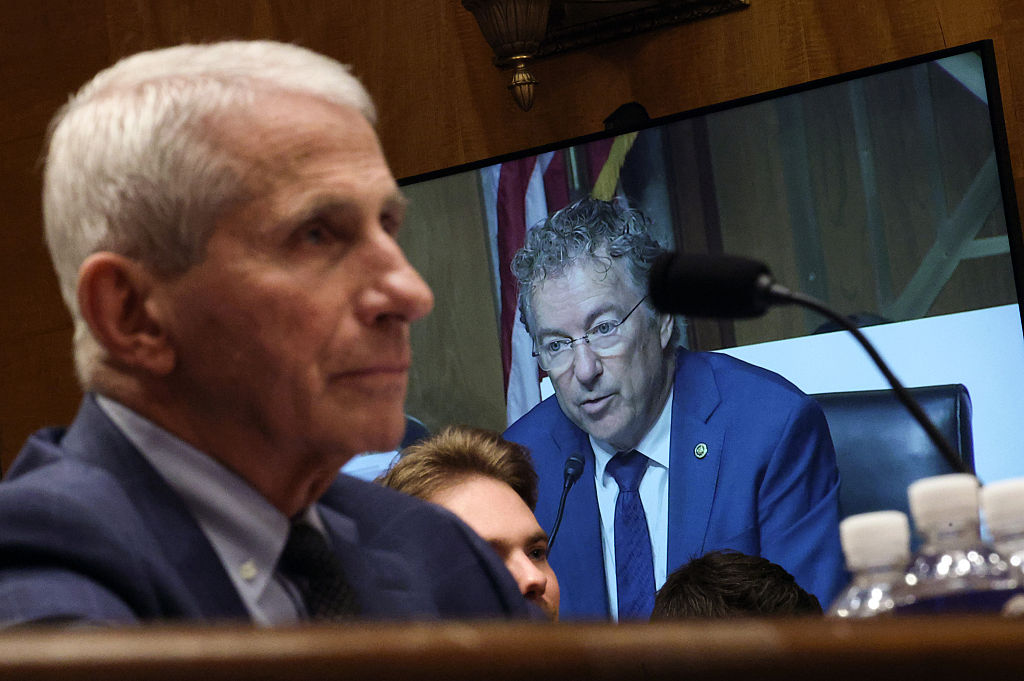
Republicans on the Senate Homeland Security and Governmental Affairs Committee voted Aug. 6 to hold Dr. Anthony Fauci in contempt, for invoking his constitutional right to invoke the Fifth Amendment of the U.S. Constitution during a highly contentious and jarring hearing, which lasted nearly three hours.
The hearing marked a chilling day for health, science and medical memory—one more concerned about retribution and retaliation than truth and the deaths and devastation brought about by the global pandemic. Despite the decorum expected of the nation’s highest government officers, the hearing devolved into a type of vile theatrics unfitting members of the Senate.
Sen. Bernie Moreno’s (R-Ohio) barb, “Who the fuck do you think you were…” will forever be emblematic of the tone and tenor not just of the hearing, but as well the modern-day attack on U.S. scientists.
The last 18 months of the Trump administration has been rife with funding withdrawn and withheld from scientists, the firing of scientists and the removal of renowned health leaders from various governmental boards and agencies. But the hearing reflected a sorrowful new low, symbolic of the public attacks on scientists and civil servants—in this case, visible at a hearing.
The hearing also characterized the weaponization and saturation of medical misinformation and disinformation in the public sphere—something now far more common and horrifically peddled by government officials. But the hearing was also dangerous for another reason: the politically convenient amnesia surrounding the pandemic’s deadliness.
Much of the news coverage of the hearing primarily focused on Fauci, the former White House chief medical adviser, invoking the Fifth Amendment 111 times.
Little ink was spilled on what should have been the most important point of a hearing: keeping people in the United States and around the world safe from past, present and future domestic and global health threats.
Instead, COVID-19 was reduced to science fiction, making a mockery not only of the deaths brought about by the pandemic, but also the devastating, lingering harms.
To be clear, COVID-19 is a deadly attacker—and its variants are equally if not more lethal. It invades the nose and throat, embedding in the lining of the nose. Once inside the cells, the virus “hijacks the cell’s machinery, making myriad copies of itself and invading new cells,” according to Science magazine.
Unfortunately, the denialism, conspiracies and mismanaged government messaging that plagued the COVID-19 pandemic—much of which continue to this day—had a significant influence on the trajectory of the pandemic in the United States by impacting the government’s willingness and ability to respond to the pandemic and the public’s willingness to adhere to government guidance.
Keep in mind that on Jan. 22, 2020, the day the CDC confirmed the first U.S. case of COVID-19, President Trump assured the public: “We have it totally under control. It’s one person coming from China and we have it under control. It’s going to be just fine.”
That was not Dr. Fauci—it was the president, who has not been asked to appear before Congress or to account for his handling of the virus.
In fact, in an interview on March 19, 2020, Trump said he “wanted to always play it down” because he did not “want to create a panic.”
Trump’s claims belied reality: By April 15, 2020, the United States had recorded 637,974 cases and tens of thousands of deaths.
In an unwise attempt to prevent “panic,” Trump also helped sow the seeds for further government and public denialism, inaction and willingness to adhere to disease mitigation practices.
In essence, the COVID-19 pandemic gave rise to a new era of denialism and conspiracy theories now carried out by members of Congress. These include outright denial that the virus was real; belief that the fatality rate or case numbers were exaggerated; belief in conspiracy theories about the origins of the virus; the spread of false information about the development, safety and effectiveness of drugs and vaccines; and denial of long COVID.
As I shared in my testimony before the Subcommittee on the Constitution and Limited Government in their hearing, “Liberty, Tyranny and Accountability: COVID-19 and the Constitution,” the pandemic was the greatest public health threat the United States has experienced in over a century. Not since the 1918 influenza pandemic has the nation experienced such a dramatic menace to its health.
And, Americans were in bad shape: In its early months, CBS reported COVID-19 in the United States “by far leads all other nations in confirmed coronavirus cases.”
Within one year, the death toll associated with COVID-19 exceeded a staggering half million deaths in the United States, compounded by more than 28 million confirmed cases.
More Americans died during the first three months of the COVID-19 pandemic (over 100,000 by June 2020) than all the U.S. deaths suffered during the Vietnam War; the fatalities of the 9/11 terrorist attacks; and the wars in Iraq and Afghanistan; and the deaths resulting from the 2009 H1N1 pandemic, Ebola and the Zika virus—combined.
In the first three months, when fatalities were roughly 100,000, COVID-19 had killed more people in the United States than the U.S. witnessed in the previous 50 years of war and disease combined.

That Fauci remains a focus of Republican scrutiny while Congress faces urgent healthcare challenges to Americans, ensuring clean air and water, reducing the cost of medical bills, addressing the affordability of medications, addressing environmental impact and focusing on staggering maternal and infant mortality, says much about the grave state of affairs in U.S. healthcare.
*
A note from Ms. editors: We want to hear from you for The Majority, a new campaign collecting stories about how reproductive freedom has enabled readers to build the lives they want and need.
Poll after poll shows a majority of Americans support reproductive healthcare access. Yet public debate overlooks the lives shaped by abortion access, contraception, IVF, miscarriage care, maternal healthcare or comprehensive sex education—countless women who chose to pursue an education, have children, not have children, protect their health and chart their own future. What’s your reproductive freedom story? Add your voice. Together, these stories will help show not only why reproductive freedom remains a majority value, but also what it makes possible.
Support more work like this article
The reporting you just read is possible because of readers like you. Since 1972, Ms. has delivered independent, feminist journalism that tells the stories too often overlooked by other news media, challenges systems of inequality and holds power to account. We have no corporate owners, no advertisers and no billionaires dictating what we cover. Instead, we answer to our readers and our mission. If you value reporting that centers women and girls—and covers the issues others leave out—please support Ms. today by making a tax-deductible donation, becoming a member to receive a magazine subscription, or gifting a membership to a friend. Together, we can continue reporting, rebelling and truth-telling.