
A new Century Foundation poll shows that while both men and women are struggling in Trump’s economy, women—especially young women—are bearing the brunt of rising costs, growing debt and dwindling faith in the American Dream.


More Than A Magazine, A Movement

A new Century Foundation poll shows that while both men and women are struggling in Trump’s economy, women—especially young women—are bearing the brunt of rising costs, growing debt and dwindling faith in the American Dream.
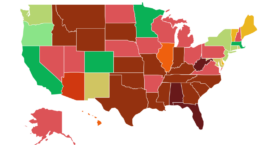
In 2021, the Century Foundation published its first care policy report card, “Care Matters,” which graded each state on a number of supportive family policies and worker rights and protections, such as paid sick and paid family leave, pregnant worker fairness, and the domestic worker bill of rights. The 2021 report card revealed the tremendous gaps in state care policies and a fragmented and insufficient system of care workers and families in most states.
This year’s update, co-authored with Caring Across Generations, takes another look at how states are doing.

The largest investment in childcare in American history expired this September. As Congress continues to negotiate a budget deal, the need for $16 billion in emergency childcare funding—requested by President Biden and congressional Democrats—remains top of mind for parents, early educators, childcare owners and directors, and employers across the nation.
The Century Foundation’s new report shines a spotlight on the 11 states and Washington, D.C., that have taken action to directly address the childcare cliff with state funds.

On Sept. 30, Congress let federal childcare stabilization grant funding expire. What happens next?
First, providers will be forced to raise tuition prices to offset the loss of stabilization grants. Then, staffing shortages. Finally, childcare programs—as many as 70,000 by our projections—will have to shut down altogether.
The good news: If Congress can get their act together to fund emergency childcare before the end of the calendar year, they can stem the worst of these consequences.

Passed in January 2021 with the goal of providing COVID-era relief, the American Rescue Plan Act (ARPA) allocated $39 billion towards childcare programming. The majority—$24 billion—went directly to childcare and daycare centers, to help the programs remain open and staffed. On Sept. 30, that funding expired, and Congress took no action to extend it. Last month, Senate Democrats introduced The Child Care Stabilization Act, a bill to extend childcare stabilization funding for five years. But until the measure gets support from Republicans, it cannot be considered for a vote.
More than 3 million children are projected to lose access to childcare nationwide, and 70,000 childcare programs are likely to close. This will have ripple effects for parents forced out of work or to cut their work hours, for businesses who will lose valuable employees or experience the impact of their employees’ childcare disruptions, and state economies that will lose tax revenue and jobs in the childcare sector as a result.

This year marks the 60th anniversary of the 1963 Equal Pay Act and Aug. 15 is Moms’ Equal Pay Day—the day that symbolizes how far into the year a mom must work to earn what men did in the previous calendar year.
An increasing number of mothers, including two-thirds of moms with young children, are breadwinners, and four out of five Black mothers are the sole or primary provider for their households. Yet America’s leaders and laws leave mothers to figure it out on their own—to simply ‘make it work.’ Despite the best efforts of the Biden administration and allies in Congress to invest in caregiving in the wake of the pandemic, every single cent of the care economy investments included in the “Build Back Better” package were left on the cutting room floor.
So what do we do about it?

The combination of the Inflation Reduction Act, the CHIPS and Science Act, and the Infrastructure Investment and Jobs Act (IIJA)—all signed into law by President Biden in the past two years—will create millions of new jobs in the American economy in the months and years ahead. These new industrial policy jobs will be across energy, physical infrastructure, manufacturing, science and technology.
Building care infrastructure into industrial infrastructure is the best way to ensure that these good jobs that have been created have people to work in them. Building a care infrastructure into the new U.S. industrial policy is not only the right thing to do, but also the most strategic.

American families have long been struggling with out-of-reach childcare prices. The tremendous gap between what parents pay, and what early educators earn, is a product of a broken market. It cannot be solved on its own. The federal government must step in with sustainable, long-term investments through reconciliation.

The U.S. has not prioritized childcare. Even before the pandemic, many families could not find childcare when and where they needed it. More than half of all families lived in childcare deserts, and those who didn’t faced exorbitant prices. That’s gotten even worse during the COVID-19 pandemic. For those who can afford childcare, extremely high prices take a toll—many families pay more than mortgage payments or rent for care. It’s unacceptable.
The Build Back Better Act will be a game-changer for parents across the nation, lowering prices and increasing the supply of high-quality care at the same time.

Build Back Better’s provisions to lower childcare costs, improve the quality of early education and increase wages will provide immediate relief to families hit hardest by the pandemic.
The more than 1 million moms still out of the workforce will begin to return to work, and others will be able to increase their hours and earnings.