What if Women Really Went Back? Viral Thriller ‘Yesteryear’ Deconstructs the Dark Side of Tradwife Culture

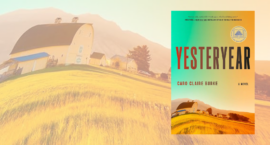
What if women really went back? That question sits at the center of Caro Claire Burke’s 2026 debut novel and viral summer read Yesteryear.

At a moment when tradwife influencers are building massive audiences by romanticizing domesticity, submission and “traditional” gender roles, Burke asks readers to imagine what life inside those arrangements actually looks like for the women who lived them—and what rights and freedoms were sacrificed along the way.

Yesteryear follows wealthy, polished (at least on the outside) tradwife influencer Natalie Heller Mills, who has built a carefully curated online brand around nostalgic femininity. But as the fantasy unravels, Burke exposes the gap between aestheticized womanhood and women’s lived experience.

Your Tax Dollars Are Funding the Trump Administration’s Patriarchal Family Agenda

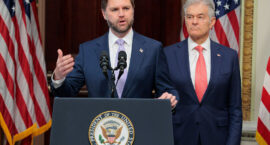
“One in three Americans are under-babied,” declared Trump’s Medicare and Medicaid chief Dr. Mehmet Oz last week, echoing JD Vance’s contempt for “childless cat ladies.”

Guided by evangelical supporters, the Trump administration is eroding longstanding civil rights protections, restricting access to contraception and abortion, and weakening support systems for single mothers and their children. The goal is clear: to pressure women into marriage and motherhood while making the patriarchal family the center of American life.

The administration’s policies closely track the Heritage Foundation’s Project 2025 agenda, which seeks to incentivize what it calls “natural marriage”—a heterosexual household with a breadwinner father, stay-at-home mother and biologically related children.

Meanwhile, the administration’s new Moms.Gov website directs pregnant women to antiabortion organizations that that have been widely criticized for their misleading information about options and for their collection of patients’ sensitive personal information.

Taxpayer dollars are increasingly being used to advance a vision of society rooted in patriarchal family structures and reproductive coercion.

Election Conspiracies Are Moving From Rhetoric to Government Action

Attacks on the legitimacy of U.S. elections are no longer confined to conspiracy theories circulating online—they are increasingly shaping government action at the local level.

In Riverside County, Calif., Sheriff Chad Bianco seized roughly 650,000 ballots from a 2025 special election based on fraud allegations that election officials say stem from misleading interpretations of preliminary voting data. Courts have since intervened, with the California Supreme Court ordering the investigation paused while litigation continues.

I spoke with Jill Garvey, co-director of States at the Core, about what these escalating “election integrity” efforts mean for democracy and public trust.

Garvey says many of the activists driving these claims understand election systems far better than they let on—and are intentionally using confusion around technical election data to sow distrust in the voting process.

Even when election officials fully explain the data and publicly refute the allegations, she said, demands for investigations continue, helping fuel a broader narrative that elections cannot be trusted.

Garvey sees these efforts as part of a larger strategy testing how far local officials can go in challenging election systems and democratic norms.

But she also points to growing community-level organizing and civic engagement in response. The groups advancing these claims, she noted, are relatively small compared to the hundreds of thousands of voters affected by their actions—a reminder that local communities still have significant power to push back against efforts to undermine confidence in elections.

Keeping Score: Supreme Court Blow to Voting Rights Will ‘Silence Our Voices’; Conservative Judges Try to Restrict Mifepristone; Moms Worry About Putting Food on the Table

In every issue of Ms., we track research on our progress in the fight for equality, catalogue can’t-miss quotes from feminist voices and keep tabs on the feminist movement’s many milestones. We’re Keeping Score online, too—in this biweekly roundup.

This week:
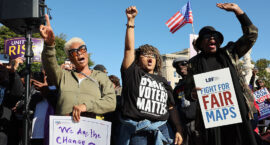
—The Supreme Court gutted the Voting Rights Act, slashing protections against racially discriminatory voting laws.
—A record high amount of books were censored from libraries in 2025, often due to LGBTQ characters or plotlines addressing racism.
—A third of moms living on low incomes have gone into debt or skipped meals so their kids could eat.
—Just 22 percent of American voters have significant confidence in the Supreme Court.
—In 2025 the number of abortions in the U.S. remained stable, but more patients in states with bans turned to telehealth services instead of traveling out of state.
—The Department of Justice announced plans to expand the use of the federal death penalty.
—An Epstein-Maxwell survivor, who asked to remain anonymous, laments, “I kept my identity protected as Jane Doe. I woke up one day with my name mentioned over 500 times. While the rich and powerful remain protected by redaction, my name was exposed to the world.”
—The Trump administration launched a Moms.gov site on Mother’s Day that refers pregnant people to unregulated crisis pregnancy centers.
—A Ms. piece on solitary confinement by Kwaneta Harris and her daughter Summer Knight won Kwaneta second place in the Collaboration category of the Stillwater Awards for prison journalism.
Liberation, a play about 1970s feminism by Bess Wohl, won the Pulitzer Prize for drama. It was also nominated for the Tony Award for Best Play. Wohl was inspired by her own life: Her mother, Lisa Cronin Wohl, was an early Ms. contributor.

… and more.

They Blame Feminism for Falling Birth Rates—but Data Says It’s Saving Families

Last month, the newest fertility data dropped—and the U.S. fertility rate has fallen again, hitting another record low.

Almost immediately, conservative influencers, media figures and elected officials pointed fingers at feminism, blaming women’s independence, career ambitions and access to contraception for the decline in births.

It’s a convenient narrative to push along their anti-birth control agenda. But it’s also wrong.

If you actually listen to women—and look at the data—the story becomes much clearer. The number one reason women are delaying or forgoing having children isn’t ideology, it’s affordability. Childcare costs, housing prices and healthcare access have made starting a family financially daunting for millions of Americans. Mix in student loan debt and political turmoil, and having a baby in 2026 is a scary venture. 

And yet, instead of addressing these barriers, policymakers—and organizations leading the way like the Heritage Foundation—are moving in the opposite direction. They are cutting or rolling back the very programs that make family life possible.

From Smith College to Florida’s New College: MAGA’s Campaign Against Universities, Women’s Studies and Liberal Arts

As a professor at Smith College and chair of the Program for the Study of Women, Gender and Sexuality, I have closely followed the Trump administration’s attacks on higher education—and on my field in particular.

This week, those attacks landed squarely on my own campus: The Department of Education has opened a civil rights investigation into Smith’s policy of admitting transgender women, arguing the college may be violating Title IX by recognizing gender identity rather than “biological sex.” The probe—prompted by a complaint from a conservative advocacy group—questions whether a women’s college can remain legally “single sex” while including trans women, and raises the possibility of federal penalties or loss of status.

This move is not an isolated action. It is part of a broader campaign to redefine civil rights protections in ways that exclude transgender people, and to pressure colleges and universities into compliance with that vision.

It is also one of many recent attacks on higher education—especially liberal arts institutions—by Republican lawmakers and the Trump administration, aimed at universities they view as out of step with a conservative, anti-feminist agenda. In a 2021 speech titled “Universities Are the Enemy,” JD Vance declared, “We must aggressively attack the universities in this country. … Maybe it’s time to seize the endowments, penalize them for being on the wrong side of some of these culture war issues.”

Women’s, gender and sexuality studies teaches students to think critically, to question the status quo and to understand how power shapes our lives across gender, race, class, sexuality and more. These are precisely the kinds of questions that have made the field a target. Rather than engage with this work, critics have increasingly sought to discredit or dismantle it altogether. The Heritage Foundation’s Project 2025 provides a roadmap for doing just that—but many of these strategies have already been tested at the state level.

Could This Be the Last Women’s History Month?

Since 1987, the United States has celebrated Women’s History Month every March.

We have used this month to correct the record. To make sure that the women who built this nation—who are often systematically written out of history books and erased from the stories we tell ourselves about who we are—are named out loud and recognized. It is a national reminder that women are not a footnote to the American project. We are central to it.

But today, just shy of its 40th anniversary, Women’s History Month celebrations are quietly disappearing. Not because communities stopped caring—but because an administration decided that honoring women is a threat.

Harriet Tubman did not free herself and stop. Fannie Lou Hamer did not survive a Mississippi jail cell to just go home. Shirley Chisholm did not run for president, unbought and unbossed, so that we could sit down now.

It’s up to us now to saddle up and make sure that future generations of women and girls can not only know about the incredible shared history of the bad ass women that helped shape the world, but can feel the full freedom of it—which means we now have work to do. 

We ride at dawn.

Kathy Spillar on ‘Velshi’: A Warning About the Right’s Agenda for Women

This weekend on Velshi with MS NOW (formerly MSNBC) anchor Ali Velshi, Kathy Spillar—executive editor of Ms. and executive director of the Feminist Majority Foundation (publisher of Ms.)—joined to discuss a sweeping new policy blueprint from the Heritage Foundation that lays out a vision for reshaping American family life and rolling back women’s independence.’

Velshi summarized the underlying logic of the proposal starkly: “You cut off opportunities outside the home. You make the public sphere hostile to women’s independence. You create a system where the only viable path left for women is dependence on a man for survival. In other words, you drag the country back to a time when women had fewer choices.

“Women today have opportunities their grandmothers could only dream of. From the perspective of the new right, that’s the crisis.”

Spillar said the report spells out a broader political strategy. “They are determined to use whatever levers of power they have under the Trump administration—to change tax laws, to provide incentives for women to have more children, to get married younger and to stay married, even in bad relationships,” and added the proposed policies primarily target heterosexual, middle- and upper-income families.

“This is the game plan of an authoritarian regime,” she said. “It’s designed to support an authoritarian government that has control over its women—and therefore over its men as well, making men more compliant because they now have larger families who depend on them economically.”

The Heritage Foundation’s New Policy Guidebook Wants to Push Women Out of Public Life

In honor of the 250th anniversary of the signing of the Declaration of Independence, the right-wing Heritage Foundation—developers of Project 2025, the policy guidebook written to influence the Trump administration’s legislative priorities—has issued a 168-page position paper, “Saving America by Saving the Family: A Foundation for the Next 250 Years.”

The document is intended to “restore the family,” by elevating a male-led, heterosexual model of social relations. 

The report is both absurd and terrifying—which is why the National Women’s Law Center (NWLC) is sounding an alarm about it. Emily Martin, the NWLC’s chief program officer and Amy Matsui, its vice president of childcare and income security, spoke to Ms. reporter Eleanor J. Bader about “Saving America by Saving the Family” in late February.

There Is Power in the Word ‘Patriarchy.’ We Need to Start Using It.

News commentators still overlook the obvious when they speculate about why the majority of white female voters in the last three presidential elections cast their ballots for a dishonest, fraudulent, racist, misogynistic sexual predator or why people who call themselves Christians support someone who embodies in virtually every way the opposite of “what would Jesus do?”

I’m tired of snapping at the talking heads on the TV or computer screen, “Come on, say the P word! It’s the patriarchy, stupid!”

We can trace harmful sex binaries, reproductive control and white Christian nationalism back to the same root system: patriarchy. Naming it is the first step toward dismantling its power.