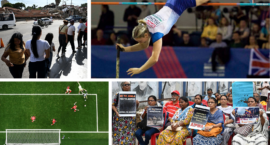


Ms. Global: South Korea Approves Abortion Pills; Anti-Femicide Protests in Cameroon; 50K Women and Girls Killed or Injured in Gaza in Three Years; and More

The U.S. ranks as the 31st most dangerous country for women, 55th in maternal mortality, 43rd in closing the gender pay gap, 84th in women’s political representation, and painfully lacks paid family leave and equal access to healthcare. But Ms. has always understood: Feminist movements around the world hold answers to some of the U.S.’ most intractable problems. Ms. Global is taking note of feminists worldwide.

This month:
—South Korea is set to approve abortion pills for public use the first time next year.
—Women political prisoners face torture and other abuses in Myanmar, warns Human Rights Watch.
—Nearly 50,000 women and girls have been killed or severely injured in Gaza in the past three years.
—Somalia approves bill to strengthen rights for abuse victims after a decade of negotiations.
—Gen Z is helping organize India’s pro-democracy protests.

… and more.

Ms. Global: Sweden Ends Repro Health Support for Liberia; U.K. Bans Trans People From Bathrooms; Feminists Lament Far-Right AfD Win in Germany; and More

Ms. has always understood: Feminist movements around the world hold answers to some of the U.S.’ most intractable problems. Ms. Global is taking note of feminists worldwide.

This month:
—In major blow to sexual and reproductive health and rights funding, Sweden ends aid to Liberia.
—Twelfth woman’s body found near Johannesburg increases fear of potential serial killer on the loose.
—The United Kingdom has introduced sanctions on Israeli settlements in the West Bank. They target companies and people who support services for settlement expansion and individual settlers accused of violence against Palestinians.
—Liechtenstein changes its laws to allow women to inherit the throne.

… and more.

Ms. Global: Protests in India After Murder of Young Girl, World Cup Leads to Increased Domestic Violence in U.K., and More

The U.S. ranks as the 31st most dangerous country for women, 55th in maternal mortality, 43rd in closing the gender pay gap, 85th in women’s political representation, and painfully lacks paid family leave and equal access to healthcare. But Ms. has always understood: Feminist movements around the world hold answers to some of the U.S.’ most intractable problems. Ms. Global is taking note of feminists worldwide.

This week: news from Bangladesh, Colombia, the U.K. and more.

The People’s Bill of Rights 250 Invites Americans to Reimagine the Constitution

A new online public platform—The People’s Bill of Rights 250—invites Americans to propose, discuss and vote on ideas they believe belong in the Constitution. As the U.S. marks 250 years, the bold, interactive project asks Americans not only to reflect on the nation’s founding, but to help shape its future.

The nonpartisan organization The People and executive director Katie Fahey, alongside a coalition of civic, advocacy and cultural leaders, spearheaded the People’s Bill of Rights 250. It invites Americans to answer a simple question: What freedoms, rights and protections should every person in the country be guaranteed over the next 250 years?  

From now until Friday, July 31, Americans are encouraged to vote and share their own ideas at the People’s Bill of Rights 250’s website.

Ms. Global: Genocide in Sudan, Withdrawal of HIV Funding in South Africa, Two Killed in Protests in Afghanistan Over Arrests of Women

The U.S. ranks as the 19th most dangerous country for women, 11th in maternal mortality, 30th in closing the gender pay gap, 75th in women’s political representation, and painfully lacks paid family leave and equal access to healthcare. But Ms. has always understood: Feminist movements around the world hold answers to some of the U.S.’s most intractable problems.

Ms. Global is taking note of feminists worldwide.

This month: news from Sudan, South Africa, Afghanistan and more.

Can You Believe They Put This in Writing? The Wildest Quotes From Heritage’s ‘Project 2026’

The Heritage Foundation has once again taken it upon itself to craft a plan for how to supposedly save America. The report—”Saving America by Saving the Family: A Foundation for the Next 250 Years”—focuses on marriage, family and the American Dream, and has become widely known as “Project 2026,” a follow-up to Heritage’s infamous Project 2025 blueprint.

Project 2025 clocked in at 900 pages; the sequel is around 150. We read the whole thing and pulled out the passages that gave us chills, made us laugh out loud, compelled us to suddenly need to take a long walk and hug our dogs, or inspired another donation to our local abortion fund.

This isn’t intended to be a fact-check or a line-by-line rebuttal. It’s intended to show you how some of the country’s most influential conservative thinkers are talking about feminism, contraception, abortion, LGBTQ+ people, higher education, marriage, motherhood and the role government should play in all of it—because you’re probably too busy to read hundreds of pages of anti-feminist slop.

And because, as former Vice President Kamala Harris famously said about Project 2025: “Can you believe they put that thing in writing?” They did—twice now!

This is the roadmap they’re offering. These documents tell us how their authors understand the country, the family and women’s place in both. We should know what it says.

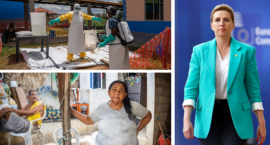
Ms. Global: Women Make Up Two-Thirds of Ebola Cases in DRC, Families Mourn Fishers Killed in Trump’s Boat Strikes and More

The U.S. ranks as the 19th most dangerous country for women, 11th in maternal mortality, 30th in closing the gender pay gap, 75th in women’s political representation, and painfully lacks paid family leave and equal access to healthcare. But Ms. has always understood: Feminist movements around the world hold answers to some of the U.S.’s most intractable problems.

Ms. Global is taking note of feminists worldwide.

This month: news from the Democratic Republic of the Congo, India, Denmark, Mexico and more.