What Happens When a Dancer Is Forced to Become a Refugee? ‘Born to Dance, Forced to Run’ Captures Life Under the Shadow of Deportation

Born to Dance, Forced to Run is a powerful new documentary that follows Steeven Labady, a queer Haitian dancer whose relentless pursuit of his artistic dreams is continually upended by displacement, asylum battles and the constant threat of deportation. Through his extraordinary journey, filmmaker and Haitian feminist activist Pascale Solages reveals the human cost of migration policies, transforming an abstract political debate into an intimate story of resilience, survival and hope.

At a moment when the Trump administration is dismantling Temporary Protected Status for Haitians and escalating immigration enforcement, the film’s message could not be more urgent. It’s a deeply human portrait of what it means to live undocumented under the shadow of deportation.

Born to Dance, Forced to Run premieres in New York on Saturday, July 25, at 6 p.m. at the Brooklyn Children’s Museum, where audiences will have an opportunity to experience this moving documentary on the big screen, followed by a Q&A.
‘Who Will Revere the Black Woman?’ Remembering Nancy, Cerina and So Many More

Even though I did not know Nancy Metayer, my heart is utterly broken by the loss of her life and the violence of her death. The night before her funeral, I joined a virtual vèyè in her honor—a space to keep watch, to remember her impact and to hold one another in communal care.

That same day, news broke about Dr. Cerina Fairfax, also killed in her home. I did not know her either, and still, I was gutted.

Nor did I know Pastor Tammy McCollum, Ashly Robinson, Qualeisha Barnes, Davonta Curtis or Barbara Deer—Black women killed in just a matter of weeks. And to think these are only the names we know.

In moments like this, I find myself returning to a question first posed by Abbey Lincoln decades ago: “Who will revere the Black woman?” The reality of this violence—and the way it is so often explained away or softened—makes that question feel as urgent as ever.

Black feminists have long named the patterns, the structures and the stakes. And still, we are left mourning, naming and insisting: We will not let their lives be forgotten. We will continue the work in their honor—because we revere them.

In a Time of Backlash, the Combahee River Collective Still Shows the Way

Combahee was born in response to the murders of 12 Black women in Boston at a time when racial violence had a pernicious vice-hold over the city.

When so many Black feminist icons of their generation have gone on to become ancestors, we are privileged to have access to these women, and other Black feminist elders like them today. At a time when books are being banned, there are galling attempts to erase the histories and the stories of marginalized groups, the radical beginnings of the Combahee River Collective must be amplified. These women were proud of their African American heritage, unequivocal about their socialist politics, and unabashed about their lesbian identity. They have as much to teach us now as they did then.

Misogynoir à la Française

A few days before Christmas, the French satirical magazine Charlie Hebdo featured an abhorrent caricature of esteemed journalist, author, filmmaker, and activist Rokhaya Diallo. The grotesque image, which we will not reproduce here, shows a half-naked Diallo dancing on stage dressed in a banana skirt. Her features were exaggerated in the manner of time worn racist propaganda—contorting her nose, mouth, and eyes for a minstrel-like effect. Next to the image was an audience pointing and jeering underneath a sign that read “The Rokhaya Diallo Show: she ridicules the separation of church and state all over the world.” There is no question that Diallo was targeted for her widespread international success and renown as an antiracist activist, as well as her prominence as a Black feminist voice decrying racial injustice, sexism, and misogynoir in France and abroad. The timing felt insidiously intentional— the magazine chose to end the year with a decidedly harmful message to Black French women as a holiday send off.

bell hooks Taught Us to Imagine Freedom. Universities Are Forcing Us to Fight for It.

On the day bell hooks became an ancestor, four years ago today, my beloved friend, comrade and co-conspirator Black feminist sociologist Shawn McGuffey and I were consoling one another over text when he wrote, “We should do something.” “Say less,” I replied.

We had institutional support from Northeastern University at a time when universities and other institutions were publicly and ceremoniously committing to funding DEI related initiatives in the tidal wave of so-called racial reckoning that occurred in the aftermath of George Floyd’s death. The first symposium took place two months later on a cold and clear February morning in 2022. This annual gathering became an important tradition that we looked forward to each year.

This week, we mark four years since the woman born Gloria Jean Watkins, a Black feminist writer, academic, professor and activist became an ancestor. But in 2026, there will be no bell hooks symposium at my university. Due to university wide fiscal austerity, we will not mark the anniversary this year in any official way. It is a tremendous loss, for our students and for our community locally, nationally and internationally.

As I grappled with my own grief over this loss, I had to also reflect deeply about what it means to be a Black feminist scholar in the academy today.

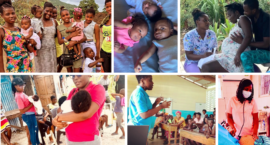
Thinking Big With Haitian Midwives

In Haiti, there are high rates of maternal and neonatal morbidity and mortality.

Founded in 2014, the Foundation for Advancement of Haitian Midwives (FAHM) partners with and supports Haitian midwives through education and outreach. Their work is urgent today while Haiti is in political turmoil, and unrelenting assaults by paramilitary groups have led to severe insecurity in the capital.

“Most people who are drawn to this want to produce safe competent, evidence-based care and to respect people’s voices, preserving the honor and dignity of every human being.”

‘Freda’ Is the Film We Need Now

Because Haiti is in the news again, we are bombarded with stories about unrelenting political turmoil, destabilizing unrest and crippling poverty.

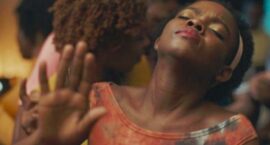
Set in contemporary Port-au-Prince, Gessica Généus’s film Freda affirms that not only do Haitian women exist, but that their existence is replete with complexity and beauty. A feminist film in every way, Freda’s commitment to the female characters especially asks us to carefully consider what we look for when we see Haitian women.

Learning From and Leaning Into Juneteenth

What does Juneteenth mean to me, to you, to us today? Long before corporate decisions to recognize Juneteenth, Black people in this country were joyfully and jubilantly celebrating this day in our own way.

As a feminist scholar, I marvel at Black women’s pivotal role in Juneteenth celebrations. It reminds me that Black women have always been architects of freedom.

‘Picturing Black Girlhood’: A Praise Song for Black Girls

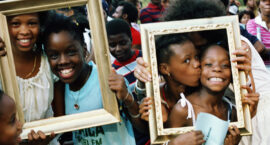
Never before have Black girls been so visible—the thought kept occuring to me as I explored the wonder that is “Picturing Black Girlhood: Moments of Possibility,” to date the largest exhibition on Black girls in the world. The expansive showcase of emerging and established photographers and filmmakers takes us on a journey into Black girls’ interior lives that simultaneously imagines a more capacious worlds for them.

The exhibition curated by photographers Scheherazade Tillet and Zoraida Lopez-Diago highlights the history of Black women photographers while also re-imagining this world for Black girls.