Yearning to Breathe Free

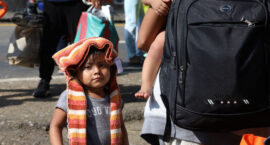
In the matter of K-E-S-G-, a Salvadoran woman stalked and threatened by gang members was denied asylum by the U.S. Board of Immigration Appeals on July 18, even though her persecution stemmed from her gender in a country that treats women as property. Advocates warn that this ruling could make it much harder for women fleeing violence to prove gender-based claims and may embolden immigration judges to discount their stories.

“This isn’t the first time the Trump administration has singled out women seeking asylum, and we know where this path leads,” said Neela Chakravartula of the Center for Gender & Refugee Studies. “More judges denying protection to women who qualify for it. More refugees being deported to danger.”

The decision highlights the ongoing struggle to recognize gender as a protected basis for asylum. Afghan and Salvadoran women, among others, may now face even steeper barriers to protection—a chilling effect that experts say could deter survivors from seeking safety in the U.S.

One Megabill for the Megarich

The Trump administration is calling its new budget “the most pro-family legislation ever crafted.” But for women like Bre’Jaynae Joiner, a single mother of two in Oakland, the cuts to Medicaid and SNAP threaten her family’s very survival.

Over the next decade, more than 11 million Americans—mostly women and children—are expected to lose health coverage, while deep food assistance cuts and work requirements will push even more families into crisis. Advocates call the bill a massive transfer of wealth to the rich at the expense of the poor, a policy that will shutter rural hospitals, deny essential care and worsen maternal mortality.

As Sen. Raphael Warnock puts it plainly: “If you cut $900 billion out of Medicaid, people are going to die.”

A Message From the Life of Urvashi Vaid: Do Not Remain Silent

When the 18-minute documentary There Are Things To premiered in Provincetown, Mass., in 2023, it was never meant to be a global statement. It was meant to be a love letter, a short community film about a long legacy. But like the woman it honors— activist Urvashi Vaid—it refused to stay small.

And how could it? We are living through a time when naturalized citizens are being threatened with denaturalization, children are being separated from their parents during immigration raids, people are crossing state lines just to access basic reproductive healthcare, and pregnant women who desperately want children are dying in homes and hospitals or on their way to seek medical care because doctors delay or deny treatment under strict abortion laws. These are not fringe headlines—they are daily realities in one of the most powerful nations in the world.

Against this backdrop, There Are Things to Do (now available for streaming on PBS) arrives like a gentle ambush. Its power is subtle, but the provocation is clear: What if the most radical thing an immigrant could do in America is not assimilate, but organize?

‘We Can Do Hard Things’: Abortion Providers Fight Back Against Rising Violence [Part 4 of 4]

Across the country, abortion providers are installing new security systems, building relationships with local law enforcement, and pushing states to pass their own protections in the absence of federal enforcement. “We really want states to use every tool available to them to pass laws to protect providers and patient communities, and they’re not yet,” says duVergne Gaines of the Feminist Majority Foundation’s National Clinic Access Project.

Still, advocates refuse to back down. For many, providing abortion is more than a profession—it’s a calling. As Ruth Richardson, who herself was named on the Minnesota assassin’s target list, put it: “We can do hard things. We’ve had to do hard things. This isn’t new.”

In Upcoming Virginia, N.J. and Pennsylvania Elections, Women’s Votes Will Decide the Future of Reproductive Rights and Equality

All eyes will be on the elections this fall in Virginia, New Jersey, Pennsylvania and beyond. These contests are not just bellwethers for next year’s midterms—they’re critical tests of how far Americans will go to defend women’s rights and equality at the state and national levels.

Women’s votes will be decisive. Pollster Celinda Lake told Ms. that women “are our own voters, we make up our own minds.” That independence has shaped elections for decades, with women consistently leaning more Democratic than men. This fall—from Virginia’s history-making two-woman governor’s race, to Pennsylvania’s Supreme Court retention battles—reproductive rights and equality are squarely on the ballot.

The message is clear: State-level elections matter profoundly, especially for women. The Dobbs decision pushed abortion and gender equality battles back to the states, and now voters must decide who will stand up for their rights.

‘Dad Went to War’: The Radical Faith Behind the Minnesota Assassinations [Part 3 of 4]

When Minnesota police arrested 57-year-old Vance Boelter after a two-day manhunt, they uncovered notebooks filled with names and addresses of elected officials and abortion providers. The suspect, who authorities say stockpiled 48 firearms, had already gunned down two people and left others gravely wounded. His writings and sermons hint at extremist religious currents, including ties to the New Apostolic Reformation.

“Their vision is violent at the outset,” says Frederick Clarkson, a longtime researcher of Christian extremism.

Advocates warn that rhetoric casting abortion as a holy war is not fringe—it is increasingly mainstream within the movement, fueling both deadly plots and everyday harassment of patients and providers.

The Long Shadow of Dr. George Tiller: Abortion Providers Under Attack [Part 2 of 4]

Julie Burkhart has spent decades on the frontlines of abortion care—from witnessing the “Summer of Mercy” blockades in Wichita to reopening a clinic after her mentor, Dr. George Tiller, was assassinated in 2009. In 2022, before she could open a new clinic in Wyoming, an arsonist burned it down. “It’s definitely more of an unsettling time,” Burkhart told Ms.

The threats extend beyond firebombs. In Pennsylvania this summer, antiabortion activists staged a Red Rose Rescue invasion, disrupting care with fake IDs, “holy water,” and “tickets to heaven.” Several participants had been pardoned by Trump months earlier. Advocates say such incidents show a growing pattern: emboldened extremists traveling across state lines to terrorize clinics.

Murder, Pardons and Impunity: How Antiabortion Violence Escalated Under Trump [Part 1 of 4]

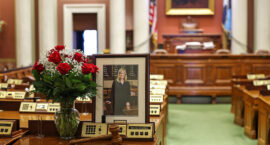
Her friend Melissa Hortman, a longtime Minnesota lawmaker, was murdered at home in June—shot by a man posing as a police officer who had also wounded two others and left behind a hit list of dozens of abortion-rights supporters. Among the names was Ruth Richardson, CEO of Planned Parenthood North Central States. “It was one thing to get a threat; it’s another to have confirmed threats where you have a friend and colleague who is assassinated,” she told Ms.

This tragedy unfolded against a backdrop of federal retreat: Trump pardoned extremists convicted of clinic blockades and violence, and his Justice Department declared it would largely stop enforcing the FACE Act, the law meant to protect providers. Advocates warn these decisions have emboldened extremists, leaving abortion providers more vulnerable than at any time in decades.

In the Fall Issue of Ms. Magazine: Abortion’s Foes Turn Deadly

The work of advocating for abortion rights has always been dangerous. But under the second Trump administration, which has enabled antiabortion lawmakers and vigilantes through policies and rhetoric, that danger has escalated dramatically, as state Rep. Melissa Hortman’s murder proves.

In our Fall issue, we delve into the motivations behind the shootings, and talk to the people who are trying to prevent further violence.

Here’s what else you’ll find in the Fall issue:

—a deep dive into how the Trump administration’s immigration policies are impacting families across the country—and advocates’ visions for a more just future.
—a visit to Syria’s “village of women,” which offers Kurdish women a refuge—one they’ll fight to protect.
—investigating how the Medicaid and SNAP cuts in the Republican budget bill will impact women and children.