Rest in Power: Judy Heumann, a Tireless Organizer for Disability Rights

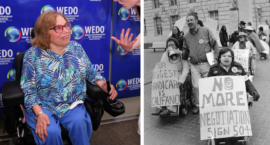
On Sunday, March 4, the world lost a fierce, funny, tireless organizer for disability rights with the death of Judith Ellen “Judy” Heumann.

If you want to work for change, take her advice: “When other people see you as a third-class citizen, the first thing you need is a belief in yourself and the knowledge that you have rights. The next thing you need is a group of friends to fight back with.”

Combating K-12 Sexual Harassment and Violence: How Far Have We Come?

Seven years ago, two parents whose child was sexually assaulted on a high school field trip created the nonprofit Stop Sexual Assault in Schools (SSAIS) after demanding accountability from the Seattle school district. In the website’s inaugural blog, Fatima Goss Graves, now president and CEO of the National Women’s Law Center, wrote: “If we do not bring a serious focus to the problem of sexual harassment and assault in elementary and secondary schools, it will be nearly impossible to make real progress at any other level of education.”

In the last decade, when it comes to stopping sexual harassment and assault in elementary and secondary schools, how far have we come?

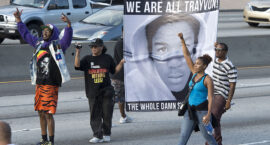
In ‘The Third Reconstruction,’ Peniel E. Joseph Outlines the U.S. Struggle for Racial Justice in the 21st Century

In recent months, historians have clashed over whether history should be used as a tool for the politics of the present. But Peniel E. Joseph’s latest work, The Third Reconstruction: America’s Struggle for Racial Justice in the Twenty-First Century demonstrates that not only is the personal political, but the past is too.

Joseph argues the dynamics of the present are never truly knowable until we anchor them to the contours of the past. This means to look at the Black women and queer Black people who have guided movements for social justice throughout American history.

We Heart: P!nk’s New Protest Anthem, ‘Irrelevant’

On July 18, the music video for P!nk’s new song, “Irrelevant,” dropped and has since been deemed a ‘protest anthem.’ She explained, “As a woman with an opinion and the fearlessness to voice that opinion, it gets very tiring when the only retort is to tell me how irrelevant I am. I am relevant because I exist and because I am a human being. No one is irrelevant. And no one can take away my voice.”

The proceeds from the new track will be donated to Michelle Obama’s national, nonpartisan voting initiative When We All Vote.

Tracing the History of a Job That Shouldn’t Exist: The Role of Clinic Escorts in America’s Fight for Abortion Rights

Their actions started relatively quietly. But then came the megaphones, the screaming, the death threats and the outright violence.

Bodies on the Line by Lauren Rankin examines the role of clinic escorts in America’s fight for abortion rights, and chronicles the history of anti-abortion extremism.

White Masculinity and the January 6 Insurrection

white-men-insurrection-january-6-masculinity-trump

Political commentary on the Jan. 6 insurrection has rightly centered race. The mob was overwhelmingly white, Confederate symbols were on full display, and the mythology of a “stolen election” was fueled by racial grievance.

But this focus often obscures another critical truth: The insurrection was also a gendered act. The vast majority of insurrectionists on Jan. 6 were not only white people; they were white men.

Any serious attempt to understand what happened that day must grapple with the intersection of race and masculinity, and with the cultural meanings attached to male power, entitlement and violence. Yet media coverage routinely relies on gender-neutral language: “people,” “extremists,” “individuals” … as if the overwhelmingly male composition of the mob were too obvious to warrant scrutiny. It isn’t.

The fact that 86 percent of those charged were men offers profound insight into the MAGA movement. Political violence, like domestic violence, is rarely spontaneous. It grows out of belief systems that normalize men’s authority and justify force as a tool for reclaiming control. Until we name and challenge those beliefs, we will continue to misunderstand both Jan. 6 and the ongoing threat to our democracy.


What Commitment to Diversifying the Federal Bench Looks Like

What Commitment to Diversifying the Federal Bench Looks Like

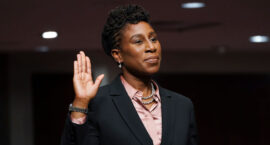
At the end of 2021, 80 percent of President Biden’s confirmed judges have been women—compared to 42 percent of President Obama’s federal judges and a mere 24 percent of President Trump’s.

It will take a sustained commitment to diversity to actually achieve a federal judiciary that reflects the American people. Even with President Biden’s diverse judges confirmed this year, the federal judiciary is still approximately 72 percent white and 65 percent men. The numbers are moving in the right direction, but we have a long way to go.

To Better Understand Sexual Violence on College Campuses, Congress Members Demand Education Department Changes

To Better Understand Sexual Violence on College Campuses, Congress Members Demand Education Department Changes

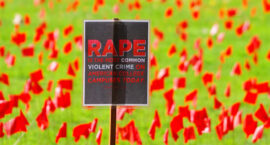
Up to 25 percent of undergraduate women will become victims of sexual violence—but because existing mechanisms for capturing and measuring this impact fail to capture the full scope of the issue, this number may be even higher. On Monday, members of Congress formally called this to the attention of the Biden administration.

In a letter signed by 77 members of Congress, signatories called on the Department of Education to update Campus Climate surveys, which assess campus culture including sexual violence.

‘Our Job Is Not Done’: Women Veterans in Congress Continue To Help Afghan Refugees

‘Our Job Is Not Done’: Women Veterans in Congress Continue To Help Afghan Refugees

Women policymakers and veterans are pressing the Biden administration to protect Afghan refugees, specifically women and children.

“Women have been on the frontlines—and not just in Afghanistan—of promoting democratic values in an important way,” said Rep. Mikie Sherrill. “So if we want to see an Afghanistan that does not look like an Afghanistan of 20 years ago, then supporting women is a critical piece of that … Our job is not done.”