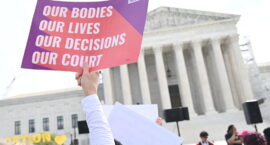
As abortion access is increasingly being decided by state and federal courts, two reproductive rights attorneys make sense of past rulings and the ongoing fight for reproductive healthcare.


More Than A Magazine, A Movement

The Center for Reproductive Rights filed Zurawski v. Texas, a groundbreaking lawsuit asking the state of Texas to clarify the scope of the “medical emergency” exceptions under its abortion bans.
The case, filed in state court in Austin, is the first lawsuit brought on behalf of women denied abortions since the U.S. Supreme Court eliminated the constitutional right to abortion in June 2022.
As abortion access is increasingly being decided by state and federal courts, two reproductive rights attorneys make sense of past rulings and the ongoing fight for reproductive healthcare.

Amanda Zurawski, Kaitlyn Joshua and Hadley Duvall have emerged as key surrogates for the Democratic Party, campaigning in support of Vice President Kamala Harris.

Two women have filed federal complaints against Texas hospitals they say refused to treat their ectopic pregnancies, leading both women to lose their fallopian tubes and endanger their future fertility.
Texas law allows doctors to terminate ectopic pregnancies, a condition in which the fertilized egg implants in the fallopian tubes, instead of the uterus. Ectopic pregnancies are always non-viable and can quickly become life-threatening if left untreated. Despite these protections, these women say they were turned away from two separate hospitals that refused to treat them. The complaint alleges that the doctors and hospitals are so fearful of the state’s abortion laws, which carry penalties of up to life in prison when violated, that they are hesitating to perform even protected abortions.
“Texas officials have put doctors in an impossible situation. It is clear that these exceptions are a farce, and that these laws are putting countless lives in jeopardy.”
The Supreme Court has come down on the major abortion case Moyle v. United States, effectively dismissing the case and leaving pregnant women and healthcare providers in Idaho without answers.
I just had the privilege of experiencing the very best of American modern medicine this week for my knee surgery. We celebrate our American medical system as the best in the world—so why would we voluntarily decide to deny the care that I just received this past week to women in 21 states in our country?
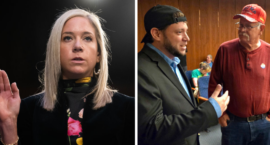
Amarillo residents will vote on an abortion travel ban—which would ban the use of the city’s roads and highways to seek an abortion out of state—in the November election.
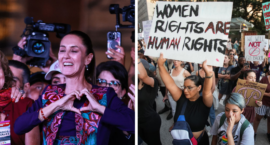
The start of this week marked a feminist milestone for our southern neighbors: the election of the first-ever woman president in Mexico—a culmination of decades of political interventions like gender quotas and parity mandates aimed expressly at elevating more women to higher office.
Just days before, in Texas—home to 10 percent of U.S. women of reproductive age—the state Supreme Court issued a huge loss to women, in the form of a callous ruling that forces pregnancy on women until (and even past) the brink of death and mandates them to continue pregnancies even when their fetus has no chance of survival after birth. To wish such suffering on pregnant Texans and their children goes beyond heartless indifference. It is violent and inhumane.
Felicidades a mis hermanas en México. And buena suerte—good luck—to my sisters in Texas. You are not alone.
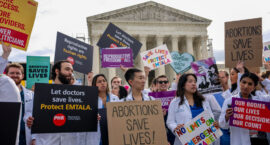
Even as we wait for U.S. Supreme Court decisions in two cases set to come down this month that could have massive impacts on abortion access, I fear that a court decision out of Texas and a new law passed in Louisiana foreshadow how the Court might rule.
The cases pending before the U.S. Supreme Court involve whether federal law requiring hospitals to provide emergency abortions in cases when a woman’s health—not only her life—is threatened supersedes state abortion bans, and whether the FDA acted properly in its decision to ease regulations making it easier to dispense abortion pills without in-person visits.
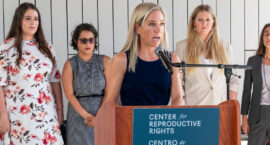
The Texas Supreme Court has unanimously rejected the most significant challenge to Texas’ new abortion laws yet, ruling Friday that the medical exceptions in the law were broad enough to withstand constitutional challenge.
The initial lawsuit was filed in March 2023, and unlike previous wholesale, pre-enforcement challenges to abortion bans, this case focused on a very narrow argument—women with complicated pregnancies were being denied medically necessary abortions because doctors were unclear on how and when they could act. Amanda Zurawski, the named plaintiff in the suit, was 18 weeks pregnant with a daughter they’d named Willow when she experienced preterm prelabor rupture of membranes. Despite the condition being fatal to the fetus and posing significant risks to the pregnant patient, her doctors refused to terminate the pregnancy because there was still fetal cardiac activity. Eventually, Zurawski went into sepsis and spent three days in the intensive care unit. While she survived, the infection has made it difficult for her and her husband to conceive again.
“The people in the building behind me have the power to fix this, yet they’ve done nothing,” Zurawski said. “So it’s not just for me, and for our Willow, that I stand here before you today—it’s for every pregnant person, and for everyone who knows and loves a pregnant person.”
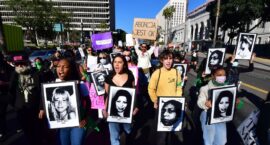
Doctors, lawyers and advocates say the state board’s new guidance still doesn’t clarify when doctors can legally perform abortions.
“Unfortunately, the increased requirements for documentation are truly unworkable,” testified Dr. Richard Todd Ivey, a Houston OB-GYN. “These decisions should be made by a patient in consultation with their physicians, because that is the practice of medicine. We as physicians want to work within the confines of the law, but we cannot do so if our hands are tied.”

The 16th annual Global Women’s Rights Awards, hosted by the Feminist Majority Foundation (publisher of Ms.), convened Tuesday evening in Los Angeles. This year’s awards celebrated the activism to secure final ratification of the Equal Rights Amendment and the bravery of both U.S. and Afghan women in the face of misogynistic laws and leadership.
The evening recognized three honorees in particular who have contributed greatly to advancing the rights of women and girls: Former U.S. Rep. Carolyn Maloney, Dr. Austin Dennard, and the Bread and Roses documentary team, including director Sahra Mani.