Weaponizing the Law to Punish People for Miscarriage

A legal system that recognizes fetal personhood punishes people for their pregnancy outcomes and strips them of their rights in the name of protecting the fetus. One striking recent example comes from Texas, where the state Supreme Court recently ruled that Kate Cox could not have an emergency, life-saving abortion. And in October, an Ohio woman was charged with a felony after her miscarriage.

Miscarriage is normal. Subjecting people who have miscarriages to criminal punishment is needlessly cruel, counterproductive, and relies on a legal understanding that pregnant people are a lesser class of person.


Texas Supreme Court Overturns Ruling That Would Have Allowed Kate Cox to Terminate Nonviable Pregnancy

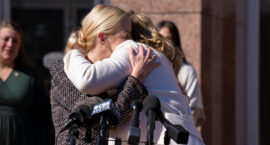
After a week of legal whiplash and threats of prosecution from Texas Attorney General Ken Paxton, Kate Cox has been forced to leave Texas to get healthcare in another state, the Center for Reproductive Rights (CRR) announced on Monday. Cox’s fetus has a fatal condition and continuing the pregnancy threatens her future fertility. “Her health is on the line,” said Nancy Northup, president and CEO at CRR. “She’s been in and out of the emergency room and she couldn’t wait any longer.”

Paxton had petitioned the state Supreme Court just before midnight Thursday to intervene and stop a Dallas woman from having an abortion—after a Travis County district judge granted a temporary restraining order allowing Cox, 31, to terminate her nonviable pregnancy. Paxton also sent a letter to three hospitals, threatening legal action if they allowed the abortion to be performed at their facility. On Friday evening, the state Supreme Court temporarily halted the lower court’s order but did not rule on the merits of the case. The court said it would rule on the temporary restraining order, but did not specify when.

Texas Supreme Court Halts Emergency Order from Lower Court Judge Allowing Kate Cox to Abort Fetus With Lethal Abnormality

For the first time in at least 50 years, a judge has intervened to allow an adult woman to terminate her pregnancy.

Kate Cox, 31, at 20 weeks pregnant, has learned her fetus has a lethal abnormality that is almost always fatal at birth. After a 45-minute Zoom hearing Thursday, Travis County District Judge Maya Guerra Gamble ruled that Cox should be allowed to terminate the pregnancy, and that Dr. Damla Karsan, a Houston OB-GYN, should be protected from civil and criminal penalties if she performs the procedure. The state cannot directly appeal Thursday’s order, since it is a temporary restraining order. Instead, the Office of the Attorney General would have to file a writ of mandamus petition, asking a higher court to take the extraordinary measure of overturning the emergency order.

Some Republicans Were Willing to Compromise on Abortion Ban Exceptions. Anti-Abortion Activists Made Sure They Didn’t.

On the floors of state legislatures over the past year, doctors detailed the risks their pregnant patients have faced when forced to wait to terminate until their health deteriorated. Women shared their trauma. Some Republican lawmakers even promised to support clarifications.

But so far, few efforts to add exceptions to the laws have succeeded.

What Happens Next in the Case Seeking to Block Texas’ Abortion Bans?

The Texas Supreme Court heard arguments on Tuesday in a case which seeks to clarify the scope of Texas’ “medical emergency” exception under its state abortion bans. The plaintiffs—20 Texas women denied abortions, joined by two doctors—were denied abortion care in Texas for their medically complex pregnancies, including cases where the fetus was not expected to survive after birth.

A ruling from the state Supreme Court is expected in the coming weeks or months. All the while, the case is working its way through the lower courts, which goes to full trial on March 25, 2024. In the meantime, the Center for Reproductive Rights “stands ready to help anyone in a situation where their life is on the line and they’re not getting the care they need.”

Creating Careers Based on Uplifting Women’s Voices

Both Elisa Lees Muñoz and Cindi Leive have built their decades-long careers creating and uplifting reporting by and for women. In this back-and-forth conversation, the two journalists discuss the risks women in the news face, the importance of women-centered and feminist reporting, and how we can best protect press freedom.

(This essay is part of the “Feminist Journalism is Essential to Democracy” project—Ms. magazine’s latest installment of Women & Democracy, presented in partnership with the International Women’s Media Foundation.)

Our Abortion Stories: Two Years of Texas’ SB 8

Last summer, the Supreme Court overturned the longstanding precedents of Roe v. Wade, representing the largest blow to women’s constitutional rights in history. In Texas, this has been part of women’s reality for years.

“The state doesn’t care about the lives of their constituents, especially pregnant people,” said Amanda Zurawski.

A series from Ms., Our Abortion Stories chronicles experiences of abortion pre- and post-Roe. This special edition is dedicated to the women in Texas fighting to reclaim the right to safe and accessible abortion care on this grim two-year anniversary. 

Texas Judge Rules in Favor of Doctors and Women Who Testified to the Grave Harm of Abortion Bans

Judge Jessica Mangrum ruled in favor of the 15 plaintiffs suing Texas for the state’s abortion bans, who almost died during pregnancy due to grave complications. Mangrum’s ruling granted a temporary injunction to block Texas’ abortion bans, but only as they apply to severe pregnancy complications, including life-threatening fetal diagnoses. The ruling says that doctors can use their own “good faith judgment” to determine when to offer abortion care, without fear of prosecution. Mangrum also ruled that Texas’ Senate Bill 8—the six-week abortion ban with the “bounty hunter” provision that allows citizens to sue anyone who aids and abets abortion—is unconstitutional.

The narrow victory was short-lived, as the state of Texas has already appealed the ruling to the Texas supreme court. According to Texas state law, as soon as an appeal is filed, a ruling is stayed.