Weekend Reading on Women’s Representation is a compilation of stories about women’s representation in politics, on boards, in sports and entertainment, in judicial offices and in the private sector in the U.S. and around the world—with a little gardening and goodwill mixed in for refreshment!
Milestones for notable women this week include birthdays for: Erica Payne (founder and president of the Patriotic Millionaires), Katrina Vanden Heuvel (editor and publisher of The Nation), RepresentWomen board member Susannah Wellford’s mother Sue Wellford, Cynthia’s daughter Becca Richie, Leda Black (The Female Power Project), Kathryn Clarenbach (founding member of the National Organization for Women), Mary Ann Shadd Cary (suffragist, abolitionist, writer and first African American woman to publish a newspaper), Sara Lind (former executive director of 21 in ’21), Patty Murray (U.S. senator), Eleanor Roosevelt (former first lady), Gwendolyn VanSant (founder and CEO, Change Maker Strategies), and Rachel Hutchinson (research analyst at FairVote).
Portland’s Democracy Is Under Attack. Its Gender-Parity Council Is the Real Story.

For more than a century, Portland’s city commission was dominated by affluent white men; only 10 women ever served, and just two were women of color.
That changed in 2024, when voters elected a 12-member city council that is 50 percent women and majority people of color, making it the most diverse in the city’s history.
Our team at RepresentWomen released an exciting new report on Friday—”Parity in Portland: How Public Financing, Proportional RCV, Council Expansion, and Community Support for Candidates Created a Powerful Community for Women in Portland, Oregon”—that explores how structural reform and community-driven organizing came together to create one of the most representative city councils in the country.
Our research found that this transformation wasn’t accidental. It was the result of intentional collaboration between reform advocates and community organizers—what we call the twin-track approach, pairing systems-level change with grassroots support for candidates.

Portland’s reform ecosystem included several critical components:
- Proportional ranked-choice voting (PRCV) replaced winner-take-all elections, allowing multiple candidates to win seats in each district and ensuring that more communities were represented.
- Council expansion created new open seats and unprecedented opportunities for first-time candidates.
- Public financing through the Small Donor Elections program leveled the playing field by amplifying small donations from residents.
- Community organizations led voter education and candidate support efforts, helping to ensure that the new system worked for all Portlanders.
Together, these changes transformed not just who ran, but who won. Women now hold half the council seats, including four women of color—an outcome that represents both historic progress and a roadmap for other cities.
As we’ve seen through our ongoing twin-track research, parity isn’t achieved by accident or by individual effort alone. It requires rethinking the systems that shape opportunity and investing in the networks that help women run, win, serve and lead. Portland’s story is proof that when structure and support align, progress can happen faster—and more equitably—than we think.

Remembering Eleanor Roosevelt’s Calm, Kind Approach to Politics and Priorities: ‘You Cannot Talk Civil Rights to People Who Are Hungry’
“True patriotism springs from a belief in the dignity of the individual, freedom and equality not only for Americans but for all people on earth, universal brotherhood and good will, and a constant striving toward the principles and ideals on which this country was founded.” —former first lady, Eleanor Roosevelt, Book of Common Sense Etiquette (1962)
Oct. 11 marks the birthday of Eleanor Roosevelt, a woman whose life and leadership continue to shape how we understand courage, public service and democracy itself.
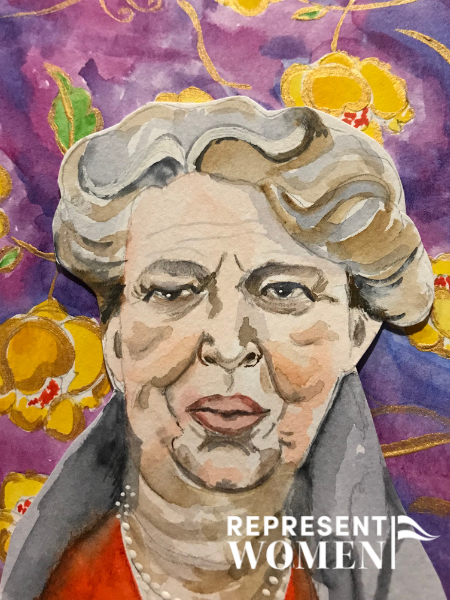
In 1933, amid the hardship of the Great Depression, Roosevelt published It’s Up to the Women, a rallying cry for courage, compassion and collective responsibility. She reminded readers that even in the most challenging times, women have always been a driving force for renewal and change:
“Women, whether subtly or vociferously, have always been a tremendous power in the destiny of the world.”
— Eleanor Roosevelt, It’s Up to the Women
Her message was not simply about perseverance, but about redefining leadership. Roosevelt often spoke about the qualities women brought to public life—empathy, practicality and a belief that communities flourish when they care for one another—values she saw as essential to the health of democracy.
Over the decades that followed, Roosevelt turned those words into action. She worked in settlement houses and labor organizations alongside women who would later help shape the New Deal. As first lady, she reimagined what it meant to serve, holding press conferences for women reporters, traveling the country to meet working families, and transforming public influence into a form of civic leadership.
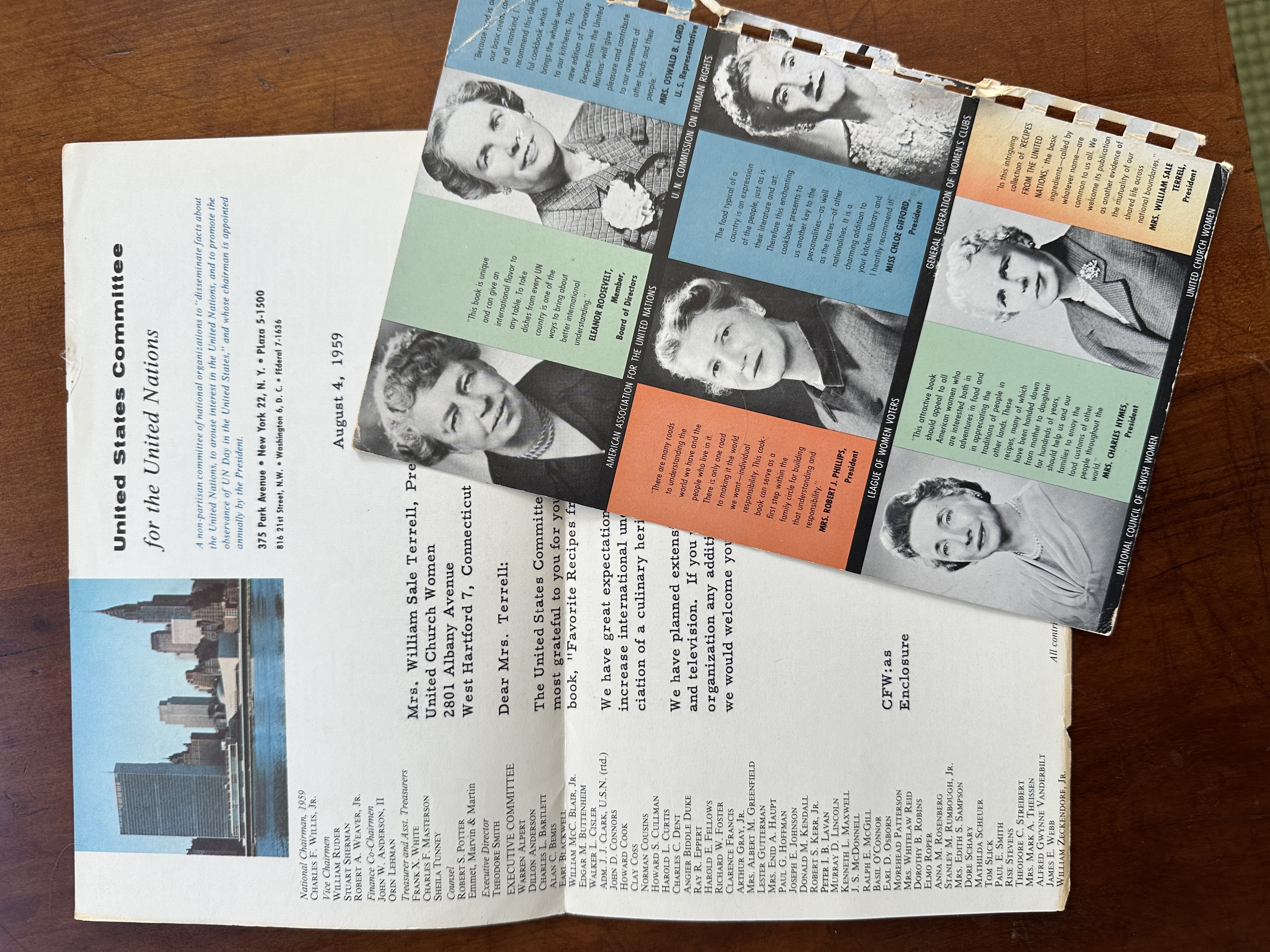
Later, as a diplomat and chair of the United Nations Commission on Human Rights, she helped craft the Universal Declaration of Human Rights—insisting that freedom must include not only political rights, but also the right to food, housing and dignity. “You cannot talk civil rights to people who are hungry,” she said.
Even near the end of her life, Roosevelt continued to build bridges across divides. In her My Day column published on Oct. 10, 1957—exactly 68 years ago this week—she wrote about meeting with the Committee of Soviet Women, calling for more exchange and understanding between women across nations:
“Their great desire is to see the U.S. and to know the women of our country better. And I am convinced that one of the things that will benefit us is to have a greater interchange between the people of the Soviet Union and our own… Only by coming and seeing will they ever understand what this country is really like and what we mean by democracy and freedom.”
In the midst of Cold War tension, Roosevelt’s words were a quiet but radical act—a reminder that peace often begins not in policy or power, but in empathy and connection.
That message feels strikingly relevant today. We are once again navigating an era of deep division—marked by distrust, misinformation and widening gaps in understanding. Roosevelt’s call for dialogue across borders and differences reminds us that the health of democracy depends not only on the systems that govern us, but on the spirit with which we meet one another. Her belief that listening, learning and cooperation could strengthen democracy is a lesson worth remembering.
Her legacy reminds us that democracy is not self-sustaining. It depends on those willing to lead with compassion, courage and conviction. Eleanor Roosevelt’s life is proof that women’s leadership is not a side note to history; it is the story of how we move forward together.
As we honor her birthday this week, may we remember her enduring message: it’s up to the women—to strengthen democracy, to bridge divides and to carry forward the work of building a freer, fairer world.
A Woman Will Be Ireland’s Next President

After the only male contender bowed out, Ireland’s ranked-choice voting election for president is now between two women. Jim Gavin, the Fianna Fáil candidate, withdrew after revelations about an unpaid rent dispute, upending what had been a three-way race. This leaves Catherine Connolly, a left-wing independent backed by Sinn Féin and progressive parties, and Heather Humphreys, the Fine Gael-endorsed former minister.
The Oct. 24 election is close. According to The Guardian, polls before Gavin’s exit showed Connolly leading with 32 percent first-choice support, with Humphreys at 23 percent and Gavin trailing at 15 percent. Simulating an instant runoff based on the second choice preferences of Gavin voters and how undecided voters might break showed a near dead heat between the two women. While Gavin has dropped out, he will remain on the ranked-choice voting ballot, meaning that preferences from his voters might still end up being decisive.
The Taoiseach—that is, the prime minister—is Ireland’s head of state, but the role of president is also an important and prominent one. Assuming Connolly or Humphreys will serve at least one seven-year term, Ireland will have had three women presidents serving a total of 28 years by 2032, as opposed to one man serving seven years. That stretch of women’s electoral success began with Mary Robinson’s comeback win in 1990.
Last Saturday, Connolly was invited to address a Sinn Féin conference in Dublin, a pro-Connolly editorial in The Irish Echo details the event:
Introducing Catherine Connolly last Saturday, Uachtarán Shinn Féin Mary Lou McDonald described her as someone who “believes in Ireland, believes in the people of Ireland, believes that we can realise a better future together. She is a rooted working-class woman. A proud Gael and Gaeilgeoir. A woman with a lifetime of standing up to Fianna Fáil and Fine Gael. She will be a President who understands the immense opportunity of Irish unity, who speaks with hope and confidence that we can achieve a united Ireland…
In her remarks, Catherine Connolly asserted her belief that Irish unity is a “foregone conclusion” and that preparations are needed to demonstrate that the new Ireland can be a place that will embrace diversity and equality. She pledged that as President she will “give voice to the firm will of the Irish people in Article 3 of the Constitution in every way I can to promote that objective”. Connolly also said that people must take courage in their hands if we are to shape a new Republic that can provide housing and health services for everyone.
The American Academy of Arts & Sciences Makes the Case for Proportional Representation
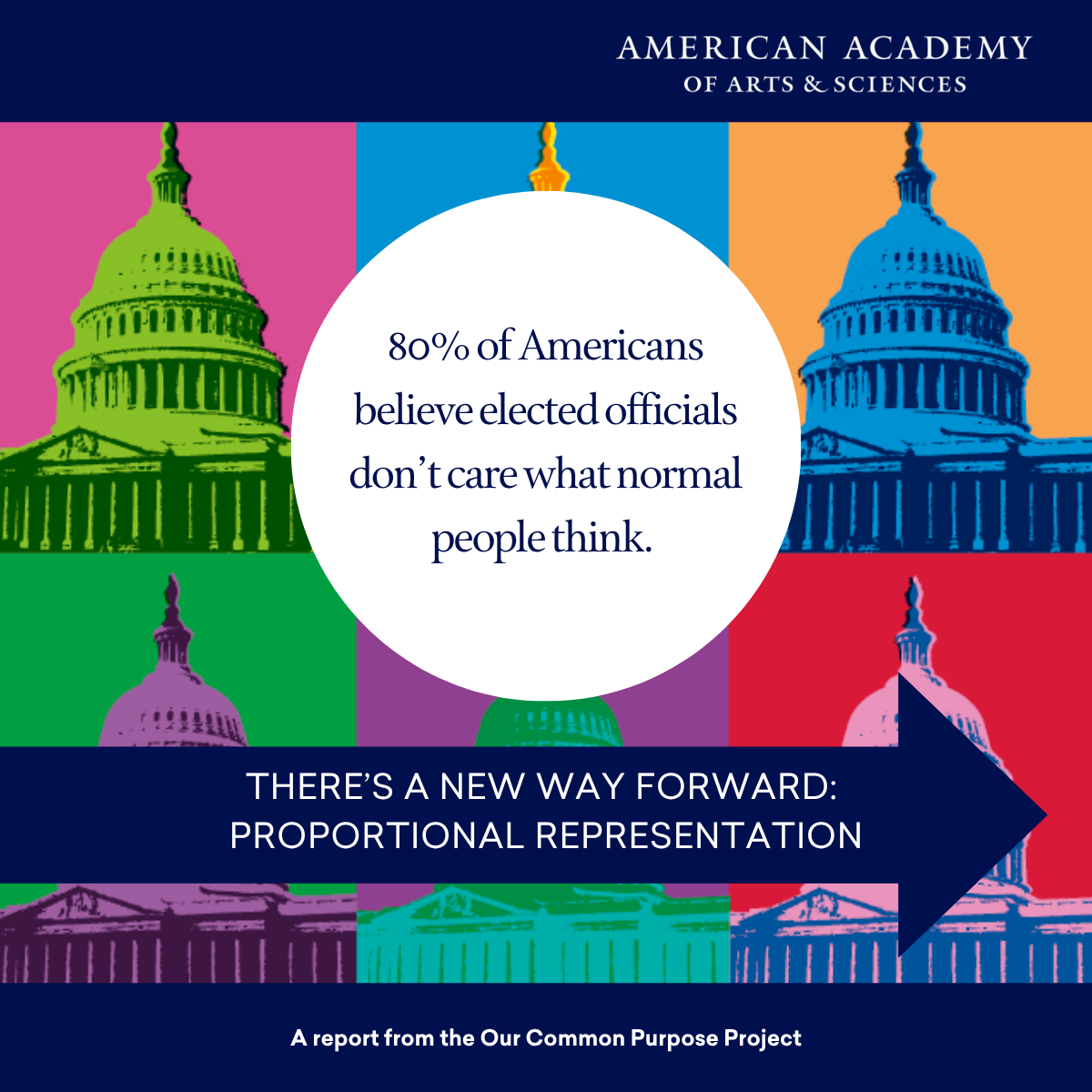
This week, the American Academy of Arts & Sciences released a groundbreaking new report—”Expanding Representation: Reinventing Congress for the 21st Century”—that reimagines how Americans elect their leaders.
The report, produced by the Academy’s Working Group on Electoral System Design, makes a compelling case for moving beyond the “winner-take-all” elections that define most of the U.S. system. Instead, it outlines how proportional representation—used successfully in many democracies around the world—could strengthen competition, reduce polarization, and ensure that more voters see their voices reflected in Congress.
“When every vote counts, when voters feel they have real choices, and when Congress more closely reflects the views of the American people, our democracy will be stronger and more resilient,” said Laurie L. Patton, president of the American Academy of Arts & Sciences.
Importantly, the report emphasizes that such reforms would not require a constitutional amendment. Congress could revise the 1967 law mandating single-member districts and allow states to adopt multi-member districts that elect representatives proportionally, ensuring fairer outcomes and more collaborative governance.
The Academy’s analysis builds on its 2020 “Our Common Purpose” report, which first called for proportional systems in the U.S. House of Representatives as part of a broader set of recommendations to strengthen democracy. This new report provides a practical roadmap for how such reforms could be designed and implemented in ways that fit the American context.
At RepresentWomen, we’ve long studied how proportional systems expand opportunities for women and underrepresented groups to run, win and serve. Research from around the world shows that when representation more closely reflects society, legislatures become more effective and inclusive—qualities our democracy needs now more than ever.
Sanae Takaichi Expected to Be Japan’s First Woman Prime Minister
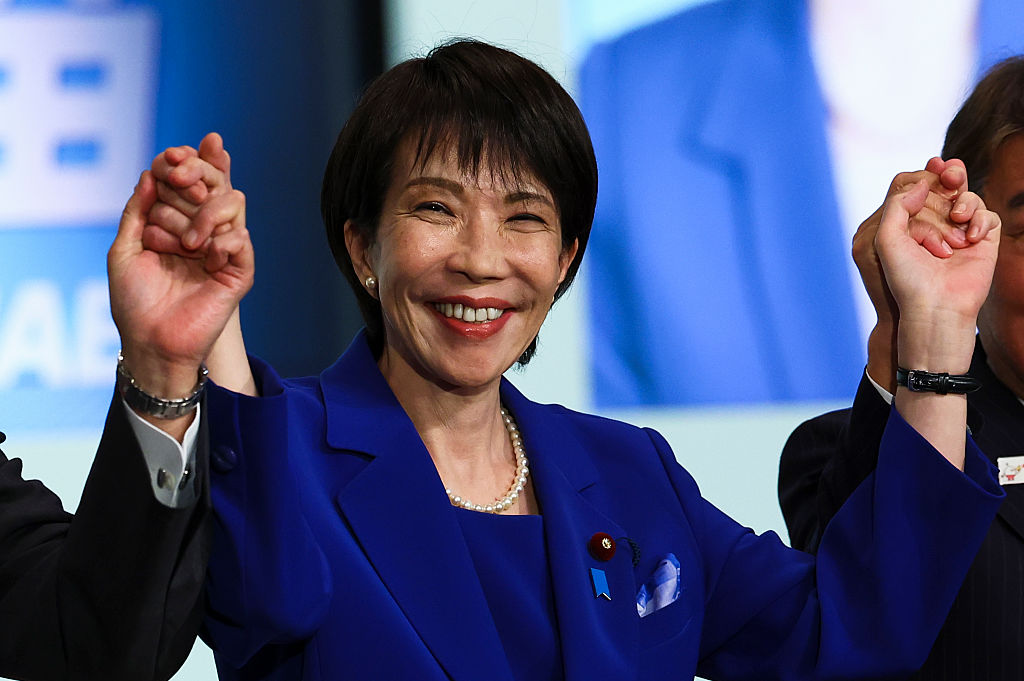
Japan’s leadership is poised for a historic shift. The governing Liberal Democratic Party selected Sanae Takaichi as its party leader on Oct. 4, over several male contenders, to replace Shigeru Ishiba, who resigned last month. Takaichi will still need to be formally elected as prime minister when Parliament convenes.
Takaichi is from the conservative wing of her party, The BBC explains:
Takaichi has been a long-time admirer of Britain’s first female prime minister, Margaret Thatcher. She is now ever closer to fulfilling her Iron Lady ambition. But many women voters don’t see her as an advocate for progress.
“She calls herself Japan’s Margaret Thatcher. In terms of fiscal discipline, she’s anything but Thatcher,” Prof Kingston said. “But like Thatcher she’s not much of a healer. I don’t think she’s done much to empower women.”
Takaichi is a staunch conservative who’s long opposed legislation allowing women to keep their maiden names after marriage, saying it is against tradition. She is also against same sex marriage. A protégé of the late former leader Shinzo Abe, Takaichi has vowed to bring back his economic vision, known as Abenomics – which involves high fiscal spending and cheap borrowing. The LDP veteran is hawkish on security and aims to revise Japan’s pacifist constitution.
Women are dramatically under-represented in Japan’s Parliament, with women holding only 15.7 percent of lower house seats, giving it a ranking of 140th in the world. Takaichi will face obstacles, both in securing the prime minister role and in government: intra-party resistance, factional dynamics and a public skeptical of continuity from the ruling Liberal Democratic Party (LDP). The Associated Press writes:
Takaichi is likely to be Japan’s leader because the LDP, even without a majority in either house of Parliament following consecutive election losses, is still by far the largest in the lower house, which decides the national leader, and because opposition groups are highly splintered.. She will need to address rising prices to restore support for the struggling party. She also faces another big test when she hosts a possible summit later this month with Trump as his trip to Asia to attend international conferences is planned.
History Made with Church of England to Have Its First Woman Leader

Sarah Mullally has been named the next Archbishop of Canterbury, the first woman ever appointed to lead England’s established church and the worldwide Anglican Communion. Mullally currently serves as Bishop of London and is stepping into what has long been a male-only role. Her appointment marks a dramatic symbolic shift—for the first time, a woman will lead one of Christianity’s oldest institutions.
Mullally inherits a church grappling with scandals over sexual abuse, deep divisions over LGBTQ+ inclusion, and declining attendance and she has pledged to confront those challenges head-on. The New York Times writes:
A former cancer nurse who later served as the chief nursing officer for England, Archbishop-designate Mullally, 63, is a vocal exponent of the rights and role of women in the Church of England. She has been the bishop of London since 2018, and now becomes the spiritual leader of 85 million Anglicans around the world.
The appointment of a woman was not a total surprise. The rumored shortlist of candidates had included two other female bishops, one of whom, Guli Francis-Dehqani, came to Britain at 13 as a refugee from Iran, fleeing the 1979 Islamic Revolution. But the naming of Archbishop-designate Mullally thrusts the church into a new era, potentially sowing tensions within the far-flung Anglican Communion, to which the Church of England, as well as the Episcopal Church in the United States, belongs. The Anglican Communion is the third-largest global Christian communion, after the Roman Catholic and the Eastern Orthodox churches.
Other bishops in that body are more conservative on women’s rights and other social issues than those in the Church of England. The church itself has been cleaved between reformers and traditionalists on issues like same-sex marriage. Speaking from an austere altar at Canterbury Cathedral after her appointment was announced, Archbishop-designate Mullally thanked women who had served in the church before her for being path breakers, and she offered an inclusive answer to those who would ask what a female archbishop might mean.
Appreciation for Jane Goodall, a Trailblazer in Science and Environmental Protection

The scientist and humanitarian leader Jane Goodall died last week at age 91. Goodall was a giant for people of my generation, with an inspiring story of breaking into a male-dominated field with intelligence, courage, and persistence. Here are excerpts from The Washington Post obituary:
Dr. Goodall, whose research prompted a transformation in the ways scientists study social behavior across species, has died at 91. ..In a career spanning more than half a century, Dr. Goodall used her global fame to draw attention to the plight of dwindling chimpanzee populations and, more broadly, to the perils of environmental destruction…
“For me as a little girl, seeing this brave young woman going out and living in the wilds of Africa and being determined to make it work was just an incredible inspiration,” said Elizabeth Lonsdorf, a professor at Emory University who has conducted research at Gombe for two decades. She added that, long after Dr. Goodall conducted her pathbreaking research, female undergraduates still say she was the one who sparked their interest in field biology.
When Dr. Goodall began her work, female field scientists were so uncommon that a British commissioner for Tanganyika refused to allow Dr. Goodall to stay at Gombe unless she was accompanied by an escort. She chose her mother, Vanne.
Even after her important finds, the male-dominated scientific establishment largely dismissed Dr. Goodall as a wisp of a woman who insisted on naming her research subjects, a practice regarded as unacceptably sentimental and anthropomorphic.
But she succeeded in revolutionizing primatology and field biology perhaps because of — not in spite of — her lack of training. The same impulse that led her to name her research subjects also led her to see the animals as individuals, and she documented the extraordinary range of their emotions and personalities.
“She has made the most important contributions of any primatologist in history,” said Robert Sapolsky, a Stanford professor who studies baboons using Dr. Goodall’s model of long-term field observation. “She’s simply the patron saint of the field.”..
She grew up in a house filled with women: her mother, nanny, grandmother, two aunts and a younger sister, Judy. “I do not remember a time when I was growing up anybody ever saying to me, ‘Well, you can’t do that because you’re a girl,’” she told Britain’s Independent newspaper in 2003.
Bougainville Has Record Number of Women Candidates in 2025 Election
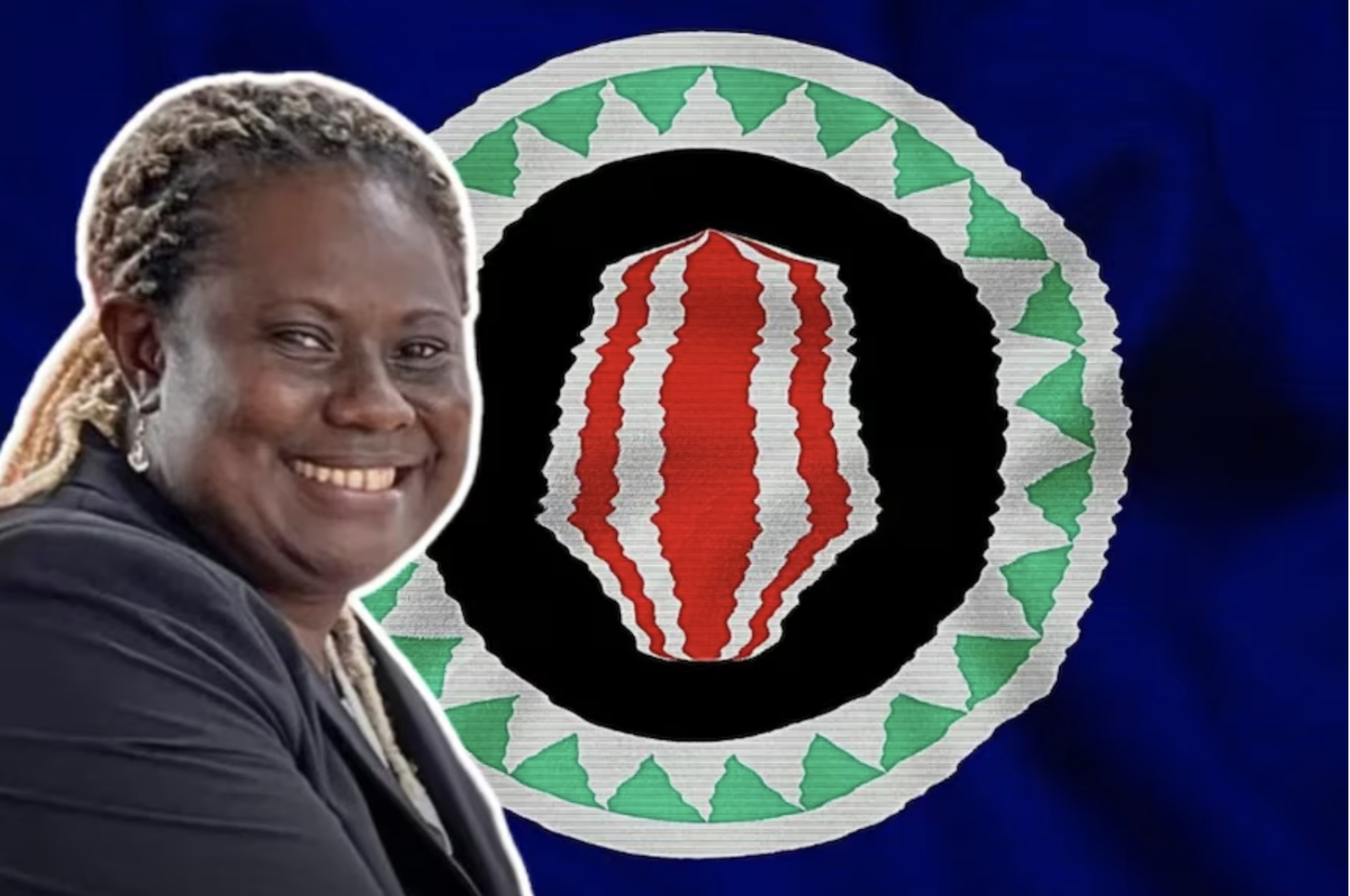
A record 34 women are running for Parliament in Bougainville’s 2025 election, a milestone for the post-conflict region as it moves closer to independence from Papua New Guinea. As in Papua New Guinea and Australia, elections will be held with ranked-choice voting—locally called “limited preferential voting, with voters asked to rank up to three candidates.
Women candidates, including seasoned leaders like Theonila Roka Matbob, Therese Kaetavara and Amanda Masono, are contesting both reserved and open seats, building on momentum from 2020 when two women won open constituencies for the first time. While women remain a small share of the 370 total contenders, their growing visibility underscores a broader shift: Bougainville’s journey toward self-determination is increasingly being shaped by women determined to lead it. The RNZ Pacific notes:
Fourteen women are standing in the three seats reserved for women, while 20 are contesting open electorates.In the 2020 election, two women won open seats for the first time, but there are hopes that more will be successful this time round.
One of the organisations helping women to enter politics is the Leitana Nehan Women’s Agency. Its head, Helen Hakena, explained how they aim to raise confidence levels among aspiring women politicians.
“What politics is about. What is politics, the role of parliamentarians and how to do manifestos,” Ms Hakena told RNZ Pacific. “So, we wanted to run training for more women so that they had the confidence in knowing what the responsibilities of parliamentarians would be, that is why and how to campaign as well.”
EMILY’S List Endorsements Show Value of Intentional Support for Women’s Electoral Success
Political parties and institutions worldwide take different approaches to increase the representation of women in politics. For most of the world, intentionality for that goal takes the form of gender quotas established either by the government for all parties or by individual parties for their own nominees.
The United States has been resistant to gender quotas in elections, and the lack of party control over nominations makes implementing quotas even more complicated here. But intentionality can take different forms, with EMILY’s List in the United States offering a clear model. For four decades, EMILY’s List has demonstrated that “early money is like yeast,” early funding and organized support help women’s campaigns grow and gain viability. It has played a huge role in the growth of women in the Democratic Party, to the point that by 2027, women will represent a majority of Democrats elected to state legislatures around the country.
EMILY’S List is starting to endorse in Democratic primaries in the 2026 cycle, with a full archive here. As a recent example, its endorsement of Illinois Lt. Gov. Juliana Stratton for the U.S. Senate underscores the enduring impact of early, strategic investment in women candidates—the Democratic winning that primary next spring could well represent Illinois for three decades.
Czech Parliament Elects Record Number of Women Thanks to Open Party List

In the 2025 Czech parliamentary elections this year, a record 67 women were elected to the 200-member Chamber of Deputies, bringing female representation to 33.5 percent. Much of this progress can be attributed to voters being able to select candidates directly, an “open list” system that allows voters to select individual candidates on party lists, one sometimes called “preferential voting,” although not ranked-choice voting. This year, fully 23 deputies moved ahead on their lists due to votes from the public. The gains also reveal that voters, especially young people, are increasingly supporting women candidates.
Radio Prague International spoke with Veronika Šprincová, an analyst and former director of Fórum 50 percent, a non-profit organization committed to promoting a balanced representation of women and men in politics and leadership roles. How preferential voting was instrumental to these gains in representation was discussed:
In Czech parliamentary elections, voters not only choose their preferred party but can also give up to four preferential votes to individual candidates on their chosen party’s list. If a candidate receives enough preferential votes, they can move ahead of others on the list and secure a seat in Parliament. This process is nicknamed “kroužkování” (circling), as voters physically circle the numbers of the candidates they want to support.
Question: Are there other electoral systems that can more effectively promote a balanced representation of women and men in politics?
Šprincová: “I think the electoral system as such is OK. And we can see that if voters really want to send a message towards political parties, they can do so. They did so in the previous elections, and also in the elections in 2010. In this year’s elections, we saw the most preferential voting ever, I would say, at least when it comes to the representation of men and women, in which it was most effective this year.
Without preferential voting, there would be only 24.5% of women, which would be less than in previous periods. So I think this is important to point out. From our perspective, the simplest and most effective solution would be to implement gender quotas on electoral lists. This would help ensure balanced representation of men and women—at least in the top positions on the list, which are the most likely to be elected.”
Every Girl Deserves to Lead

Oct. 11, marks the International Day of the Girl—a global observance dedicated to recognizing the rights, leadership, and limitless potential of girls everywhere.
As UNICEF reminds us, investing in girls’ education, safety and participation in public life is not only a moral imperative —it’s essential to building more equitable and resilient communities. From Portland to places across the globe, progress begins when every girl grows up seeing women in power and believing that leadership is hers to claim.