


The Netflix reboot offers a timely reminder that America was built less on rugged individualism and more on care, equality, partnership and shared responsibility.
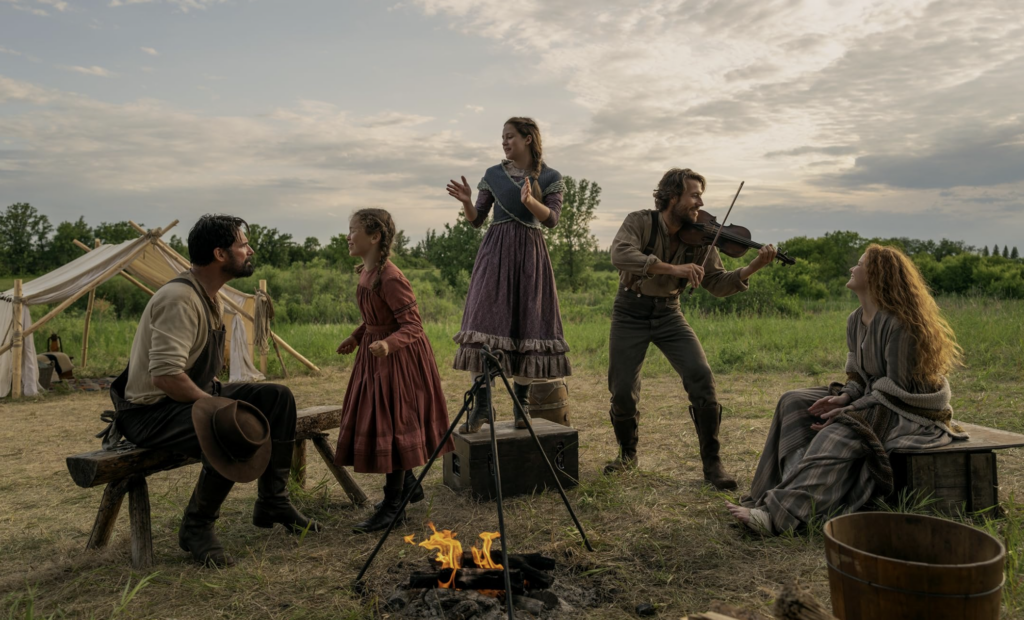
It would be easy to be cynical about a remake of Little House on the Prairie. At a moment when “tradwife” nostalgia and gender politics dominate so much of our cultural conversation, the series arrives as an unexpected relief—and maybe just what we need today.
There’s a nod to the old debate over whether men or bears are more dangerous. (Here, it’s men versus wolves.)
There’s the diversity of a post-Civil War America: free Black men, Native Americans, mixed-race chosen families and more.
But the show isn’t interested in hammering home a lesson from either side of our political divide. It’s more interested in showing the country as it was—and maybe still is—by offers a quieter and more useful idea: This country wasn’t built by macho men full of bravado. It was built by people (men and women both) who were simply looking to make a better life and create opportunity for their families.
That’s the real engine of the story, a white family migrating from Wisconsin to Kansas, onto land that belonged to the Osage. You can read it as the story of migrants anywhere, and colonization of this country, or you can take it as the simpler story of a family where men and women carry the load together—where the men are caring at times, haunted by old trauma at others, and occasionally just hustlers trying to get ahead. None of them is larger than life. They’re just trying to get by and to give their kids something better than what they had.
The show allows itself a few earnest lessons, delivered through equally earnest dialogue.
“It’s a myth that men can make it out here alone,” the Black small-town doctor tells the husband, who later tells his wife and daughters, “Hope is everything.”
We could use lessons like that these days.
But mostly, it’s just good storytelling: a traumatized man learning to apologize, a Native American family caught between survival and making peace with white neighbors encroaching on their land, the everyday danger of childbirth, the lingering wounds of a war that tore the country apart (and maybe still does), sibling rivalry, and the quiet question of whether a father secretly wants a son more than his daughters.
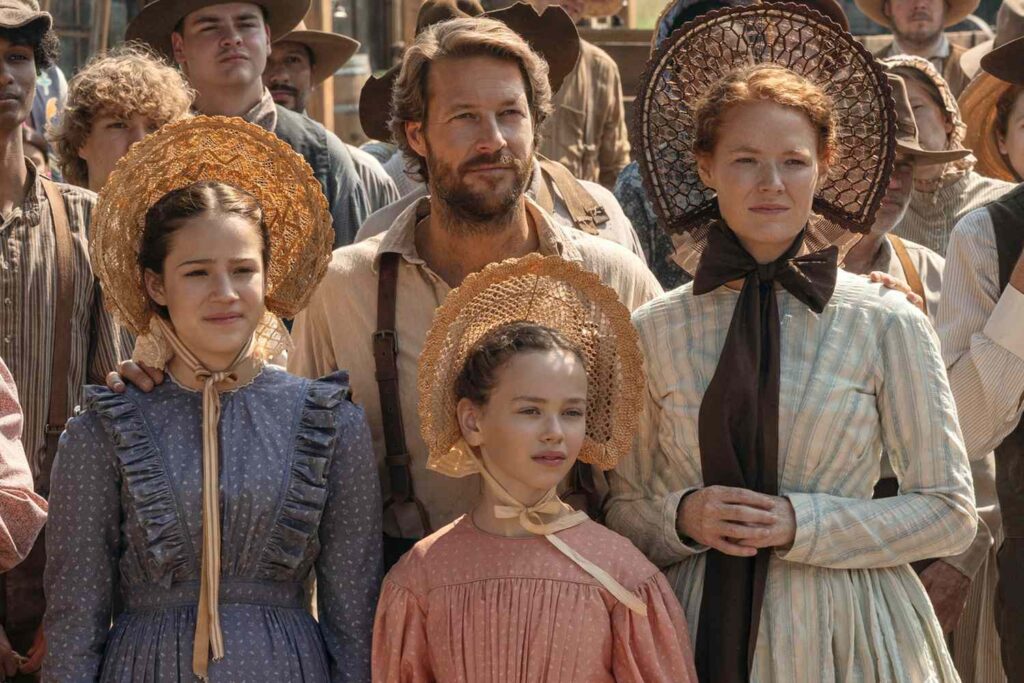
More than once, we thought of Train Dreams, the 2025 Netflix film by Chris Bentley, though this tells a similar story for a much wider audience. What the two share is a vision of manhood built around care rather than conquest: thoughtful men, flawed men, men for whom fatherhood is the center of their lives. They aren’t heroes, exactly—just plain, decent men trying to find their footing in a country freshly out of a war that ended slavery, even as it stepped into a new era of oppressing the people who were already here. The show, as with Train Dreams, never lets you forget that history. It’s always present, but it’s carried by characters wrestling with the same universal struggles we all recognize.
The women and girls matter just as much, of course. They’re fierce and determined, never reduced to helpless victims—and it’s largely through how the men in the show treat them that we get the show’s gentlest lessons on how men and women can meet each other halfway.
We need these sorts of stories on screen to inspire current and future generations of boys and fathers who treat women with respect and do the hands-on care. We know from Equimundo’s research that dads with more equitable attitudes related to gender are almost twice as likely to be highly involved in parenting care.
This country wasn’t built by macho men full of bravado. It was built by people—men and women both—who were simply looking to make a better life and create opportunity for their families.
The Center for Scholars & Storytellers’ research shows the majority of Gen Alpha and Gen Z today want to see more involved, loving fathers on screen. Shows like Little House on the Prairie are the perfect opportunity to continue that.
The show is a reminder that the men who actually built this country weren’t swaggering or self-mythologizing. They were quietly showing up for their families, day after day.
We found ourselves smiling by the end. Maybe that’s the note we need most in our fractured country right now—the idea that it was caring men and brave, empowered women who got us this far, and that leaning into that, rather than silly ideas about tradwives who never were.
Little House on the Prairie (2026) is available for streaming on:

Support more work like this article
The reporting you just read is possible because of readers like you. Since 1972, Ms. has delivered independent, feminist journalism that tells the stories too often overlooked by other news media, challenges systems of inequality and holds power to account. We have no corporate owners, no advertisers and no billionaires dictating what we cover. Instead, we answer to our readers and our mission. If you value reporting that centers women and girls—and covers the issues others leave out—please support Ms. today by making a tax-deductible donation, becoming a member to receive a magazine subscription, or gifting a membership to a friend. Together, we can continue reporting, rebelling and truth-telling.