Most of us have seen the photograph by now.
Reuters freelance photographer Cheney Orr captured a Black woman sitting quietly on a Washington, D.C., Metro train, surrounded by masked white men, members of the white nationalist group, Patriot Front, on their way to march through the nation’s capital. They wore masks and matching uniforms. They carried Confederate flags and chanted “Reclaim America.”
All of this, on the Fourth of July, 2026—a day we’re meant to celebrate 250 years of the opposite.
The woman looked frightened, yet composed. Maybe she was doing what so many women instinctively know how to do when something feels threatening: Don’t escalate, don’t make eye contact, don’t draw attention to yourself, don’t give anyone a reason. As a white woman, I can only imagine the additional layers of self-preservation she had to use.
The photograph is unsettling, but what happened afterward was worse: Asked twice by Dana Bash on CNN’s State of the Union to simply condemn Patriot Front, Interior Secretary Doug Burgum couldn’t get there. He said he couldn’t possibly agree with what the group stood for, “but in America, free speech is allowed.”
But Doug, in America, it can be both: You can defend free speech, while condemning the hate speech of a white nationalist organization marching through the nation’s capital on Independence Day.

I keep coming back to the masks.
Masks have always carried meaning. A surgeon wears one to protect a patient. Someone recovering from an illness wears one to protect themselves and others. A firefighter wears one to survive long enough to save someone else.
But when someone covers their face while intimidating another person, threatening a community or committing a crime, the purpose isn’t protection—it’s concealment. It’s a way of saying, I want to do this, but I don’t want anyone to know it was me.
That’s why Patriot Front marches with their faces covered: for anonymity. Masks make accountability harder. They allow participants to disappear back into ordinary life once the march is over. They make denial easier.

I’ve participated in protests and marches over the years alongside hundreds, sometimes thousands, of people. Not one of us wore a mask. We stood behind our words and convictions. We accepted that our names belonged with our beliefs.
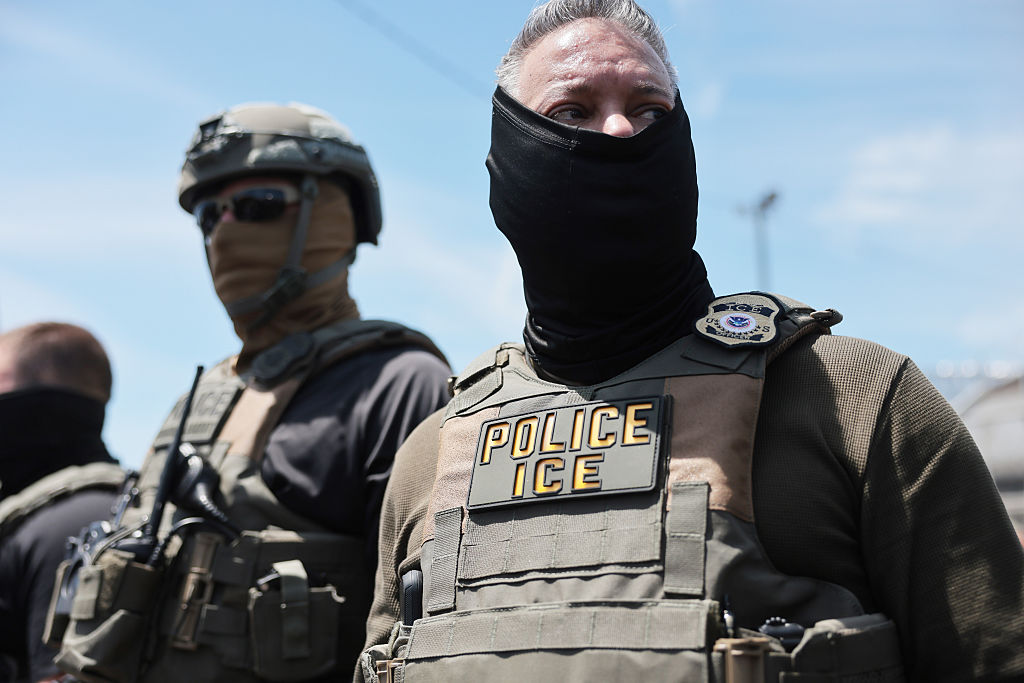
Americans have also watched images of masked federal immigration agents carrying out arrests in public places: outside schools, in courthouse hallways and parking lots. Whatever someone’s views on immigration policy, government officials exercising significant power while concealing their identities raises legitimate questions about transparency and accountability. When the people exercising government authority cannot readily be identified, public trust suffers.
Different circumstances. Different purposes. But a similar effect. The mask creates distance between the person exercising power and the person experiencing it. It asks the rest of us not to look too closely. It asks us to accept that people can exercise intimidation or authority anonymously and that no one has to answer for it.
The question isn’t what one group did that day. It’s what it means when intimidation and hate aren’t met with clear condemnation from those in positions of power.
History shows that societies don’t become more compassionate by accident. They become more compassionate because ordinary people refuse to normalize cruelty, refuse to excuse bigotry and refuse to stay silent when someone else becomes the target.
With permission from the president, I watch adults celebrate behavior we spend years teaching our children to reject. We teach our kids not to bully, not to demean people because they’re different, not to hide behind others when they’ve done something wrong and not to run from responsibility. Those lessons don’t become less true because someone powerful models the opposite. If anything, they matter more.
As someone who writes about gender equality, I’ve watched that shift firsthand. The hateful messages I receive have become more frequent, more personal and more vicious. I now keep a file of them—not because I enjoy revisiting them, but because they remind me that words matter. Words shape behavior. Words shape culture.
This isn’t about asking everyone to agree politically. Democracies depend on disagreement. But they also depend on recognizing one another’s humanity—and on being willing to say plainly that white nationalism deserves condemnation, not equivocation.
The most troubling part of what happened in Washington wasn’t simply that Patriot Front marched through the nation’s capital. It was that, when given a straightforward opportunity to denounce the group, a senior government official declined to do so. We should expect more from our leaders.
I’ve decided I won’t look away or stay silent. And I’ll do so without a mask.
*
A note from Ms. editors: We want to hear from you for The Majority, a new campaign collecting stories about how reproductive freedom has enabled readers to build the lives they want and need.
Poll after poll shows a majority of Americans support reproductive healthcare access. Yet public debate overlooks the lives shaped by abortion access, contraception, IVF, miscarriage care, maternal healthcare or comprehensive sex education—countless women who chose to pursue an education, have children, not have children, protect their health and chart their own future. What’s your reproductive freedom story? Add your voice. Together, these stories will help show not only why reproductive freedom remains a majority value, but also what it makes possible.