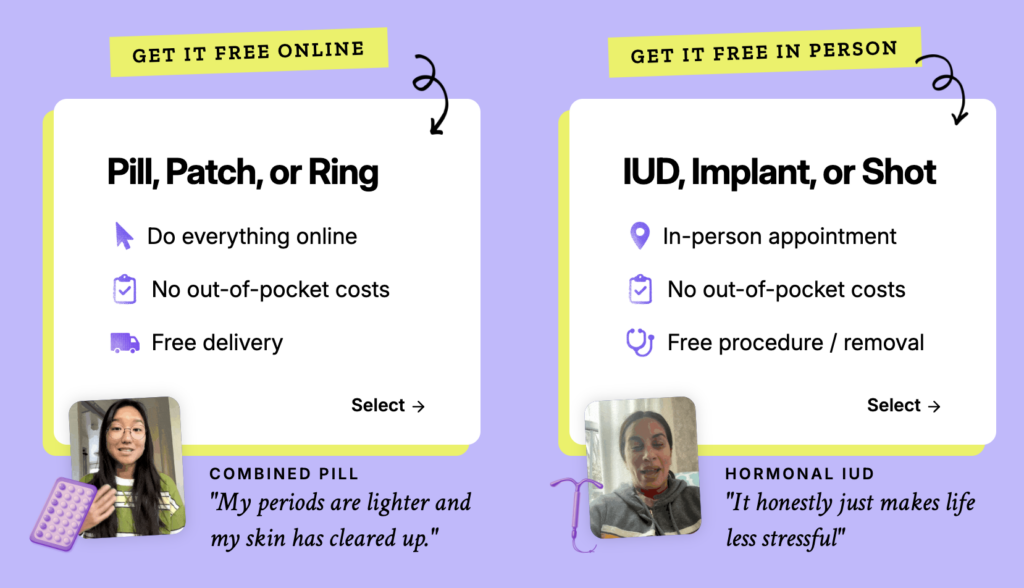
In this age of legal attacks on birth control access and shifting Medicaid coverage, a new online resource has emerged to educate people about the birth control methods available to them and provide them for no fee.
The website FreeBC now offers comprehensive information about every effective birth control method—from pills, patches and rings, to IUDs and implants.
After exploring their options, users can then schedule a telehealth appointment with a healthcare professional. After a patient decides which form of birth control they want to start with, FreeBC will either send it in the mail in discreet packaging or help the patient find a nearby clinic if needed for a method like IUD insertion.
FreeBC is currently available only in Colorado, with plans to expand soon to patients in additional states.
As the name suggests, FreeBC offers all of these services at no cost whatsoever to patients—a critical resource at a time when medical care for many Americans is becoming harder to access. FreeBC is available to patients who are either uninsured or facing high co-pays for birth control. The website does ask for insurance information if a patient has it available in order to stretch FreeBC’s resources even further, but having insurance is not a requirement to use FreeBC’s services.
Anyone in Colorado—and soon other states—can use FreeBC regardless of their immigration or citizenship status. FreeBC asks for no identifying information other than a selfie and additional form of ID with a photo, name and birthdate to verify each patient’s age. The only requirement to schedule a telehealth appointment or receive birth control through the mail or at a clinic is that the patient is 18 or older, but FreeBC’s educational materials are available online for people of all ages to access.
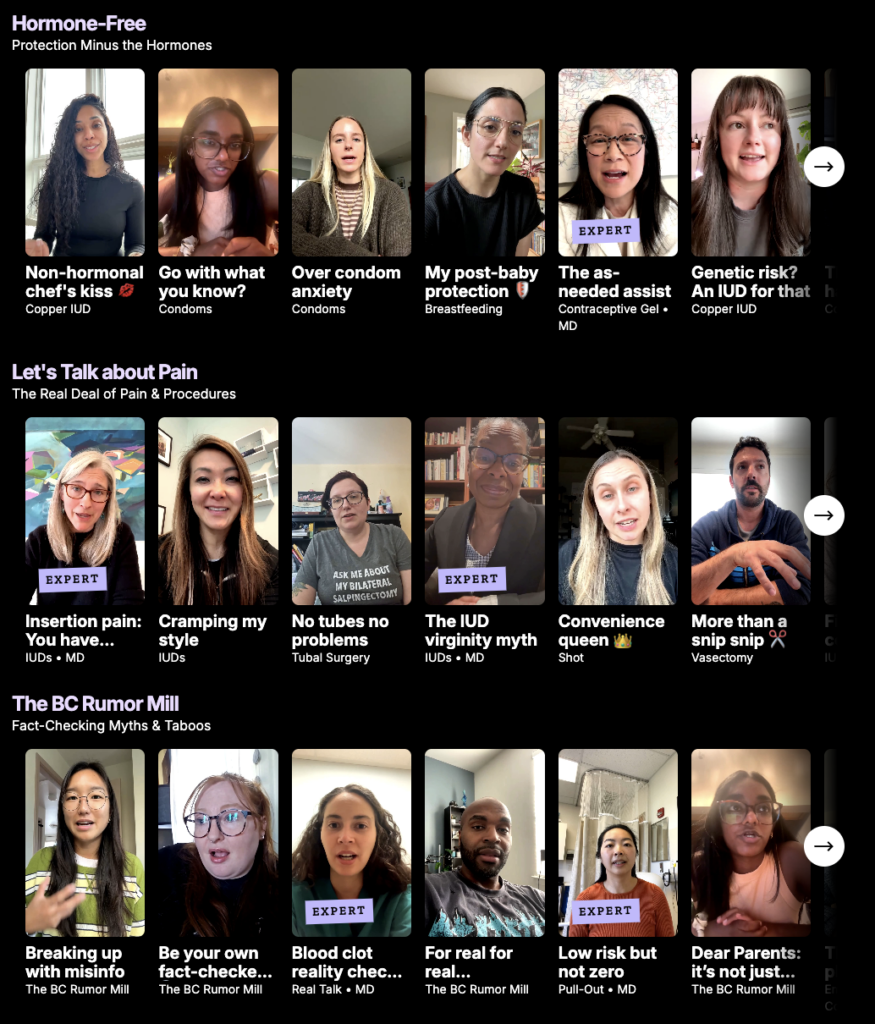
The video gallery on the website includes dozens of short videos from 100+ people and 15+ experts, grouped by topic, exploring the various birth control options. Scrolling through them feels like all the best parts of social media—a curated feminist algorithm, accessible language, learnings on women’s health—without all bad stuff. (Online violence, billionaire-funded algorithms, mis- and disinformation, and deepfake or nonconsensual image abuse come to mind.)
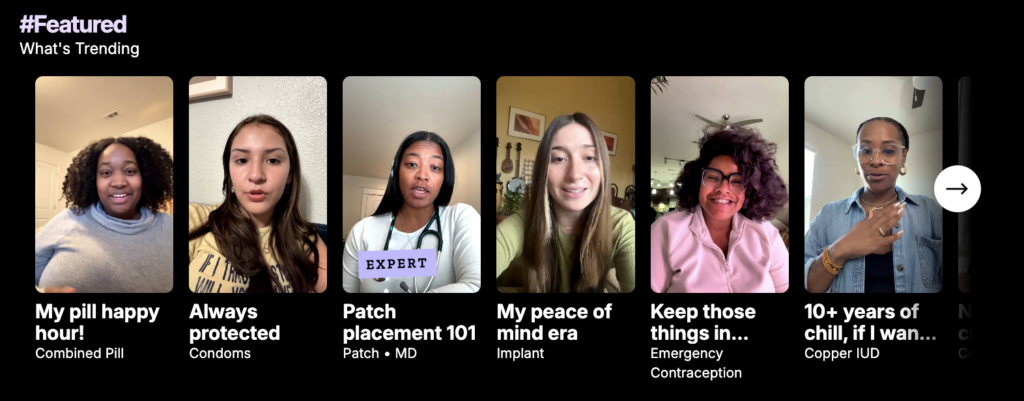
The resources are currently available in English and Spanish, with additional languages expected to be added.
Accessible, trustworthy information about contraception is particularly important as comprehensive sex education faces growing political challenges across the country. The Trump administration has moved to reshape federal teen pregnancy prevention programs around anatomy, reproduction and parenthood rather than comprehensive sexual health education. FreeBC is making a difference simply by offering reliable, accessible information for people seeking to understand their reproductive health and contraceptive options.
FreeBC is an initiative of the nonprofit organization Upstream USA, and is supported by Pandia Health—the only women-founded, women-led, doctor-founded, doctor-led birth control and menopause telemedicine and pharmacy service—and Colorado Community Health Network, which represents 21 Colorado community health centers and serves as the largest primary care network in the state. So while FreeBC is not a medical provider in and of itself, it works by partnering with telehealth companies and brick-and-mortar clinics in the states where FreeBC is available, meaning patients can access birth control at no cost.
More information about FreeBC’s services and contraception in general is available on FreeBC’s website. FreeBC also has a short video with more information about the services offered:
Originally published on the Feminist Majority Foundation’s Feminist Newswire.
*
A note from Ms. editors: We want to hear from you for The Majority, a new campaign collecting stories about how reproductive freedom has enabled readers to build the lives they want and need.
Poll after poll shows a majority of Americans support reproductive healthcare access. Yet public debate overlooks the lives shaped by abortion access, contraception, IVF, miscarriage care, maternal healthcare or comprehensive sex education—countless women who chose to pursue an education, have children, not have children, protect their health and chart their own future. What’s your reproductive freedom story? Add your voice. Together, these stories will help show not only why reproductive freedom remains a majority value, but also what it makes possible.
Look to these trusted groups if you or a loved one needs to know more about reliable abortion care:
- A one-stop-shop for abortion seekers: I Need An A
- Other websites to explore all your options for abortion care: Plan C Pills, Abortion Finder
- Safe websites to buy abortion medication: Aid Access, Massachusetts Medication Abortion Access Project, Hey Jane
- If you need help affording abortion care, tell your telemedicine provider or contact an abortion fund near you.
- To protect your digital privacy when planning your abortion, click here.
- For free legal help as a patient or doctor, call If/When/How’s Repro Helpline—844-868-2812—or contact Pregnancy Justice.
- For medical advice, contact the Miscarriage & Abortion Hotline: 833-246-2632.
- If you need to know the abortion law in your state, look to the Center for Reproductive Rights. or Guttmacher Institute.