For survivors of intimate partner violence, access to abortion pills through telehealth and mail can offer a crucial path to care when an abuser controls their movements, money and medical decisions.
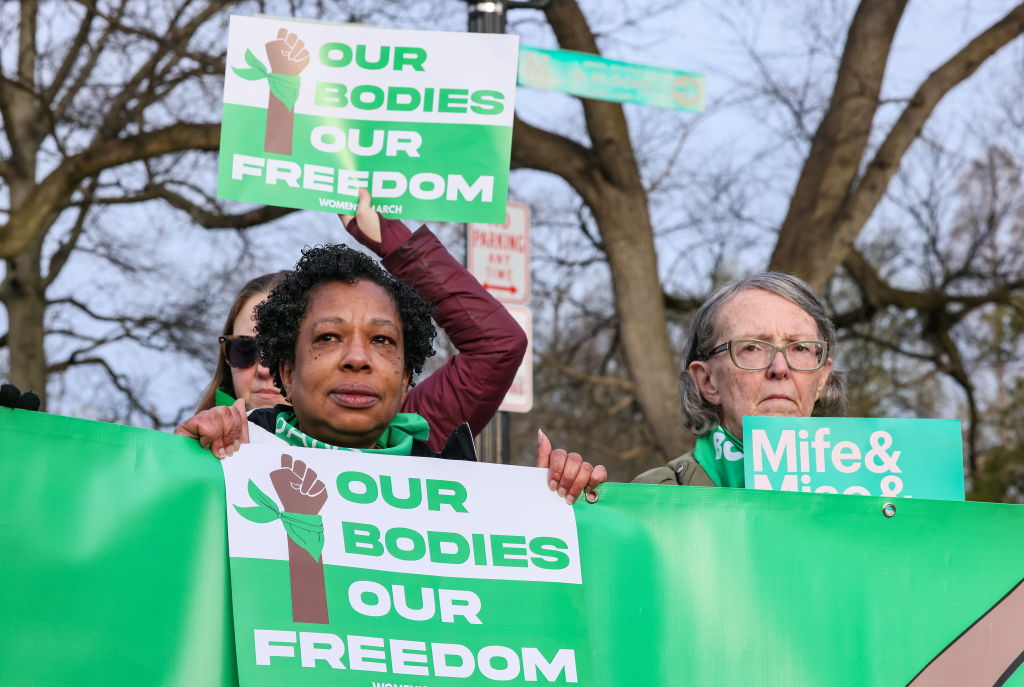
The 5th U.S. Circuit Court of Appeals heard arguments on Sept. 9 in Louisiana v. FDA, one of three cases threatening nationwide access to mifepristone, the medication used in the majority of abortions in the United States. The case challenges the Food and Drug Administration’s decision to allow mifepristone to be prescribed through telehealth and dispensed through certified pharmacies, including by mail.
Earlier this year, the 5th Circuit sided with Louisiana and briefly disrupted telehealth access, before the Supreme Court put that decision on hold while litigation continues.
Meanwhile, the FDA is conducting a sham review of mifepristone, even after decades of use and extensive evidence attesting to the medication’s safety.
Louisiana v. FDA has been widely followed for the last three years and is ultimately expected to return to the Supreme Court. And while its stakes center on access to mifepristone generally, survivors of intimate partner violence (IPV) may be among the hardest hit by a national restriction on the abortion care drug.
Already living under extreme, sometimes life-threatening, circumstances, survivors have vanishingly few options to care for themselves in the event of a pregnancy. Telehealth treatment and access to mifepristone by mail have been one of the few reprieves offered thus far, and their restriction could pose grave consequences to survivors nationwide.
The Stakes for Survivors
To better understand the possible catastrophe that would result from restricting access to mifepristone, it helps to understand what intimate partner violence actually looks like in a survivor’s daily life.
Abusers restrict a survivor’s world and independence, isolating them from support networks and exerting control over decisions both major and ordinary.
An abuser can control a survivor’s car keys, bank account and phone, and can monitor work schedules and social media accounts. They can track a survivor’s movements, menstruation cycles and medical care, restrict access to transportation and money, sabotage birth control or interfere directly with decisions about pregnancy. For someone living under that kind of surveillance, telling them they need to appear at a clinic in person to get medical care, including abortion care, may effectively require them to place themselves under further surveillance or risk angering their abuser. These questions compound in complexity and potential danger when considering other ways that the state imposes its will on marginalized groups like Black, Indigenous, immigrant and rural-based survivors.
For many, this is simply a non-starter: The risks are too high.
IPV is all too common in the United States: Nearly 60 million women have reported experiencing sexual violence, physical violence or stalking by an intimate partner during their lifetimes. And reproductive coercion is a well-documented part of that abuse: In a National Domestic Violence Hotline survey of more than 3,000 women seeking help, 23 percent said an abusive partner had pressured them to become pregnant when they did not want to, while 20 percent said a partner had prevented them from using birth control.
… Telling them they need to appear at a clinic in person to get medical care … may require them to place themselves under further surveillance or risk angering their abuser.
Homicide is currently a leading cause of death for pregnant women, and imposing further restrictions on reproductive care could significantly increase the risk of homicide, since control over reproductive choices often plays a role in intimate partner violence.
An abusive partner wants the survivor’s world to get smaller and smaller—for the doors of a survivor’s life to be closed except for the one that leads them back to the abuser—and what better way to close doors on a survivor than to drastically limit their healthcare options?
With its effort to restrict access to mifepristone, Louisiana wants to give yet more power to abusive partners. In this light, this case has the unfortunate effect of abusers and the government working together to control survivors.
How Access Can Mean Agency
While telehealth and mailed access to mifepristone alone don’t solely guarantee power and autonomy to survivors, they provide crucial options for survivors to take their lives into their own hands. It gives survivors the ability to get the care they need in their own time, on their own terms and with the kind of privacy that is a given for other kinds of healthcare.
Ensuring survivors have multiple healthcare options—and that those options meet them where they are—allows them to choose the path that offers the greatest measure of safety and dignity in their own lives. That is, after all, the simple principle behind providing multiple avenues for care: The decision belongs to the patient, rather than to someone else deciding what care she can access or how she must access it. And that is precisely the principle at stake in Louisiana v. FDA.
It is also why Legal Voice, together with the National Network to End Domestic Violence, Center for Survivor Agency and Justice and other researchers specializing in intimate partner violence, filed an amicus brief in the case. Reinstating an in-person dispensing requirement for mifepristone would not give survivors more control over their healthcare; it would pile yet another barrier onto people who are already navigating extraordinary restrictions on their freedom.
… Telehealth and mailed access to mifepristone … provide crucial options for survivors to take their lives into their own hands.
Pseudoscience, Real Dangers
The terrible irony in this case is that Louisiana is arguing that mifepristone is unsafe and that telehealth access will somehow endanger survivors—neither of which is true.
Hundreds of peer-reviewed clinical studies have concluded that mifepristone is safe and effective, and more than 7.5 million Americans have used it since its approval by the FDA in 2000. Globally, prescribing mifepristone via telehealth is standard practice. Mifepristone sends fewer people to the ER than Viagra and Tylenol. The science is clear and settled on this.
And if the state was actually concerned with the health and well-being of survivors, it would do everything it can to ensure they have every option available to get the healthcare they need, including abortion care. Instead, it is trying to shut the door on mifepristone access for millions, potentially endangering countless survivors’ lives in the process.
Survivors ought to have the freedom and power to make their own reproductive choices without interference from government bodies pushing pseudoscience or abusers seeking to coerce them. Preserving access to mifepristone through telehealth and mail helps protect that autonomy—and, for some survivors, their safety.
*
A note from Ms. editors: We want to hear from you for The Majority, a new campaign collecting stories about how reproductive freedom has enabled readers to build the lives they want and need.
Poll after poll shows a majority of Americans support reproductive healthcare access. Yet public debate overlooks the lives shaped by abortion access, contraception, IVF, miscarriage care, maternal healthcare or comprehensive sex education—countless women who chose to pursue an education, have children, not have children, protect their health and chart their own future. What’s your reproductive freedom story? Add your voice. Together, these stories will help show not only why reproductive freedom remains a majority value, but also what it makes possible.