When it comes to gender-based political stereotypes, the Internet has been consumed with Mar-a-Lago face: white, middle-aged, defined eyeliner, heavy contouring, overdone lip and cheek fillers, perfectly blown-out hair—a la Kristi Noem, Karoline Leavitt, Pam Bondi and Erika Kirk. The look attempts to project authority, wealth and a certain femininity. “Mar-a-Lago face” has also become a way to show membership within Trump’s political circle by embodying the exaggerated, confrontational style associated with Trump-world femininity.
But the public image of the MAGA woman is fast changing.

Increasingly, the Trump administration is spotlighting women who don’t fit this mold. Women like Kai Trump and Usha Vance, who appear non-traditional and apolitical, are being deployed—presumably to help soften the administration’s image and make it more approachable to audiences.
These women present themselves through social media and personal stories instead of traditional political messaging—creating a sense of intimacy and relatability that belies the administration’s deeply anti-woman agenda.
At the 2024 Republican National Convention, Kai Trump, his 19-year-old granddaughter, took the stage to “share the side of my grandpa that people don’t often see.” The speech was a clear strategic move, framing Trump as a doting grandfather rather than a polarizing political figure. Kai told stories about a “grandpa” who sneaks candy for his grandchildren, calls during the school day to check in, and cares deeply about his family.

Since then, Kai has built a massive social media presence totaling nearly 10 million followers across all platforms. Her content consists of golf outings, “Get Ready With Me” videos, shopping vlogs and everyday moments with her grandfather. She wears light makeup and chats casually with the camera, looking more like a Gen Z influencer than a powerful, distant political figure.
Second Lady Usha Vance represents a different version of this softer political femininity. The first South Asian second lady, a Yale-educated lawyer and someone who was previously registered as a Democrat, she does not physically present in stereotypical MAGA form. She consistently opts for a low-key, “no-makeup makeup” look, and her hair is visibly graying.
In June, her $8 Old Navy maternity dress drew attention after New York Times fashion director Vanessa Friedman suggested that pregnancies of women in the Trump administration have become part of its public image.
While Kai Trump’s platform emphasizes family and femininity and Usha Vance’s promotes education, the administration’s record tells a different story.

Usha Vance’s Democrat-coded background and non-traditional appearance is exactly what makes her an effective tool for the administration. In April, she launched a podcast, Storytime with the Second Lady, where she reads storybooks to children. She has hosted a range of guest speakers, including her husband, Vice President JD Vance, NASA’s Artemis II astronauts, Cheryl Hines and President Trump himself.
On the surface, there is nothing overtly political about a teenager filming golf videos with her grandfather or a second lady reading stories to children. These women may seem harmless—even comforting.
But they are doing real political work.
The response to Kai Trump’s platform shows how powerful this strategy can be. In her comment section, viewers applaud her authenticity, relatability and kindness. They praise her close relationship with her parents and grandfather, and describe her as a positive influence on young people. Some even say they’re not interested in politics but enjoy watching her content.
Whether or not it’s a deliberate strategy, the effect is the same: Audiences who say they don’t care about politics still end up trusting the people behind deeply political policies.
This is the power of political femininity. The more familiar a political figure becomes, the easier it can be to forget what that familiarity is designed to distract from. While Kai Trump’s platform emphasizes family and femininity and Usha Vance’s promotes education, the administration’s record tells a different story.
- The administration has defunded Planned Parenthood, weakened Title X family planning services, and removed words related to gender and women’s health from public websites.
- Forty-one states now restrict abortion, and the FDA has been pushed to reconsider its decades-old approval of mifepristone.
- At the same time, the president has attempted to dismantle the Department of Education and proposed deep cuts to a number of universities—making Usha Vance’s Storytime podcast particularly ironic given that it frames the administration as pro-literacy.
The stereotypical MAGA woman—the one with the “Mar-a-Lago face”—was easy to spot. The new women shaping the administration’s image are harder to recognize, and come disguised as influencers, granddaughters, caretakers and mothers.
Democracy depends on citizens evaluating governments by what they do, not by how relatable or comforting we find them. Instead of focusing on the faces the administration wants us to see, we must engage critically with the issues that demand our attention: access to reproductive healthcare, funding for women’s health, and the future of public education.
Don’t be fooled. Form never trumps substance.
*
A note from Ms. editors: We want to hear from you for The Majority, a new campaign collecting stories about how reproductive freedom has enabled readers to build the lives they want and need.
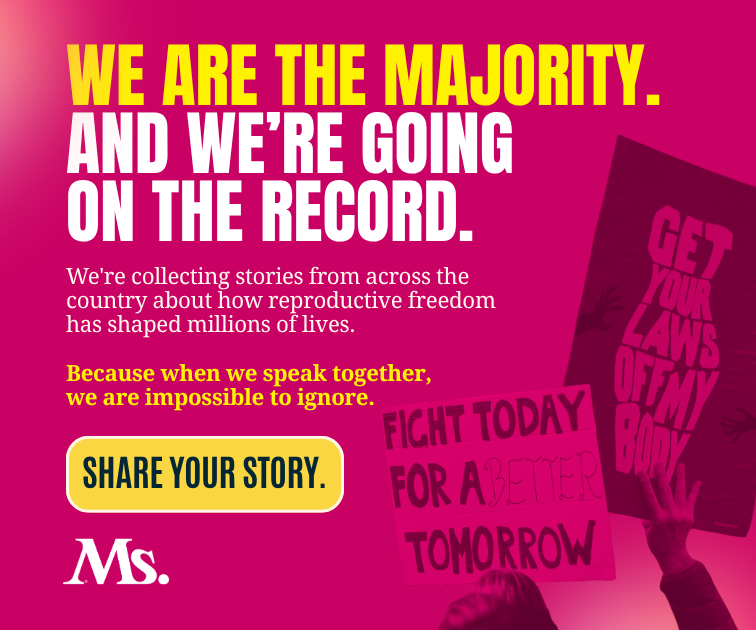
Poll after poll shows a majority of Americans support reproductive healthcare access. Yet public debate overlooks the lives shaped by abortion access, contraception, IVF, miscarriage care, maternal healthcare or comprehensive sex education—countless women who chose to pursue an education, have children, not have children, protect their health and chart their own future. What’s your reproductive freedom story? Add your voice. Together, these stories will help show not only why reproductive freedom remains a majority value, but also what it makes possible.