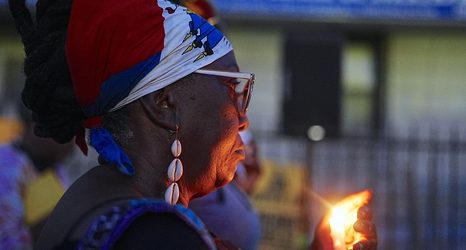


A collaborative project between students in New Jersey and in Sierra Leone revealed how unreliable electricity and internet connections can limit opportunities to learn and lead.

Last summer, our Girls Learn International chapter set out to support girls in finding their own voices and leading their communities on issues they cared about. We organized an international public speaking webinar with Sierra Leone Rising, which helped us reach 40 girls in villages in Sierra Leone.
Even with nonprofit support, internet barriers strained our ability to communicate regularly. A project that had seemed so doable on paper became harder to carry out. As students in well-resourced suburban communities, we had taken reliable internet access for granted. We had planned around the connections available to us, rather than the conditions our partners faced.
Our surprise turned to anger: How could something so basic, so essential to daily life in the modern world, remain out of reach for so many school-aged children around the globe? In what world could a student in a small, remote village be promised equal opportunity without access to the digital tools other students take for granted?
We shifted from live sessions to private YouTube videos, tailored assignments and chat-based communication when possible. Those adjustments helped us continue, but they did not remove the barriers.
That’s when our student partners in Sierra Leone taught us an important lesson about addressing infrastructure gaps in their communities.
They wanted to use their public speaking skills to advocate for better electricity and internet access. The limitations disrupting our collaboration were also issues they wanted to organize around locally.
In one assignment our team distributed, a student described the need for electricity in her community:
“My community is currently facing light issues and I can say: Light is life.”
Her words connected our discussion of digital access to a basic requirement: electricity to power a device.
Our experience reflects a broader digital divide: As more opportunities to learn, work and connect move online, gaps in internet access and digital skills can reinforce the barriers women and girls already face.
This year, in honor of the 15th International Day of the Girl on Oct. 11, I urge leaders and girls’ rights advocates alike to recognize digital access as part of the fight for gender equity.
We must address the inequalities girls already face while ensuring that new technologies do not deepen them. An online lesson or leadership program can expand opportunities—but only if students have the electricity, devices, affordable internet and skills to participate.
The gap is substantial. The International Telecommunication Union estimates 2.2 billion people were offline in 2025. While 94 percent of people in high-income countries used the internet, just 23 percent did in low-income countries.
Girls face additional barriers: A 2023 UNICEF analysis found 90 percent of adolescent girls and young women ages 15 to 24 in low-income countries were offline, compared with 78 percent of their male peers. Across 41 countries and territories analyzed, female youth were nearly 13 percent less likely to own a mobile phone than male youth in the same household.
These findings show why closing the divide requires more than expanding network coverage. Girls also need access to devices and opportunities to develop digital skills. UNICEF calls for addressing gender stereotypes within families and online violence, alongside providing technology and training.
Funding these needs is a challenge, particularly where debt payments strain public budgets. Malala Fund reported that, in 2024, the 10 countries facing the greatest barriers to girls’ education spent, on average, four times as much on debt repayments as on education. Digital learning cannot be a substitute for adequately funded schools, but reliable connectivity can help students access additional resources and support.
Local projects can help address these needs. Sierra Leone Rising, for example, reports that girls learn coding in a computer lab at Bumpe High School. Such projects offer a concrete starting point for supporting digital skills.
Nonprofit partnerships can help fill gaps, but governments remain responsible for investing in public infrastructure and education. Schools and community organizations need sustained support for reliable electricity, affordable connections, devices and training. Girls should help shape those investments, drawing on their knowledge of what is missing and what would make a difference.
Our chapter’s experience is one example of how infrastructure barriers affect educational partnerships. It also taught us to listen more closely to our partners and design projects around the resources they can actually use.
For this International Day of the Girl, I want to share the lessons of girls experiencing these barriers firsthand. Their drive and resourcefulness deserve recognition—and investment that makes it possible for them to participate consistently.
Our Sierra Leone peers were ready to speak about what their communities needed. The question is whether leaders will listen and fund the electricity, connections and learning opportunities that can help them act on those ideas.
*
A note from Ms. editors: We want to hear from you for The Majority, a new campaign collecting stories about how reproductive freedom has enabled readers to build the lives they want and need.
Poll after poll shows a majority of Americans support reproductive healthcare access. Yet public debate overlooks the lives shaped by abortion access, contraception, IVF, miscarriage care, maternal healthcare or comprehensive sex education—countless women who chose to pursue an education, have children, not have children, protect their health and chart their own future. What’s your reproductive freedom story? Add your voice. Together, these stories will help show not only why reproductive freedom remains a majority value, but also what it makes possible.