

In an excerpt from her new book Side Effects, journalist Alice Miranda Ollstein reveals how Louisiana’s restrictions on abortion medications are disrupting routine medical care, complicating access to contraception and putting patients at risk.
Editor’s note: Four years after Dobbs, dismayed that the total number of abortions in the country has risen instead of fallen after states enacted bans thanks in large part to telehealth access to abortion pills, conservative activists and lawmakers have made restricting access to mifepristone and misoprostol a top priority.
In this excerpt from Chapter 7 of her new book Side Effects: How Abortion Bans Impact Everyone’s Health, POLITICO senior healthcare reporter Alice Miranda Ollstein investigates the fallout from one of their myriad strategies: a first-of-its-kind law in Louisiana designating the drugs as controlled substances. In addition to exploring the policy’s impact on emergency care, including dangerous delays in hospitals administering the drugs to patients experiencing miscarriages, post-partum hemorrhages and other crises, Ollstein uncovered several ways it has also interfered with routine outpatient procedures.
Some of the doctors and pharmacists she interviewed are part of a lawsuit challenging the policy, which remains ongoing after a state judge rejected Louisiana’s request to throw out the case in May of 2025. Meanwhile, though Louisiana remains the sole state with this law on the books, other GOP-led states have introduced copycat bills, including Idaho, Indiana, Kentucky, Mississippi, Missouri, Oklahoma, Tennessee and Texas.
As these and other states as well as federal agencies consider restrictions on mifepristone and misoprostol in the months and years to come, Ollstein shines a light on the medical repercussions of laws like Louisiana’s on non-abortion healthcare.
The following is an excerpt from Side Effects: How Abortion Bans Impact Everyone’s Health by Alice Miranda Ollstein (out Oct. 27, 2026).

In the fall of 2024, Louisiana implemented the nation’s first-ever law designating mifepristone and misoprostol as controlled substances. That put the pills in the same category as opioids and anxiety medications that have a high risk of dependency and abuse, even though mifepristone and misoprostol have no recreational use, aren’t stimulants or sedatives, and are not addictive.
“They do not meet the definition or intent of what a controlled substance is, and categorizing them as such can lead to harm,” warned the American College of Medical Toxicology. “Additionally, it sets a dangerous precedent of politicizing pharmaceutical regulation.”
The state targeted the two drugs because they are used in combination in most abortions. Louisiana lawmakers, having already banned nearly all abortions shortly after Dobbs, passed the new law to deter women who were still obtaining the pills online or through friends by making possession without a valid prescription a crime punishable by up to five years in prison.
Like all other abortion bans around the country in the first few years after Dobbs, the Louisiana law shielded the pregnant woman taking the pills from prosecution, but left the door open to charging her spouse, doctor or anyone else who assisted her.
The targeted medications, however, have a broad range of other medical uses beyond abortion, from inducing labor to assisting in the removal of uterine polyps.
Dr. Emily Holt, a family medicine physician in New Orleans, had regularly prescribed both drugs to help patients manage miscarriages, and had offered just misoprostol to those with a stenotic cervix, in which the entrance to the uterus closes up. But she most frequently used misoprostol for IUD insertions.
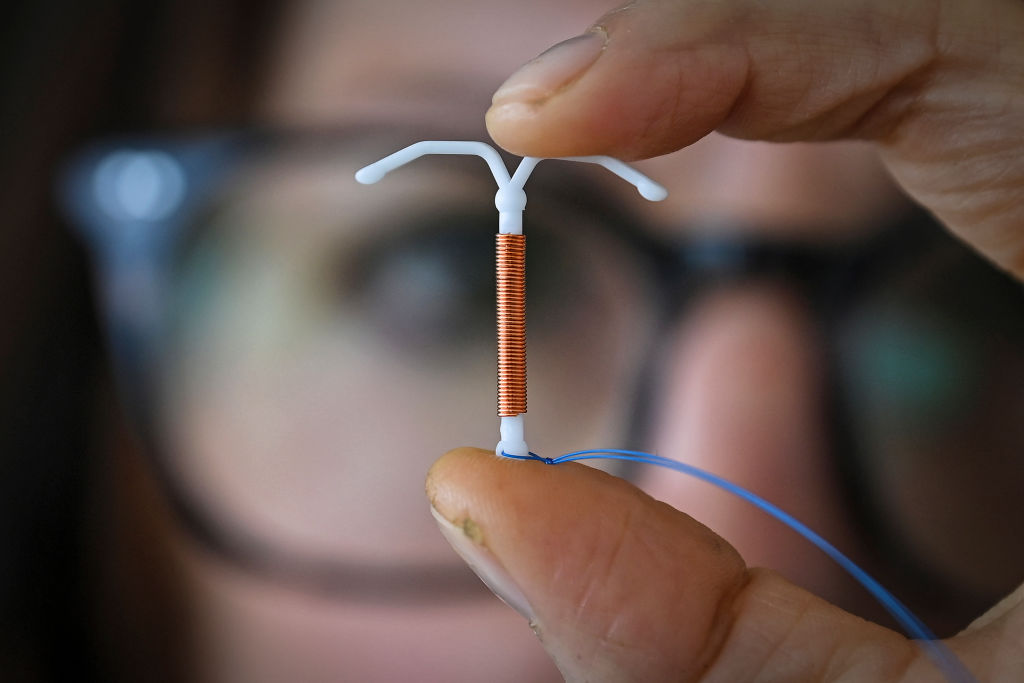
Implanting the quarter-sized, T-shaped device made of plastic or copper involves a quick but delicate outpatient procedure. It’s hard to predict when patients will have an easy time—with the thin rod holding the IUD slipping through the cervix without a hitch and embedding it snugly into the wall of the uterus—and when the insertion will leave the patient doubled over in pain, or fail altogether. Uteruses come in many shapes and sizes, and can be tilted in various directions, complicating the operation.
Before the controlled substances law took effect, Holt kept a stash of misoprostol in her clinic so that a patient whose IUD insertion wasn’t successful the first time could take a dose and try again, the pills softening and opening up the cervix. But after Oct. 1, 2024, that was no longer possible. Holt was licensed only to prescribe controlled substances, not dispense them. And while she could jump through hoops to obtain that additional certification, she feared doing so, as it would put her clinic on a state registry of facilities where such drugs could be found.
“I’m a single female physician, and I do not want the general public thinking that dangerous and addictive substances are in my building,” she said. “The ones people think of are opiates and benzodiazepines and ADHD medicine—drugs that tend to have street value and are a target for theft.”
The opioid epidemic had ravaged New Orleans as badly as the rest of the country, and it wasn’t unheard of for people in the throes of addiction, or those looking to profit off their desperation, to break into a pharmacy. In fact, around the country, hundreds of pharmacies are burgled each year, many by organized crime rings who traffic the stolen drugs. Holt’s clinic only stocked run-of-the-mill antibiotics, blood pressure medicine, insulin and other prescription drugs not considered dangerous or addictive by the government. But to protect her clinic and herself, she ordered a custom sign on Etsy with white block letters on a blue background reading: “No cash or controlled substances kept inside.”
It’s hard to predict when patients will have an easy time … and when the IUD insertion will leave the patient doubled over in pain, or fail altogether.
Losing the ability to keep misoprostol on hand had serious consequences for Holt and her patients. She started suggesting that every patient seeking an IUD take the medication prior to coming in for their appointment, as it was impossible to know who would end up needing it. She especially urged women who had never given birth to use the pills, since their cervixes were likely to be more tightly closed.
Those patients had to make a separate trip—or several—to find a pharmacy willing to dispense the newly restricted drug. And, like many patients around the country seeking mifepristone, misoprostol or methotrexate for nonabortion purposes, some faced delays or denials from pharmacists afraid of prosecution, even though Holt always included diagnosis codes on their prescriptions. For some patients, experiencing this pushback, or even fearing the possibility of it, made them second-guess going forward with their contraceptive method of choice.
“It really freaks them out,” she said. “It makes them think, ‘What is this drug you’re giving me? Why is this process so extreme? I thought we were just doing an IUD insertion.’”
Even when her patients successfully obtained misoprostol, their ordeal was not over. Both Holt and her patients feared they would be hassled or even criminally investigated for possessing the pills, even with a valid prescription for something other than abortion, so she encouraged them to take it prior to their appointments to avoid carrying it around. And the drug, while safe, could cause cramping and diarrhea, and sometimes made the procedure more painful.
“It’s not a medication that’s recommended for everybody to be used during an IUD insertion,” Holt explained. “But laws like this sort of push doctors like me into a corner, and I have to weigh how to practice evidence-based medicine in a state like Louisiana, where we have non-evidence-based laws like this one that is actually going to cause more harm to the patient.”
Copyright © 2026 by Alice Miranda Ollstein. This excerpt originally appeared in Side Effects: How Abortion Bans Impact Everyone’s Health, published by The New Press. Reprinted here with permission.
*
A note from Ms. editors: We want to hear from you for The Majority, a new campaign collecting stories about how reproductive freedom has enabled readers to build the lives they want and need.
Poll after poll shows a majority of Americans support reproductive healthcare access. Yet public debate overlooks the lives shaped by abortion access, contraception, IVF, miscarriage care, maternal healthcare or comprehensive sex education—countless women who chose to pursue an education, have children, not have children, protect their health and chart their own future. What’s your reproductive freedom story? Add your voice. Together, these stories will help show not only why reproductive freedom remains a majority value, but also what it makes possible.