



The Latest Cache of Epstein Files Haven’t (and Won’t) Spark Wall Street’s #MeToo Moment

In 2010, a 28-year-old woman working at the London branch of a Wall Street bank was leaving the office around 10 p.m. when a colleague pushed her against a wall and tried to forcibly kiss her. “A cab driver saw what was happening and physically pulled him off me,” the woman, who asked not to be named for fear of repercussions, told me. She reported the incident the next day to her manager, who told her she “should dress for the job I want” and not “like a stripper.” The women quit a month later. “I just wanted out,” she said. “I was mortified.”

What is notable about this story is how common it is. Even now, she said, you can speak to almost any woman who has spent time working in finance and she will know someone who has been harassed or assaulted. Often she has her own story.

That culture, and Wall Street’s willingness to perpetuate it, is back in the spotlight after the latest release of emails linked to Jeffrey Epstein, which are reviving scrutiny of his extensive connections across the industry.
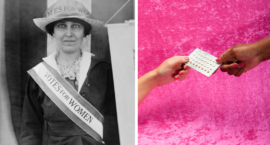
The Forgotten Mother of the Contraceptive Pill

As reproductive rights continue to be under siege, we remember Katharine Dexter McCormick, a key figure in expanding access to birth control pills in the U.S.

At one point in the late 1940s or early ’50s, McCormick had been one of the richest women in America, but what made her truly remarkable was what she did with that wealth: Defying countless contemporary social norms, mores and medical taboos, she provided almost all of the funding necessary to make oral contraception a reality. McCormick’s fortune, fearlessness and feminism mean that she can lay claim to being the mother of the modern pill. Her name is barely known.

Pauli Murray: The American Hero You Never Learned About (and the Federal Government Doesn’t Want You To)

A few years ago, I went searching for Pauli Murray. By that point, the poet, civil rights activist and pioneering legal scholar had been dead for 35 years. But in researching her life for the book I was working on, I’d learned about the profound impact that her work had had on the very fabric of America and particularly on the country’s legal system. I was convinced that because of everything Murray had done—the extent to which she had shaped movements and laws and lives—she would have to be remembered prominently and publicly. It was probably just my own fault, I reasoned, that I hadn’t previously heard of her.

Like millions of others around the world, I have spent the last few weeks oscillating between fear, anger and sadness as I’ve watched the new U.S. administration neglect the core values of democracy and wreak havoc with the systems that have propped up this country for centuries. With no way of changing the mind of a morally bankrupt megalomaniac, I’m concentrating on what I can do. Since I’ve learned of her remarkable life, I’ve loved telling people about Murray; about the unlikely against-all-odds battles she faced head-on—public wars she waged while simultaneously grappling with her own often-debilitating private troubles. If the federal government chooses to ignore those upon whose shoulders we all stand, those of us who recognize the indignity of this will simply have to make up for it by telling their stories loudly, telling their stories often and then repeating them over and over and over again. It is, after all, what Pauli Murray would do.