‘Every Vote Counts’: What Women Leaders Know About Fixing Broken Political Systems—From Iceland to Washington

At the Reykjavík Global Forum on Women Leaders in Iceland, women political leaders gathered with warmth and purpose to confront the most pressing challenges of our time.

We talked about democracy, leadership, activism and power-building. We talked about fear. About childcare. About boys who aren’t sure where they fit in this “new” world. About deadlines and death threats, ranked-choice voting—and the deeper reasons why they keep doing this work despite the challenges.

Amid those conversations, three interviews in particular stayed with me: Liz Berry, a Washington state representative who campaigned with a 6-week-old baby; Eliza Reid, Iceland’s former first lady and author of Secrets of the Sprakkar: Iceland’s Extraordinary Women and How They Are Changing the World; and Alison Comyn, an Irish journalist-turned-senator from a country that’s used proportional representation—a form of ranked-choice voting—for generations.

Taken together, their stories sketch a kind of roadmap: how we change the rules, how we change ourselves and how we do this work together. They also leave us with a question: Could my city, state or party pilot a system where “every vote counts,” and more than two parties can breathe? And, if so, how can I help make that change a reality?

What the Backlash Against Women’s Leadership Tells Us About Young Men

At this year’s Reykjavík Global Forum in November, where 500 global leaders from public and private sectors convened in Iceland, the mood around gender equality was both urgent and reflective. Progress that once felt inevitable now looks fragile. The Reykjavík Index for Leadership reveals concerning declines in how women are perceived for leadership roles across major economies, while conversations about young men and boys have become more heated, polarized and emotionally charged.

While at the forum, I spoke with Richard Reeves, an author and researcher focused on boys and men, and Michelle Harrison, the founding force behind the Reykjavík Index for Leadership, about what’s really going on—and what comes next. Their insights help clarify the current backlash, the urgency of centering young people, and why gender equality must remain a shared project—one that includes all of us.

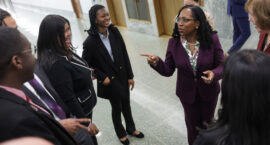
‘The Women Are Talking!’ Up Close and Personal With Women World Leaders at the 2024 Reykjavík Global Forum

Every November, political and community leaders from around the world bundle up and head to Reykjavík, Iceland, for the annual Reykjavík Global Forum on women’s representation and leadership, a beautifully curated, invitation-only opportunity to discuss our world’s most pressing issues, from a woman’s perspective.

This year, I not only had the opportunity to attend but also to sit down for a private conversation with three absolute legends: Mary Robinson, President of Ireland (1990-1997), Dr. Michelle Harrison, CEO of Verian and the Reykjavik Index for Leadership, and Senator Donna Dasko (Canada). Pull up a chair and join me to hear what these powerhouse women leaders have to say.

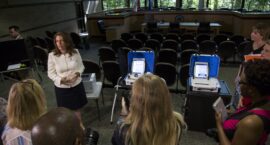
What Moms in Politics Really Want This Mother’s Day: Campaign-Funded Childcare

There are several obstacles moms face when entering politics—a big one being the lack of universal, affordable childcare.

For moms entering a political career at any level, allowing campaign funds to be used for childcare expenses is a critical first step to leveling the playing field for women candidates to run and win. Campaign-funded childcare means that both men and women candidates would no longer need to factor in childcare costs when deciding to run, which would blow open the doors for more and diverse women candidates to get their names on the ballot.

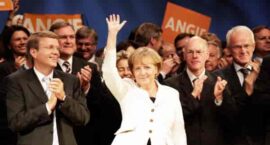
The Impact of Angela Merkel—What 16 Years of Women’s Leadership Can Get You

The Impact of Angela Merkel—What 16 Years of Women's Leadership Can Get You

How did Germany manage to elect Angela Merkel, a woman leader who achieved unity, stability and economic growth through some of the most turbulent years in history? Through political structures with inherently less barriers for women—namely, a mixed-member proportional representation electoral system and gender quotas. By and large, U.S. politics uses neither of these. But change is possible.