Virginia Will Choose Its First Woman Governor in November’s High-Stakes Election

Over the next month into Election Day on Nov. 4, 2025, Virginia voters will decide not only the state’s next governor, but also control of the House of Delegates. The outcome will determine the direction of Virginia’s policies for years to come, and will send powerful signals about the nation’s political climate. 

The race is already historic. For the first time, both major party candidates for governor are women: former U.S. Rep. Abigail Spanberger (D) and Lt. Gov. Winsome Earle-Sears (R). Whoever wins will become the state’s first woman governor. 

In Upcoming Virginia, N.J. and Pennsylvania Elections, Women’s Votes Will Decide the Future of Reproductive Rights and Equality

All eyes will be on the elections this fall in Virginia, New Jersey, Pennsylvania and beyond. These contests are not just bellwethers for next year’s midterms—they’re critical tests of how far Americans will go to defend women’s rights and equality at the state and national levels.

Women’s votes will be decisive. Pollster Celinda Lake told Ms. that women “are our own voters, we make up our own minds.” That independence has shaped elections for decades, with women consistently leaning more Democratic than men. This fall—from Virginia’s history-making two-woman governor’s race, to Pennsylvania’s Supreme Court retention battles—reproductive rights and equality are squarely on the ballot.

The message is clear: State-level elections matter profoundly, especially for women. The Dobbs decision pushed abortion and gender equality battles back to the states, and now voters must decide who will stand up for their rights.

Women as Teachers, Governors and Civil Service: The Fight for Women’s Leadership Everywhere

Weekend Reading for Women’s Representation is a compilation of stories about women’s representation in politics, sports and entertainment, judicial offices and the private sector—with a little gardening mixed in!

This week:
—Teachers have always been the cornerstone of thriving communities and a healthy democracy. It’s no accident that so many powerful women leaders began their journeys in classrooms. And yet, while women dominate the teaching profession, they remain underrepresented in our political institutions.
—President Trump’s recent federal workforce reductions have disproportionately harmed Black women, who are long overrepresented in civil service relative to the private sector.
—A growing number of women are entering the race for governor in 2025 and 2026.
—Debra Shigley, an attorney, small business owner and mom of five, has secured a top spot in a Georgia runoff election for a state Senate seat. Her election on Tuesday, Sept. 23, will be one to watch as women’s leadership in Georgia, and across the country, continues to grow. Georgia already uses ranked-choice voting, sometimes called “instant runoffs,” for military and overseas voters. Expanding this system statewide would guarantee majority winners in a single election.
—U.K. women are calling out dangerous narratives that weaponize sexual violence against women to scapegoat asylum seekers.
—Italian women fight digital violence and demand consent online.

… and more.

Mayoral Candidates Tout Plans—But Feminist Infrastructure Is What New Yorkers Need

Frantic, I keep checking my phone for the arrival of the New York City public bus I am waiting for. It finally arrives, 10 minutes after the scheduled time, meaning I will be late for school. With each stop it makes, the bus fills with students like me and people heading to work. Women and toddlers also board in force, lugging more baby strollers than I can count. As the strollers pile up, I scan the bus, wondering how many more can possibly fit. It is a Jenga-like ordeal, and I overhear a group of caregivers confidently affirm how five strollers can be tilted, folded and configured to fit in the bus.

This is the silent role public infrastructure plays in action. Infrastructure greets us on our daily commute, provides livable spaces for us outside, shepherds kids to and from school. Infrastructure is fundamental to our well-being as citizens, essential to a functioning democracy. And to work for all of us, it must be considered through a feminist lens.

Urban infrastructure loomed large in the New York City mayoral primary in June and will continue to be a major discussion point through the general election in November. I can’t help but question who is making decisions about urban transportation infrastructure and the people who use it.

Canada Rejects MAGA’s Gender Panic—And Why It Matters After This Year’s Pride Month

As Pride Month came to a close against a backdrop of global backlash to LGBTQ+ rights, Canada’s spring election delivered a rare counterpoint: Voters refused to take the bait.

Conservative leader Pierre Poilievre’s campaign, dubbed a “Maple MAGA” version of Trumpism, alienated moderates. It was grievance-driven, thin on substance and heavy on imported outrage. His fixation on divisive social issues made it harder to convince voters he could govern effectively. In the end, Canadian voters sent a clear signal—they’ll take affordability over fear politics.

At a time when liberal democracies from the U.K. to South Korea are seeing renewed assaults on LGBTQ+ rights, Canada’s election offers rare evidence that backlash isn’t inevitable. When cost-of-living pressures intensify, the politics of distraction lose their potency. The gender panic playbook didn’t just fail—it boomeranged.

Independence Day, Ranked-Choice Wins and Jacinda Ardern: This Week in Women’s Representation

Weekend Reading for Women’s Representation is a compilation of stories about women’s representation in politics, sports and entertainment, judicial offices and the private sector—with a little gardening mixed in! 

This week:
—This Friday marks the 249th anniversary of the signing of the Declaration of Independence. The journey for women’s equal representation remains unfinished.
—Zohran Mamdani looks poised to join 36-year-old Boston mayor Michelle Wu as part of a new generation of leadership in the U.S. Northeast. It’s time for more aging men like Cuomo to step aside and let more women step up. And if New York City is any indication, the voters may take matters into their own hands.
—St. Paul in 2023 elected an all-women city council in its ranked-choice voting elections. There’s now a vacant seat, and three women are among the four candidates running in an Aug. 12 special election.
—Jacinda Ardern’s new book, A Different Kind of Power, highlights the shifting dynamics of power, how women are redefining what leadership can be, and the impact of fairer election systems for creating openings for new voices like her own.

… and more!

Weekend Reading on Women’s Representation: Elected Leaders Should Be Able to Serve Without Fear; Honoring Opal Lee, Grandmother of Juneteenth

Weekend Reading for Women’s Representation is a compilation of stories about women’s representation. 

This week:
—new research on the importance of women’s leadership
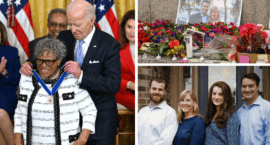
—how Opal Lee became known as the Grandmother of Juneteenth
—No matter who wins the race, Virginia’s next governor will be the first woman to ever hold the office.

… and more.

Ranked-Choice Voting Spurs a New Era of Collaborative Campaigning in New York

New York City Council Speaker Adrienne Adams, who is seeking to become the city’s first Black woman mayor, entered the race for the Democratic nomination relatively late. But after a surprising assist from a political rival, she qualified for public matching funds late last month, giving her campaign new momentum.

The crowded June 24 Democratic primary has garnered national attention—and a silver lining has been the increased visibility of ranked-choice voting (RCV) and how it uniquely fosters collaborative campaigning and elevates women and candidates of color.

The Best Birthday Gift for Trump? Voting in Every 2025 Election

Weekend Reading for Women’s Representation is a compilation of stories about women’s representation. 

This week:
—2025 is often considered an off-year for elections, but that couldn’t be further from the truth.
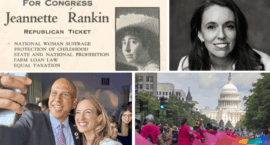
—Washington, D.C., is the site of dueling images: Pride and Trump’s alleged celebration of U.S. military might.
—Hannah Pingree has joined the crowded Democratic field for governor in Maine.
—U.S. Rep Mikie Sherrill (D-N.J.) will join Virginia’s Abigail Spanberger as Democratic nominees for governor in races leaning toward Democrats.
—San Antonio elects Gina Ortiz Jones as mayor.
—Ranked-choice voting is a women’s issue.

… and more!

Weekend Reading on Women’s Representation: Honoring Stonewall’s Legacy; NYC Mayor Race Shows Benefits of Ranked-Choice Voting for Women

A compilation about women’s representation in politics, sports and entertainment, judicial offices and the private sector—with a little gardening mixed in!

This week:
— New York City Council Speaker Adrienne Adams is expected to qualify for public matching funds this week after a late surge in campaign donations, thanks to a surprising boost from a rival.
—progress made towards gender parity in international elections
—In South Korea’s June presidential election, young women played a pivotal role in electing Lee Jae-myung, leading one reporter to call it “the anti-anti-feminist election.”
—June is Pride Month, marking the anniversary of the 1969 Stonewall Uprising in New York City, a turning point in queer activism in the United States.

… and more.