The Sound of Silence After Minneapolis: America’s Masculinity Blind Spot

A trans shooter in Minneapolis does not change the pattern: Most mass murderers are cisgender men. Change begins with acknowledging that truth. And then acting on it.

Men, let’s answer the call. Let’s urge Minnesota Gov. Tim Walz and Attorney General Keith Ellison to use their platforms to spark a movement of men to lead the way. Enough is enough. The time is now—before the guns ring out again.

What Would Social Media Look Like if it Was Made for Women? How Women are Navigating Social Media During the Second Trump Administration

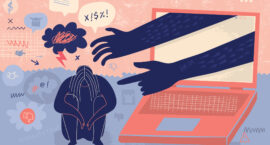
Following the 2024 election and the presidential inauguration, women faced a dramatic increase in online harassment. Across X, TikTok, Facebook and other social platforms, statements calling for the repeal of the 19th Amendment resurfaced and increased by 633 percent compared to the previous week. Increasingly jarring, “Your body, my choice,” became a trending phrase on Facebook and grew by over 4600 percent on X. 

Olivia DeRamus, the founder and CEO of Communia, a social networking app and self development platform made for women, said that the social networking app has become a place for women to take refuge from the dramatic uptick in online harassment following the 2024 election and the inauguration. 

The Problem With Sabrina Carpenter’s Album Cover Is Not Sex—It’s Violence 

The real discomfort with Carpenter’s controversial cover isn’t about sexual provocation. It’s about normalizing images of violence against women.

Policing women’s sexual choices should never be the goal of this discourse. Our personal sex lives are rich with context, and I hope that most people who enthusiastically interact with violent sexual acts, such as choking or hair-pulling, have felt comfortable enough with their partner to talk them through and have a truly consensual experience.

But we can monitor the way we speak about sex—especially expressions that lack that personal context, like album covers—and our tendencies as feminists to defend them in any light, no matter how troubling, for fear of restricting women as opposed to liberating them. 

We do not need to be OK with violence. Each of us has the personal autonomy to consider it, be conscious of it, oppose it, or even play with it. But when we look at an image of a woman having her hair pulled like the leash of a dog, it is only human—and important—that we feel uncomfortable.


War on Women Report: MAGA Republicans Hope to Turn Miscarriage Into a Crime and Gut Planned Parenthood

MAGA Republicans are back in the White House, and Project 2025 is their guide—the right-wing plan to turn back the clock on women’s rights, remove abortion access, and force women into roles as wives and mothers in the “ideal, natural family structure.” We know an empowered female electorate is essential to democracy. That’s why day after day, we stay vigilant in our goals to dismantle patriarchy at every turn. We are watching, and we refuse to go back. This is the War on Women Report.

Since our last report:
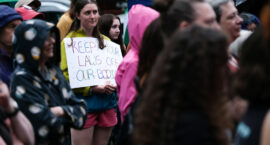
—On June 14, between 4 and 13 million people attended No Kings rallies nationwide to protest President Trump’s immigration and economic policies.
—Four states—California, Massachusetts, New York and New Jersey—have petitioned the FDA to undo restrictions on the abortion pill mifepristone.
—Some good news out of Montana: This month, the state supreme court struck down three abortion restrictions that Republican lawmakers passed in 2021.

… and more.

This Father’s Day, Let’s Break the Manosphere’s Hold on Young Men

Father’s Day is a celebration of caregiving. Let’s also make it a day for men to be emotionally sensitive guides, not just breadwinners or protectors.

Let’s say to the boys in our lives: “You don’t have to be angry to be strong. You don’t have to dominate to be respected. You don’t have to hate women to be a man.”

Let’s tell them: “You can cry and still be brave. You can nurture and still be powerful. You can be gentle and still be strong.”

Let’s begin the conversation with our sons—again, and again, and again—until they hear us. Until they believe us. Until they believe in themselves.

Trump Is Creating Unique Problems for Gen Z

Since November, much of the media coverage of this most recent election cycle has focused on Gen Z—especially the Gen Z gender gap, and how young men in particular seem to be swinging further and further right.

At the same time, Gen Z (born between the mid 1990s and the early 2010s, so around ages 13 to 28 in 2025) is the most diverse generation in American history… which might be why so many of the Trump administration’s recent actions, like attacks on higher ed, seem to be targeting Gen Z specifically.

The ‘Subway Shirt’: How Young Women Are Dressing to Deflect Unwanted Attention

An excerpt from Sexy Selfie Nation: Standing Up for Yourself in Today’s Toxic, Sexist Culture, in which Leora Tanenbaum offers an incisive exploration of why many young women wear body-revealing outfits and share sexy selfies and what these choices say about our toxic, sexist culture:

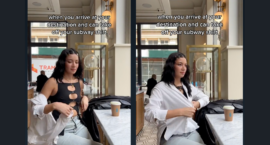
“As temperatures in New York City climbed, young women faced a dilemma: They wanted to wear summery tank tops and miniskirts but were concerned that as they traveled around the city, especially on the subway, they would be met with predatory stares, harassing, ‘Hey baby, won’t you give me a smile?’ comments, and even unwanted touches and gropes.

“And so, being resourceful New York women, they hatched a solution: the ‘subway shirt’—an oversized, shapeless shirt one slips over her ‘real’ outfit.”

How Violent Porn Initiates Young Boys in Violence Against Women

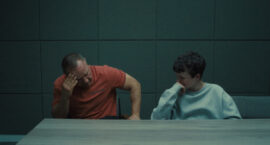
“Your body, my choice.” That misogynist credo is the crux of the blockbuster Netflix mini-series, Adolescence, the third most-watched English language show of all time on Netflix. The show continues to provoke debate about the impact of social media on the mental health of boys, in a world dominated by the manosphere, and its power to transform boys’ into violent misogynists. 

Surprisingly, porn was the one missing element in the otherwise brilliant four-part Netflix drama.

The show centers on a 13-year-old boy, Jamie—a typical lad, vulnerable, like so many other young men, to the venom of online misogyny spewed through unbridled social media, chatrooms, blogs and podcasts. This angry ideology, masquerading as manly virtue, blames women for male alienation and promotes violent sexuality and the dehumanization of women—the very narratives of porn.