
Feminist advocates last week met with leading lawmakers on Capitol Hill to amplify calls for an equitable peace process in Afghanistan being made by women on the ground.


More Than A Magazine, A Movement

Feminist advocates last week met with leading lawmakers on Capitol Hill to amplify calls for an equitable peace process in Afghanistan being made by women on the ground.
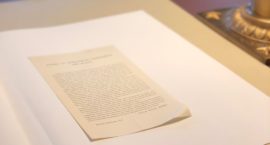
Abolitionist and suffragette Julia Ward Howe’s 1870 “Mother’s Day Proclamation” called for advancing peace and equality. Centuries later, her words still ring true.

The work to change our responses to sexual violence—in conflict and at home—is the work that many of us have dedicated our lives to, and you can be sure that we will press on. I wish I could say the same for our country.
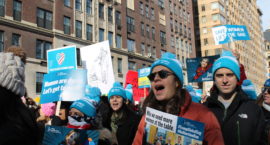
The UN Security Council just adopted its 9th resolution on Women, Peace, and Security. The resolution was intended to address the needs of victims of sexual violence in conflict—but thanks to the Trump administration, the ideology of few were put above the lives of thousands of women and girls.
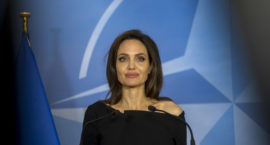
Afghan women have spoken out to demand their inclusion in the peace process unfolding between the Trump administration and the Taliban—and so have women across the globe who stand shoulder-to-shoulder with them. Actor, activist and UN special envoy Angelina Jolie has now joined that chorus of voices.
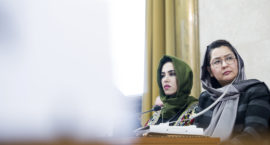
Notably absent from recent headlines about the potential withdrawal of U.S. troops from Afghanistan is talk of the dangerous consequences such a decision could have for women and girls in the region—and the lack of women’s representation in the ongoing “peace talks” between the Trump administration and leaders of the Taliban.

I must admit to being somewhat flattened at first by the heaviness of the Rohingya predicament, with no truly feasible resolution in sight. Signs of trauma cling to my sisters, permanently emblazoned on my memory. But I cannot stress enough that those images alone do not represent the full picture.
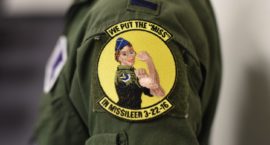
Only 12 percent of the people who held leadership positions in the field of nuclear security from the 1970s to 2019, including in an acting capacity, were women. (Only 2 percent of that 12 percent were women of color.) Their stories deserve to be told. That’s why Heather Hurlburt, Elizabeth Weingarten and Alexandra Stark and I set out to create the first oral history of how these pioneers impacted policy and the obstacles they faced to make it happen.
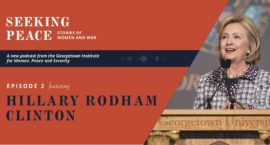
“I just knew that if we didn’t focus on peace and security and the role that women can and should play, we would be missing opportunities that would make a big difference to ending conflict, saving lives and creating more peaceful situations that would be good for the United States.”
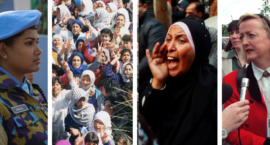
The 2011 debut of Women, War and Peace was a landmark. Seven years later, the intersections of gender and conflict remain as relevant as ever—so PBS is releasing four more installments.