Update: On Thursday, May 14, the Supreme Court halted the extreme Fifth Circuit Court ruling from May 1 banning telehealth distribution of mifepristone, in direct response to the abortion pill makers’ emergency appeal. This means mifepristone is still accessible via telehealth and through the mail while litigation challenging the Food and Drug Administration’s 2021 decision to allow clinicians and pharmacies to mail medications to patients after a telehealth consultation rules, brought by the state of Louisiana, moves forward. The FDA is also currently reviewing the safety protocols for mifepristone, meaning access by mail could still be threatened in the future.
The decision is unsigned, but Justices Samuel Alito and Clarence Thomas were named in their dissents. Misreading the law and counter to a century of president, Thomas suggested mailing abortion pills violates the Comstock Act, a backdoor method of enforcing a national abortion ban by restricting the shipment of abortion drugs as well as medical equipment used in abortions.
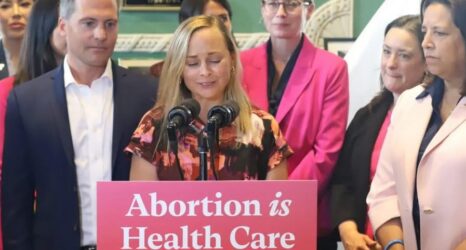
The ruling to allow the mailing of mifepristone was met with relief from abortion rights advocates, but also with growing frustration, defiance and anger at what many see as an exhausting cycle of temporary protections and looming threats. Feminists and reproductive justice advocates say patients should not have to live week-to-week wondering whether a handful of judges will allow them basic healthcare access.
In a widely shared Instagram post following the ruling, Physicians for Reproductive Health wrote: “You deserve better than your rights resting upon the whims of a club of nine 400-year-old nerds who don’t know anything about you. You deserve the dignity of having an abortion in the way that works best for you, not just with the crumbs the courts will allow.” The post also directly rejected antiabortion claims about safety: “Anti-abortion extremists do not care about your safety, they care about controlling you.”
The sharper tone reflects a broader shift in reproductive rights messaging as advocates increasingly frame access to abortion pills not as a temporary privilege granted by the courts, but as healthcare people are entitled to regardless of political ideology or judicial intervention. And that’s not going away. (Here’s how to order abortion pills, regardless of what the courts decide.)
Supreme Court Extends Temporary Protection for Abortion Pills by Mail as Legal Fight Continues. But Even if Courts Restrict Mifepristone, Americans Still Have Options
Regardless of what the courts decide, international telehealth providers, community networks and websites selling pills are ready to ramp up services to fill the needs of Americans.

Late on Friday, May 1, judges on the Fifth Circuit Court of Appeals—notorious among abortion-rights advocates and legal commentators for being highly conservative and hostile to abortion access—entered a nationwide ban on U.S. clinicians dispensing the abortion pill mifepristone by mail after a telehealth consultation. The court’s ruling reimposed a medically unnecessary requirement lifted by the FDA in 2021 that patients must pick up the medication in person from a clinician—overriding a lower court’s ruling from April, as well as the advice of medical experts. The ruling applied across the United States.
The following Saturday, May 2, the two manufacturers of mifepristone, GenBioPro and Danco, asked the justices to step in after the Fifth Circuit reinstated a requirement that the drug—used in about 60 percent of abortions nationwide—be dispensed only in person. Both companies warned the court the ruling was “unprecedented”: Danco said it would “inject immediate confusion and upheaval into highly time-sensitive medical decisions,” while GenBioPro cautioned it had “unleashed regulatory chaos.”
The following Monday, May 4, the U.S. Supreme Court temporarily paused the Fifth Circuit’s Friday ruling, preserving the current status quo while the justices consider the emergency appeal. The order keeps telehealth and mail access in place for now. The emergency action from the Court ordered the Trump administration to answer by Thursday, May 7, which the White House ignored.
Then, on Monday afternoon, the U.S. Supreme Court briefly extended its temporary order preserving telehealth and mail access to mifepristone while the justices continue deliberating over the emergency appeal. Justice Samuel Alito extended the Court’s administrative stay through Thursday, May 14, at 5 p.m. ET, keeping on hold the Fifth Circuit’s May 1 ruling that would have required patients nationwide to obtain the medication through in-person visits.
The legal fight comes as the FDA is undertaking its own review of mifepristone—at the direction of Health and Human Services Secretary Robert F. Kennedy Jr.—despite decades of evidence affirming the drug’s safety and effectiveness. Approved by the FDA more than 25 years ago, mifepristone has since been used safely by millions of people in the United States and by millions more around the world, with extensive research consistently confirming its safety profile.

More than one in four people in the U.S. who have an abortion do so using telehealth and mail.
Some U.S. clinicians will continue to provide the mifepristone plus misoprostol regimen via telehealth, while others have said they would and are now pivoting to a misoprostol-alone protocol—which is very safe and effective, but has more side effects.
Women can always obtain mifepristone and misoprostol from international telehealth providers for a sliding fee, community networks for free and websites selling pills, starting at $85. The organization Plan C lists reliable providers on their website at plancpills.org.
In a statement following the ruling, Plan C called the ongoing case “a political attempt by the antiabortion movement to prevent access to telehealth abortion,” noting that opponents are “presenting widely disputed science … to discredit mifepristone,” a medication backed by more than 100 studies.
The two international telehealth providers currently serving the United States are Women on Web and Abortion Pills in Private.
Based in Canada, Women on Web connects abortion seekers with prescriptions for mifepristone and misoprostol, and to pharmacies that will mail these medications to people up to 14 weeks of pregnancy. They charge a sliding scale fee of $120 or less with delivery in 7 days or less.
In an interview with Ms. last November, Women on Web’s executive director Venny Ala-Siurua said, “No matter what the U.S. does as far as restricting mifepristone, Women on Web will continue to provide mifepristone and misoprostol to people in the U.S.”
Abortion Pills in Private uses a simple, doctor-supervised telehealth model designed for easy access and confidentiality, serving patients through 11 weeks of pregnancy. They charge $95 and deliver in 7 days or less.
A co-founder of Abortion Pills in Private said in a Ms. interview last December, “If mifepristone is further restricted…we are able to scale up if we suddenly have a lot more people ordering.”
Ms. interviewed another international telehealth provider last December, Women Help Women, that did not serve the United States at the time. When asked whether they would consider expanding their services to the U.S. if the Trump administration restricts access to mifepristone, coexecutive director Berro Pizzarossa was unequivocal: “I don’t see why not. If restrictions deepen, we should be ready together with the networks already doing this work. Let’s create normalcy in the steady abundant provision of abortion medicines.”
Another avenue abortion seekers are using is community networks sharing abortion pills for free in states that ban or restrict access. There are now five verified and listed by Plan C and INeedAnA. Four are affiliated with Red State Access: AccessMA, MidWestAccess, IdahoAccess and ARTogether. These four networks now serve approximately 3500 people across 38 states and territories each month. The fifth listed community network is DASH.


Red State Access-affiliated networks offer high-quality pills manufactured in India and mail them in discrete packages. Clients can choose between receiving them in foil blister packs or as loose, unidentifiable pills, depending on their security concerns and community provider stock. Community networks serve people of all ages and at all gestations, and offer trained doulas to assist with using abortion pills.
The third way people are obtaining abortion pills is through websites that sell pills without additional support. Plan C conducts research using mystery shoppers to test the reliability of these websites and tests the medications received in a lab to verify the medications.
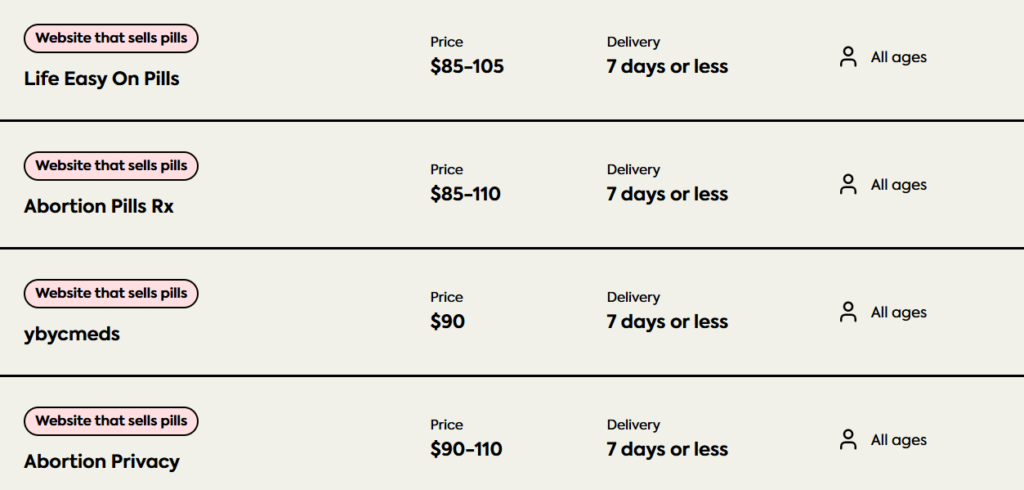
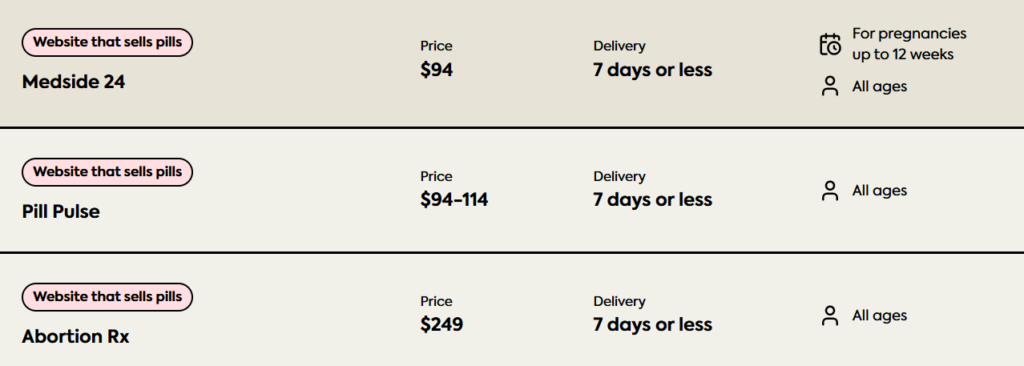
Plan C lists support services for people using abortion pills, including:
- Miscarriage and Abortion Hotline providing free and confidential expert medical support for people using abortion pills.
- Reprocare providing peer-based support on getting and using abortion pills.
- Repro Legal Helpline providing free, confidential legal information from expert lawyers.
- Aya Contigo providing free Spanish first abortion doula services.
Attorneys specializing on medication abortion law and regulation affiliated with If/When/How say using abortion pills is legal across the United States and is not impacted by the Fifth Circuit’s ruling.
Advocates are hopeful the Supreme Court will stay the Fifth Circuit’s extreme decision, but in the meantime, mifepristone is still widely and affordably available across the United States through these alternative channels.
Women throughout the world in countries where abortion is illegal use misoprostol alone–and suffer the additional side effects–but many American women are refusing to settle for the substandard care antiabortion extremists are trying to force on them by using international telehealth providers, community networks and websites selling pills.
Look to these trusted groups if you or a loved one needs to know more about reliable abortion care:
- A one-stop-shop for abortion seekers: I Need An A
- Other websites to explore all your options for abortion care: Plan C Pills, Abortion Finder
- Safe websites to buy abortion medication: Aid Access, Massachusetts Medication Abortion Access Project, Hey Jane
- If you need help affording abortion care, tell your telemedicine provider or contact an abortion fund near you.
- To protect your digital privacy when planning your abortion, click here.
- For free legal help as a patient or doctor, call If/When/How’s Repro Helpline—844-868-2812—or contact Pregnancy Justice.
- For medical advice, contact the Miscarriage & Abortion Hotline: 833-246-2632.
- If you need to know the abortion law in your state, look to the Center for Reproductive Rights. or Guttmacher Institute.