Protecting students requires more than press releases, Dear Colleague letters and selectively targeted investigations.
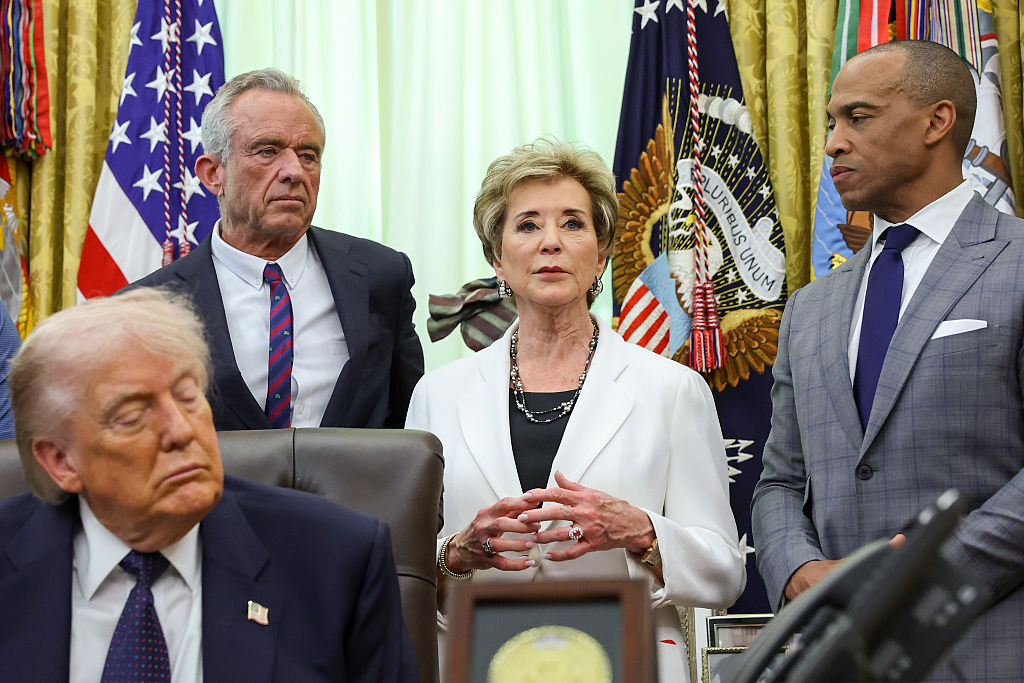
Trump’s Department of Education issued a Dear Colleague Letter on July 10 warning schools they risk losing federal funds if they fail to protect students from sexual misconduct by school employees. The accompanying press release announced that the Department’s Office for Civil Rights (OCR) will open 20 directed investigations into school districts whose Civil Rights Data Collection submissions suggest they may have mishandled allegations of staff sexual misconduct.
The question is not whether educator sexual misconduct deserves federal attention. It is why the Education Department has elevated staff-on-student sexual misconduct, while devoting comparatively little attention to peer sexual harassment and assault, which occurs far more frequently.
One possible explanation is that educator sexual misconduct allows the department to demonstrate visible action on an issue that is politically uncontroversial, while helping restore public confidence in its commitment to protecting students.
The letter follows criticism from 112 gender equity organizations, survivors’ advocates and Sen. Bernie Sanders (I-Vt.) over the administration’s dismantling of OCR and its shift away from investigating many forms of sex discrimination. Critics argue the administration has increasingly weaponized Title IX to advance political objectives, particularly through investigations involving diversity initiatives and transgender students’ participation in girls’ sports, while reducing enforcement in other areas of sex discrimination.
According to the report released by Sanders, based on OCR’s own enforcement data, the agency has sharply curtailed civil rights enforcement in several key areas. Despite 2,705 pending cases involving sexual harassment, sexual violence, racial harassment, discriminatory school discipline, and seclusion or restraint, OCR reached zero resolution agreements in any of those categories during 2025.
OCR investigations do more than determine whether a district violated Title IX. Through Early Complaint Resolution and Rapid Resolution, they can deliver immediate relief to students while driving systemic reform. But those outcomes depend on a capacity that OCR no longer has.
With half the staff and more than half of its regional offices shuttered, the department now claims that it will conduct 20 investigations based on data from the 2023-’24 Civil Rights Data Collection. The announcement allows the department to highlight a popular enforcement initiative, while leaving unresolved broader questions about OCR’s diminished enforcement of peer sexual harassment and assault.
The announcement does not create a new legal obligation. OCR’s 2001 Revised Sexual Harassment Guidance already made clear that Title IX requires schools to respond promptly and effectively to employee sexual misconduct.
What is new is the department’s decision to elevate educator sexual misconduct through a stand-alone Dear Colleague Letter, while announcing a high-profile enforcement initiative.
OCR has in the past demonstrated the value of systemic enforcement.
Beginning in 2015, the agency expanded complaints involving Chicago Public Schools into a districtwide Title IX investigation that reviewed more than 280 employee sexual misconduct complaints, over 2,800 student-on-student complaints, and practices across more than 400 schools. OCR concluded that the district’s system for handling sexual misconduct violated Title IX, resulting in sweeping reforms and years of federal oversight. That investigation illustrates what robust civil rights enforcement can accomplish and raises legitimate questions about whether today’s severely reduced OCR has the capacity to undertake investigations that produce comparable positive impact.
The Dear Colleague Letter faults districts for inadequate policies and poor investigations while emphasizing collective bargaining agreements as potential obstacles. Yet many of the nation’s most significant educator sexual misconduct scandals did not occur because districts lacked policies or because unions prevented action. They occurred because school leaders made decisions that prioritized institutional interests over student safety. Concerns about legal liability, reputational harm, staffing disruptions and organizational self-protection often shape how allegations are handled; leading to delayed investigations, quiet resignations, or employee transfers.
The Education Department’s critique of teachers’ unions points to Los Angeles Unified School District’s use of employee “reassignment.” Yet administrative reassignment typically means employees are assigned to their homes while an investigation proceeds. It is frequently an appropriate interim measure.
“The administration does nothing in the Dear Colleague letter to reduce the frequency of or provide additional resources to address K-12 incidents of sexual harm in a meaningful way,” says Heidi Goldstein, a board member of Stop Sexual Assault in Schools, a national nonprofit. “Instead, it squarely pressures LEAs [local education agencies] with unionized staff to fix this problem without offering legal or financial support for the long and expensive process of renegotiation of collective bargaining agreement terms.”
The letter’s emphasis on teachers’ unions has also drawn criticism from labor advocates, such as American Federation of Teachers president Randi Weingarten, who views it as part of a broader pattern of portraying educators and their unions as obstacles rather than partners in protecting students.
Restoring confidence in federal civil rights enforcement requires more than announcing investigations. As Trina English, a California teacher and founder of School Staff Against Sexual Violence, observes, “If the Department of Education truly cared about eradicating K12 sexual harm, it would restore OCR staffing and force K-12 local educational agencies to implement their own policies.”
Her comments echo a broader concern among advocates that meaningful enforcement depends not only on issuing guidance but also on maintaining the institutional capacity to ensure schools comply with Title IX. If OCR can initiate 20 proactive investigations based on statistical reporting, why have students who filed individual Title IX complaints alleging sexual harassment and assault not received comparable attention?
Everyone agrees that adults should not abuse students, schools should not conceal abuse and districts should not transfer offenders. But protecting students requires a fully staffed Office for Civil Rights capable of consistent, systemwide enforcement.
This latest announcement should be judged by whether it produces sustained oversight, meaningful relief for students and genuine accountability for school districts. Until then, legitimate questions about the department’s priorities and its capacity to carry them out will remain.
*
A note from Ms. editors: We want to hear from you for The Majority, a new campaign collecting stories about how reproductive freedom has enabled readers to build the lives they want and need.

Poll after poll shows a majority of Americans support reproductive healthcare access. Yet public debate overlooks the lives shaped by abortion access, contraception, IVF, miscarriage care, maternal healthcare or comprehensive sex education—countless women who chose to pursue an education, have children, not have children, protect their health and chart their own future. What’s your reproductive freedom story? Add your voice. Together, these stories will help show not only why reproductive freedom remains a majority value, but also what it makes possible.