


A new report out of Massachusetts “provides for the first time a public accounting of the unimaginable harms afflicted on children,” said Massachusetts Attorney General Andrea Campbell.
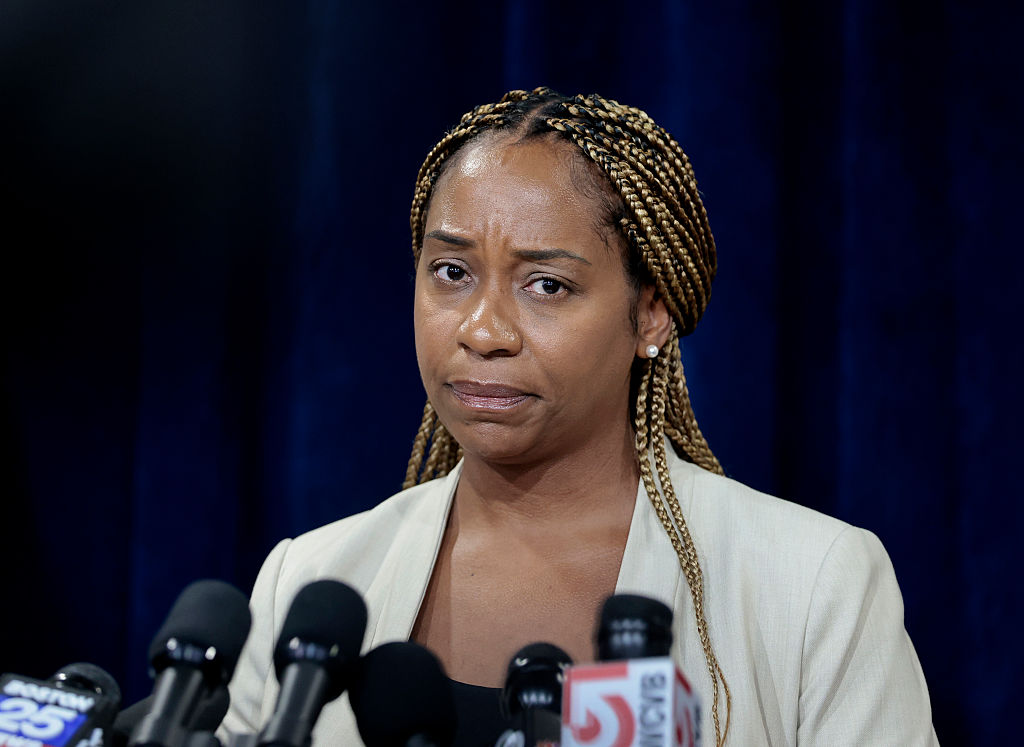
Massachusetts Attorney General Andrea Campbell released a 203-page report on Sept. 30 showing more than 270 Catholic priests abused at least 1,000 children over several decades in the dioceses of Fall River, Springfield and Worcester.
The report focuses on how church leadership, including bishops, perpetuated this abuse by failing to report crimes to the police, obstructing investigations into these crimes and repeatedly reassigning perpetrators to new parishes, where they abused even more children. The report also details the ways current Catholic leadership continues to circumvent policies and procedures designed to protect children.
“For decades, survivors of clergy sexual abuse, including those who are no longer alive, have carried the devastating consequences of abuse, while the institutions entrusted with their care too often failed to protect them,” said AG Campbell. “This report provides for the first time a public accounting of the unimaginable harms afflicted on children in the Fall River, Springfield and Worcester dioceses.”
The attorney general’s office had previously released a report revealing widespread priest sexual abuse and institutional coverups in the Archdiocese of Boston in 2003, which was the focus of Pulitzer-Prize winning Boston Globe reporting in 2002 and the 2015 Oscar-winning film Spotlight.
The newly published investigation, which began in 2019, reviewed more than 300,000 pages of records and interviewed more than 100 individuals, including survivors, advocates, attorneys, clergy, diocesan officials and employees.
Frustrated survivors have been demanding release of the report for years.
The report catalogues horrific instances of child sexual abuse dating from the 1950s through the 2010s. Many priests named in the report abused dozens of young boys and girls. Former priest James Porter abused more than 100 children while church leadership shielded him in the Fall River diocese in the 1960s.
Today, about 95 percent of Catholic dioceses maintain published lists naming credibly accused clergy, including the Fall River and Springfield dioceses. Worcester is one of just 12 dioceses across the United States to refuse to release such a list.
Shockingly, the report states the three dioceses continue to support priests who sexually abused children by their “unwillingness to formally, permanently, and publicly cut ties with offending priests … [which] creates continued risk.”
In some cases, the dioceses under investigation still pay benefits, such as pensions, housing and healthcare, to likely abusers whom the Catholic Church allowed to retire or leave ministry without being laicized (defrocked and removed as members of the clergy).
These former priests largely enjoy life without consequences, especially because the statute of limitations for most of their crimes has expired.

In her report, Campell called for the elimination of the statute of limitations for civil claims involving child sexual abuse and an indefinite lookback period to give survivors whose civil claims have already expired an opportunity to seek remediation.
Additionally, the report called on Massachuetts legislators to eliminate the $20,000 “charitable immunity cap” for civil claims involving child sexual abuse. This cap has allowed the Catholic Church to dodge more significant financial responsibility for its systemic role in the abuse of children.
Within the dioceses under investigation, the report calls for increased independence of dioceses’ review boards tasked with evaluating claims of child sexual abuse. It also calls on church officials to prevent sex abuse by punishing grooming behavior and closely monitoring former priests who abused children.
“While important reforms have been made, the report documents decades of failures by diocesan leaders to adequately respond to allegations of child sexual abuse and protect children from further harm,” said Campbell. “No institution should ever put its own reputation and interest above the safety and wellbeing of its constituents, especially children.”
Epidemic of Sexual Abuse in Male-Dominated Religions
This report is the latest of many revealing widespread clergy sexual abuse and institutional coverups in the Catholic Church and other male-dominated patriarchal religions.
In 2018, a Pennsylvania grand jury published a 1,356-page report documenting decades of sexual abuse by more than 300 Catholic priests who victimized thousands of children in six dioceses. The report found a “systemic cover up by senior church officials in Pennsylvania and at the Vatican.”
In 2022, the Southern Baptist Convention released a report revealing that the Convention’s Executive Committee leadership and lawyers covered up sexual abuse and mistreated survivors across more than 20 years.
Both of these denominations bar women from the ministry. Men are far more likely than women to commit sexual abuse, especially in male-dominated and controlled institutions.
Patriarchal values of the Catholic Church contribute to what the attorney general’s report calls an “old boy’s network” culture where priests protect their fellow clergymen, even when they are abusers. Other contributing factors are the pattern of excusing violence as temptation, sin or sickness, the extreme power given to priests and the reverence for them, and the church’s hierarchical power structures.

In these religions, men are given God-like status and unsupervised access to children in an environment where religious culture can be weaponized to excuse harm—or worse, blame the victim. These factors also allow male clergy to abuse adult parishioners, especially young adults in vulnerable circumstances.
According to the BishopAccountability.org, the largest public library of information on Catholic clergy abuse, there have been 30 reports of grand juries and attorneys general on priest sexual abuse and coverups around the country in 15 states so far.
BishopAccountability.org also has a database of clerics accused of child sexual abuse, including accused bishops, church lists of accused, survivor accounts, a timeline, whistleblowers, lawsuits, investigative reports and media coverage.
To avoid accountability today, the Catholic Church fights laws designed to help survivors of sexual abuse, such as elimination of caps on liability or statutes of limitations for child sex abuse crimes. Between 2011 and 2019, the Catholic Church spent $10.6 million in eight Northeastern states to lobby against such laws.
Another strategy the Catholic Church uses to avoid accountability is to file bankruptcy so they don’t have to pay court-ordered penalties to compensate the victims of clergy sex abuse.
The Massachusetts attorney general’s report catalogs testimony from several survivors of abuse, including Frank Fitzpatrick, who was repeatedly gang-raped by James Porter and other priests beginning when he was a 9-year-old altar boy.
“I am that boy. I carry him with me, always,” wrote Fitzpatrick. “He took your violence, you shameful enablers who do nothing but cover up and perpetuate the cycle of systemic abuse. You call yourselves representatives of God. God has no place in anything you stand for. God is safety; God is nurturing; God is protection; God is Love.”
*
A note from Ms. editors: We want to hear from you for The Majority, a new campaign collecting stories about how reproductive freedom has enabled readers to build the lives they want and need.

Poll after poll shows a majority of Americans support reproductive healthcare access. Yet public debate overlooks the lives shaped by abortion access, contraception, IVF, miscarriage care, maternal healthcare or comprehensive sex education—countless women who chose to pursue an education, have children, not have children, protect their health and chart their own future. What’s your reproductive freedom story? Add your voice. Together, these stories will help show not only why reproductive freedom remains a majority value, but also what it makes possible.