I Want to Be Obsolete. Instead, I’m Afraid to Teach.

I want to be obsolete. I want to walk into a classroom full of students excited to learn feminist histories and begin by marveling at how far we’ve come—how unthinkable it now feels that a president once demeaned women, faced dozens of credible accusations of sexual violence, and still rose to the highest office in the country. I want that version of this story to feel distant, resolved, finished.

Instead, I walk into my gender, women and sexuality studies classes scanning for signs of hostility—wondering who might be recording, who might be there to report me, who might see my teaching not as scholarship but as something to punish.

Teaching about marginalized communities, especially through a feminist, anti-racist lens, now carries real risk: of being surveilled, doxxed, harassed or silenced. Books are banned, curricula are targeted, and the very act of naming systems of power is treated as a threat.

And yet, I keep teaching. I keep showing students that what they are experiencing is not individual failure but the result of structural forces—and that those forces can be challenged. I tell them their voices matter, their rage is justified, and their histories deserve to be known.

I would rather be obsolete. But as long as these attacks persist, our work is far from done.

‘Sharing Our Stories Loosens the Grip they Have on Us’: Watching Students Claim Voice to Power

I have been a professor for almost 25 years and can’t imagine any other job. One of the most gratifying parts is being there for my students, but by June of every year, I’m tired. Especially after teaching The Power of Feminist Writing.

Misogyny induced pain and trauma shouldn’t only be acknowledged and validated in a gender studies classroom. The students and I should feel confident that *anyone* would believe our trauma is real. But we all know that is not the case, which is why many of us were sad to see the class end. 

Teaching Students to Write Their Rage

“The Power of Feminist Writing,” a new college course at the University of Washington, Bothell, emboldened young feminist writers during a painful school term.

“I am optimistic that they will mobilize their new skills and write their rage against the most misogynist turn they will hopefully ever see in their lifetime,” said Dr. Julie Shayne, after facing a term of mass shootings and the overturning of constitutional abortion rights with her students.

80 Million No’s Mean No

no means no trump rape culture

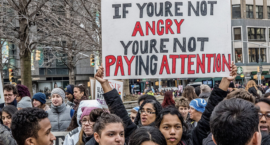
The defeat of Donald J. Trump feels like emerging from a misogyny-trauma-hangover. The fact that he was ever elected and, as of this writing, has received over nine million more votes than his first run, is a massive global metaphor for rape culture.

For survivors of abuse and those who care for them, it was traumatic to watch his first ascendance to power, horrific to live through, and dehumanizing to have the prospect of a second term dangled in front of us. From the perspective of a women’s studies professor and life-long-feminist, one who is closer to sexual assault than anyone likes to be, the whole process felt traumatic.

Celebrating 50 Years of Gender, Women and Sexuality Studies: “Damn Straight, We Persisted”

Persistence is Resistance: Celebrating 50 Years of Gender, Women & Sexuality Studies

“Persistence is Resistance” is an open-access book that celebrates 50 years of gender, women and sexuality studies (GWSS) by welcoming existing community members and curious folks alike. This book is both about and a manifestation of 50 years of GWSS history.

In just fifty years, GWSS professors went from no programs, no course materials, no full-time professors, to more than can be contained in university walls, including paywalls.