Ms. on Men: Rethinking Masculinity in the Wake of the 2025 Election

When the editors of Ms. asked me to guest-edit “Ms. on Men,” a feature section in the latest print issue highlighting key issues related to men and masculinity, I knew this was more than a symbolic gesture—it was a necessary intervention.

In the wake of the 2025 election, with a growing number of young men embracing right-wing populism, we need a pro-feminist vision of masculinity rooted in justice, not grievance. This section brings together voices committed to that vision, offering both critique and possibility.

The first piece from the feature—going live on MsMagazine.com early Friday, July 25—will answer the question we’ve all been pondering: Why is the vice president sitting like that?

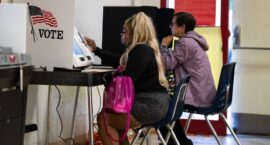
The SAVE Act Will Set Women Voters Back a Generation

Barely six months into the new administration, President Trump and his allies are advancing a bill that will fundamentally change our elections and make it harder for millions of women to register, vote and participate in our democracy.

The deceptively named SAVE Act represents the latest and most dangerous threat of election denialism to date.

Proponents of the SAVE Act would have us believe that anyone can walk into a polling station and cast a vote without being identified at all. This could not be further from the truth.

SAVE Act supporters allege mass fraud in our elections, votes under the names of dead people and party activists voting multiple times. This, too, is false.

‘The Feminist Agenda Is Wildly Popular’: Celinda Lake on the Political Power of Feminist Voters

Pollster and leading Democratic strategist Celinda Lake has been examining the data on women and feminist voters for decades. I talked to her about what Americans really want. (Spoiler alert: It’s not Project 2025.)

“People think that feminism is a dirty word. In fact, it’s a very strong word. Particularly for progressives and Democrats—feminism is highly correlated with voting for Democrats. Half of Independents consider themselves feminists; when you describe it, a third of Republicans and 83 percent of Democrats do. Our voters consider themselves feminists. It is a very quiet movement out there that is really underestimated. …

“Feminist issues, however we define them, are doing quite well. What we don’t have is we don’t have enough of them out front. We don’t have enough leaders taking them on.”

I Asked Top Election Experts About 2024 Tampering Claims. Here’s What They Said.

In recent weeks, a wave of rumors has surfaced online suggesting the 2024 election may have been “stolen” or, more specifically, tampered with due to faulty machines. While many of these claims remain vague or speculative, some are beginning to gain traction across social media platforms and alternative news sites. 

In the interest of democracy, transparency and election security, I reached out to a group of leading experts—many of whom work at the intersection of voting rights, cybersecurity and public trust—to share two examples of the kinds of articles I’ve seen on this topic, and ask for their take.

What follows are responses from some of the country’s most experienced voices on election integrity. Their insights are a valuable reminder that while election systems are not perfect, there is currently no credible evidence supporting claims of widespread vote manipulation in 2024. Instead, these experts highlight what’s real, what’s theoretical and where our attention should actually be focused as we work to protect democracy.

‘An Abortion Saved My Life After I Got Leukemia’

Mom Abby Blum tells why she was forced her to end her much-wanted pregnancy. She warns that an unexpected tragic event can happen to any woman—even if they think they’ll never need an abortion.

“It felt like an impossible choice, but I decided to go ahead and have the abortion to end my pregnancy so I could start the treatment I needed to save my life. … For me, the abortion was a medical necessity. And, in hindsight, I realize that in the post-Roe v. Wade era, I was lucky to be in a state where I had access to an abortion and to all the healthcare that I needed. ….

“If I had lived in a state like Texas, which bans abortion in nearly all cases, my story would have had a very different ending. I didn’t choose to get cancer and to have to make the decision to end my pregnancy, but that’s what can sometimes happen in life.”

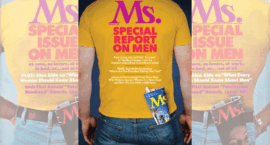
Sneak Peek: What’s Up With Men? Ms. Magazine Summer Issue Tackles ‘Brocasts,’ JD Vance and the State of American Manhood

It’s true that many boys and men are struggling. It’s also true that the right has successfully weaponized those struggles in their relentless attacks on feminists, liberals and progressives, and anyone else they can accuse of “wokeism,” and subsequently disparage and defund.

The “Special Report on Men” in the upcoming Ms. Summer issue—on newsstands July 1—seeks, instead, to understand the ways in which men’s struggles are connected to larger questions of gender and power that feminists have wrestled with for centuries.

You’ll find:
—Why is the vice president sitting like that? Organizer and writer Garrett Bucks sees through JD Vance’s awkward posture to reveal his self-defeating message for young men.
—Mental health clinician Jewel Woods argues that healing men and boys requires looking beyond grievance-based narratives.
—Jackson Katz promotes an untapped strategy for preventing violence against women: making it men’s work.

… and more!

Trump Is Creating Unique Problems for Gen Z

Since November, much of the media coverage of this most recent election cycle has focused on Gen Z—especially the Gen Z gender gap, and how young men in particular seem to be swinging further and further right.

At the same time, Gen Z (born between the mid 1990s and the early 2010s, so around ages 13 to 28 in 2025) is the most diverse generation in American history… which might be why so many of the Trump administration’s recent actions, like attacks on higher ed, seem to be targeting Gen Z specifically.

Could Hollywood’s Vision of a Black Woman President Help Make It Possible?

Mission: Impossible—The Final Reckoning featured Tom Cruise’s action hero Ethan Hunt deep-sea diving through a submarine 500 feet under the sea, swimming naked in sub-zero temperatures, and sky diving in the middle of a plane duel. And yet, perhaps the most implausible fiction was… a Black woman president of the United States?!

Black male presidents in film and TV set the stage for Barrack Obama’s election. Could more depictions of Black female leaders pave the way for a Black woman president?

(This is Part 1 of a two-part series on women leaders and feminist leadership. Part 2—out Monday, June 2—continues with a public syllabus.)

As Reproductive Rights Collapse, Funders Are Disappearing. Why?

Grassroots organizations are on the frontlines of defending human rights at this moment. Yet, it’s alarming that major funders are leaving the field right when groups working to defend bodily autonomy and democracy need them most. 

In the 2024 presidential election, we saw the consequences of what happens when donors abandon grassroots organizations—where a billion dollars were raised for the Harris campaign at the expense of movement organizations in key battleground states. In a presidential election lost to low voter turnout, the decision to underfund grassroots groups—those best equipped to knock on doors and mobilize voters—proved dangerously short-sighted.

(This essay is part of a collection presented by Ms. and the Groundswell Fund.)

From Montana to Florida—How Past Pro-Abortion Ballot Measures Are Helping Fuel a Movement

During the 2024 elections, 10 statewide abortion ballot measures aimed at expanding abortion rights in their respective states were certified for the general election ballot, marking the most in a single year. The majority of the results solidified what pro-abortion advocates already knew: Abortion is popular. 

In 2024, voters overwhelmingly supported reproductive rights measures in eight states, seven of which passed (Florida fell just 3 percent short of the 60 percent threshold required). Amendments passed in Arizona, Colorado, Maryland, Missouri, Montana, Nevada and New York.