
Seven short films on our favorite Black writers, thinkers and poets capturing the human experience: Barbara Brenner, Phillis Wheatley, Octavia Butler, Gwendolyn Brooks, Ida B. Wells, Hannah Crafts and Adrienne Kennedy.


More Than A Magazine, A Movement

Breast cancer is the second most common type of cancer in women. Eight in 10 cases are found in women aged 50 or older, but it also affects younger women and can be found in men.
Seven short films on our favorite Black writers, thinkers and poets capturing the human experience: Barbara Brenner, Phillis Wheatley, Octavia Butler, Gwendolyn Brooks, Ida B. Wells, Hannah Crafts and Adrienne Kennedy.

Across a range of conditions that disproportionately affect women, research into mifepristone’s potential has been slowed, defunded or blocked altogether. Nowhere is that clearer than in the treatment of endometriosis and other serious illnesses that leave millions of women in chronic pain.
Endometriosis—when endometrium cells grow outside the uterus—afflicts an estimated 10 percent of reproductive-age women. It can lead to chronic pelvic and back pain, heavy or abnormal bleeding, pain during sex or bowel movements, fatigue, bloating, digestive issues, infertility, anxiety and depression.
Mifepristone can help—it blocks the progesterone causing the cellular growth and decreases the size of existing endometrial lesions, thereby relieving painful symptoms. But antiabortion politics have obstructed the development of the medication for these uses in the U.S.
Researchers have also produced studies showing mifepristone is effective for treating ovarian and breast cancer, chronic inflammatory diseases, and several psychiatric disorders, including major depressive disorder, post-traumatic stress disorder (PTSD) and psychotic depression.
This is Part 2 of 3 in a new series, “The Moral Property of Women: How Antiabortion Politics Are Withholding Medical Care,” a serialized version of the Winter 2026 print feature article.

In the years since Roe was overturned, physicians across a wide range of medical specialties have described how abortion bans are undermining their ability to follow evidence-based standards of care. Dermatologists, oncologists, neurologists, cardiologists and others told Physicians for Human Rights (PHR) that they are regularly forced to alter treatment plans, delay urgent care or avoid prescribing the most effective medications simply because those treatments could harm a pregnancy. These constraints are creating a chilling effect that reaches far beyond reproductive health and into the everyday practice of medicine.
As PHR’s Michele Heisler and Payal Shah explained, abortion bans are also fueling discriminatory care. Reproductive-age women are routinely denied the best available treatments, while men with the same conditions face no such barriers. Even within the group of reproductive-age women, clinicians are making decisions based on subjective judgments about a patient’s “contraceptive reliability”—a practice that opens the door to bias and disproportionately harms marginalized patients.
This two-tiered system of care is not hypothetical: It is already shaping medical decision-making in ban states, with dangerous consequences for patients’ health and lives.

Estrogen, the hormone long cast as a public health threat, has been unfairly maligned.
The FDA has finally announced it will remove the incorrect “boxed warning” from vaginal estrogen products and issue corrected labeling for other estrogen therapies—a much needed course correction for one of modern medicine’s most damaging missteps.
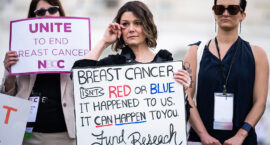
For more than 18 million Americans living with cancer, access to healthcare and health coverage is more than just financial security. It connects them to life-saving care that maintains and improves their quality of life.
However, federal action—and inaction—may sever that connection for people with cancer.
Without congressional action, current marketplace premium tax credits will plummet on Jan. 1, 2026—by an average of 93 percent in HealthCare.gov states. Among people with cancer receiving these tax credits, 86 percent report they will have difficulty affording and getting necessary health care services.

In every issue of Ms., we track research on our progress in the fight for equality, catalogue can’t-miss quotes from feminist voices and keep tabs on the feminist movement’s many milestones. We’re Keeping Score online, too—in this biweekly roundup.
This week:.
—Karen Attiah, a Washington Post columnist, said she was fired over social media posts she made following the killing of Charlie Kirk. “I did my journalistic duty, reminding people that despite President Trump’s partisan rushes to judgement, no suspect or motive had been identified in the killing…”
—Epstein survivors spoke out in support of the Epstein Files Transparency Act.
—Missouri state lawmakers held a sit-in to protest redistricting.
—Texas banned trans people from using public bathrooms.
—Senators pushed back against RFK Jr.’s anti-vaccine views.
—Colleges and universities experience a chilling effect of Trump’s war on DEI.
—Being stalked increases the risk of heart disease.
—Tea Party Patriots co-founder said they plan to pressure Senate Republicans to attach the SAVE Act to must-pass funding legislation in September.
… and more.
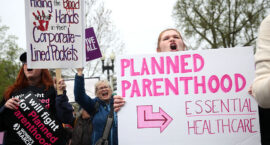
In its Medina v. Planned Parenthood South Atlantic ruling last week, the U.S. Supreme Court issued a devastating blow to reproductive health clinics across the nation. A substantial slate of decisions issued by the Court Friday dealt several more severe blows to the rule of law and our constitutional rights—though a silver lining was the Court’s decision to uphold the Affordable Care Act’s preventive-care mandate.
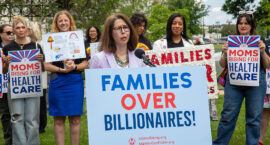
For the past few decades, women’s healthcare has been under increasing attack across the country. Even states like New York, often perceived as a beacon of women’s healthcare, are backsliding, increasingly unable to address women’s health challenges adequately. Indeed, the lack of funding and legislative support isn’t limited to rural areas or red states; it is everywhere.
As the Trump administration threatens to accelerate this decline even further, we must come to terms with how little our cities, states and federal government have valued and prioritized women’s health for more than 30 years and begin fighting back against this renewed assault.

“If she could have put off the baby for two more years, she could have saved up a nest egg and created her family the way she wanted. Instead, she was trapped with a baby too soon.”
Abortions are sought by a wide range of people for many different reasons. There is no single story. Telling stories of then and now shows how critical abortion has been and continues to be for women and girls. (Share your abortion story by emailing myabortionstory@msmagazine.com.)
“Seven more days. To find out what is happening inside my body. What is poisoning my body. Starving my body. Starving my life of joy and laughter.”

The ongoing decimation of the federal funding landscape brings some good(ish) news for women: the role of state legislatures in stepping up to help improve and advance the health of menopausal women.
Thus far, 13 states—a record one in four—have introduced more than 20 bills focused on menopause care, proposing changes that could permanently reshape insurance coverage and educational and health care resources. Public officials in Michigan, Illinois and West Virginia announced support for menopause reforms. Michigan Gov. Gretchen Whitmer recently hosted a roundtable for leaders and a statewide listening tour. The latest slate of bills—introduced in red and blue states alike—would bolster workplace supports and dedicate resources to public education. The bills are being proposed at such a fast clip that menopause was named on a “Ones To Watch: Legislation Landscape for 2025” list.