Young Men May Not Be as Conservative as You Think

Gen Z men in their teens and twenties are leaning further right than ever… or so mainstream media would have you believe.

For months before and since the November 2024 election, news articles, podcasts and polls have been pointing to the widening gender gap between young men and young women. (Young white men in particular voted for Donald Trump by a 28-point margin in 2024, compared to 2020 when young white men between 18 and 29 supported Joe Biden over Trump by six points.)

However, new polling from the Young Men Research Project (YMRP) suggests there might be more to the story.

“The share of young men who say they voted for Trump in 2024 but no longer view him favorably, it’s on the order of 5 to 8 percent of young men,” John Ray, YMRP team member and senior director of polling at YouGov, told me in an interview.


How Being Slut-Shamed by The New York Times Brought Out the Feminist in Joan Didion

In 1984, Joan Didion’s best-selling, critically acclaimed books didn’t stop a respected critic such as Christopher Lehmann-Haupt from presuming he had the right to criticize the publicity photo for her novel Democracy. The black-and-white image, he wrote, “presents the author wading in a skirt and sweater that cling sufficiently to reveal somewhat more of the anatomy than one is accustomed to seeing in a dust-jacket portrait”—then, without providing evidence, that “Miss Didion’s dust-jacket image was thought to be in questionable taste by a number of fastidious observers, including her English publisher.”

Joan Didion’s husband, the writer John Gregory Dunne, wrote a long, fuming, deadly serious and rather hilarious letter to Lehmann-Haupt defending his wife’s honor, arguing he “would stick pasties on the Venus de Milo and call it taste. It is a taste I want no part of.”

Lehmann-Haupt conceded defeat. The New York Times critic responded, “Dear John: Thanks for writing. I guess you’re right.” 

Trump’s History of Misogyny Was Obvious Long Before the Epstein Files Scandal

The Trump administration’s handling of the Epstein files has rattled his MAGA base unlike any other issue, and caused the president a major political headache. It remains to be seen whether he or the Republican Party he leads will suffer any lasting damage.

But for the many millions of Americans who are not fans of the current president, one of the truly astounding features of this scandal is how long he has been able to evade meaningful accountability for his history of misogyny—as well as serious scrutiny of his long friendship with the late sex trafficker Jeffrey Epstein. Trump’s close association with the disgraced pedophile has been a matter of public record for more than two decades.

What’s even more tragic is that despite all of this, Trump has managed to get elected president of the United States not once, but twice. He has then used the awesome power of the presidency to roll back feminist gains in a number of different ways. His administration’s regressive agenda has included, during the early months of his second term, a dramatic reversal of progress in federal support for sexual assault prevention initiatives.

Fast Facts About Bea Feitler, the Pioneering Graphic Designer You’ve Never Heard Of

For our Summer 2025 issue, Ms. is going retro. The cover for the latest print issue is an homage to the October 1975 issue, which offered a “Special Issue on Men.” Both covers, 50 years apart, show a man in jeans and a T-shirt (the 1975 model was, no joke, Robert Redford) with a rolled-up issue of Ms. in his back pocket, honing in on the idea that women’s rights is a men’s issue too.

It’s the perfect time to remember Bea Feitler, the early Ms. art director who designed the 1975 men’s issue cover. Despite being a prominent designer (she art-directed Harper’s Bazaar and other magazines throughout the 1960s and ’70s), Feitler is largely unknown today.

In honor of her incredible legacy, which inspires Ms. staffers to this day, here are some of our favorite facts about Feitler and her remarkable life and work.

The Problem With Sabrina Carpenter’s Album Cover Is Not Sex—It’s Violence 

The real discomfort with Carpenter’s controversial cover isn’t about sexual provocation. It’s about normalizing images of violence against women.

Policing women’s sexual choices should never be the goal of this discourse. Our personal sex lives are rich with context, and I hope that most people who enthusiastically interact with violent sexual acts, such as choking or hair-pulling, have felt comfortable enough with their partner to talk them through and have a truly consensual experience.

But we can monitor the way we speak about sex—especially expressions that lack that personal context, like album covers—and our tendencies as feminists to defend them in any light, no matter how troubling, for fear of restricting women as opposed to liberating them. 

We do not need to be OK with violence. Each of us has the personal autonomy to consider it, be conscious of it, oppose it, or even play with it. But when we look at an image of a woman having her hair pulled like the leash of a dog, it is only human—and important—that we feel uncomfortable.

How Reshma Saujani Makes the Invisible Work of Motherhood Impossible to Ignore

Most women are taught to make motherhood look effortless. Reshma Saujani wants you to see that we were never supposed to do it alone.

In a country that still treats caregiving as a personal responsibility rather than a public good, Saujani is changing the script. Not by asking for sympathy, but by exposing the architecture of the lie—and building something better in its place.

“I come from a long line of rule-breakers,” she told me. “My parents fled a dictator. They landed in Chicago with nothing. I grew up surrounded by refugees who were just trying to make it work. That kind of survival teaches you two things: one, that struggle is constant—and two, that silence is dangerous.”

She was a rule-breaker long before she was a movement-builder—always challenging authority, always in detention. “I’ve never been good at following the script,” she said. And that’s exactly what makes her effective.

A Podcast for Our Constitutional Crisis: ‘Speaking Freely’ Provides Echoes of History—and Warnings for Today

As threats to free speech continue to escalate under the Trump administration, we must do our part to defend First Amendment rights for all.

In an illuminating new 10-episode series, Speaking Freely: A First Amendment Podcast, Stephen Rohde, who has litigated and written about freedom of expression for decades, explores some of the most controversial free speech and free press cases decided by the U.S. Supreme Court—looking at hot-button issues like hate speech, defamation, incitement, social media, obscenity, flag burning, espionage and academic freedom.

Listen to Speaking Freely on Apple Podcasts, Spotify or iHeart. All 10 episodes available now.

Case Not Dismissed: Domestic Violence Is Indeed a Big Deal For Survivors

“It’s just domestic violence.”

“They did not have a good relationship.”

 If I had a dime for every utterance of those repulsive, dismissive sentiments from TV pundits and legal experts about the details in the Sean “Diddy” Combs trial in New York, I would donate it to the Department of Justice’s Office on Violence Against Women, to reinvigorate paused funding.

That is because the cultural affinity for survivor diminishment as demonstrated in this case is aligned to the White House administration’s latest reduction of monetary, social, healthcare, housing and legal support for those experiencing domestic violence.

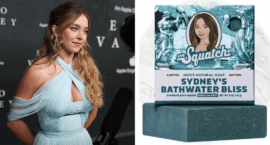
Sex Sells … Even in the Soap Aisle: What Does Sydney Sweeney’s ‘Bathwater Soap’ Say About Our Porn-Dominant Culture?

“I need your thoughts on this.” Attached to this urgent text was a link my friend had forwarded to me: An article by Elizabeth Gulino titled, “You Can Buy Sydney Sweeney’s Bathwater Now.”

Upon my first glance at the article, I found myself instinctually grasping for some feminist argument of the campaign, which Sweeney claimed to be fulfilling her fans’ persistent and frankly invasive requests for her bathwater. However, the way our commercial society and the broader marketplace are structured encourages women to market themselves towards those often degrading desires and enables men to continue acting as if treating women as objects is acceptable. And the solution is not restructuring what we construe as feminism, but rather, resisting the urge to accommodate one’s power to what seems like inevitable exploitation.

Defending bathwater products in the name of feminism will not lead us to the kind of liberation we could want for ourselves.

Trump Is Creating Unique Problems for Gen Z

Since November, much of the media coverage of this most recent election cycle has focused on Gen Z—especially the Gen Z gender gap, and how young men in particular seem to be swinging further and further right.

At the same time, Gen Z (born between the mid 1990s and the early 2010s, so around ages 13 to 28 in 2025) is the most diverse generation in American history… which might be why so many of the Trump administration’s recent actions, like attacks on higher ed, seem to be targeting Gen Z specifically.