New York Times’ Shameful Reporting on Planned Parenthood Bolsters Right-Wing Attacks on Reproductive Healthcare Access

The New York Times recently published a 3,000-word investigative report claiming to have found “scores of allegations” against Planned Parenthood for misconduct, medical malpractice, mismanagement and labor violations. Released within a month of Trump’s inauguration, the article appears timed to provide ammunition for the ongoing right-wing attack on reproductive rights. 

The NYT could have invested its significant resources into investigating how Planned Parenthood plays a unique and irreplaceable role in the U.S. healthcare system as the nation’s leading provider of sexual and reproductive healthcare and largest sex educator. By choosing to publish what reads as a hit job on Planned Parenthood at this political moment, while failing to devote any resources to investigating the opaque and unregulated antiabortion industry vying to defund and replace Planned Parenthood, the NYT has done a grave disservice to readers, especially women and girls who need reproductive healthcare.


Feminist Wins and Firsts at the 2025 Golden Globes

This special edition of Ms.‘ “Keeping Score” highlights the feminist wins and milestones at the 2025 Golden Globes. From Nikki Glaser’s sharp, solo-hosted monologue that tackled sexism in Hollywood, to historic wins by women like Demi Moore, Karla Sofía Gascón and Fernanda Torres, the event marked a notable shift in celebrating diverse and older female talent. With awards for films like Emilia Pérez and Wicked, the night underscored progress in recognizing women’s contributions across genres.

Sexism in Politics: It’s the Same Old Story

Donald Trump—who arguably is not likable to a good many people, who is not respected by a percentage of world leaders (or some of his own former generals and advisers), who doesn’t represent everyone (women who want abortion rights, to name one group), who has danced (or, at least, swayed) publicly, who consistently lies, whose cognitive abilities have come into question and whose behavior is notably unpresidential—has to jump through fewer hoops than Kamala Harris.

Being a man will do that for you.

Hollywood’s Role in Perpetuating the ‘Angry Black Woman’ Trope

After Vice President Kamala Harris recently completed an interview with a combative Fox News host, pundits agreed she “gave a master class on what it means to be a Black woman in politics” by demonstrating cool, calm, effective leadership. The Grio’s Gerren Keith Gaynor noted she avoided the “angry Black woman” trope—a stereotype that not only permeates politics but has deep roots in the entertainment industry. 

In recent years, a more diverse and empowering portrayal of Black women on the big screen has celebrated complexity and identity. For nearly all of its existence, though, Hollywood has been anything but inclusive, often illustrating one-dimensional perspectives of Black women. The history of inadequate representation—and certainly positive representation—helped form the “angry Black woman” stereotype, among other false narratives. 

JD Vance Is Lying on Abortion

Minnesota Gov. Tim Walz faced Sen. JD Vance of Ohio Tuesday night at the vice presidential debate, and day-after results are showing more or less a toss-up on who won among pundits.

Admittedly, Vance sounded coherent and slick. But much of what he said—especially on abortion, IVF and childcare—were lies, engineered for women to let their guards down and to distance himself from his extreme views, most of which are ripped right from Project 2025’s Mandate for Leadership. Vance has stood consistently against abortion rights during his two-year political career—despite attempts Tuesday night to embody a congenial and reasonable version of conservatism.

Abortion *Is* an Economic Issue. Pundits, Please Take Note.

Why is it that pundit after pundit has argued that the economy will be the dominant issue this election? In doing so, they are ignoring the fact that abortion is an economic issue for women and their families.

How many times do we have to remind them about the impact of having a child on parents’ earning abilities, and the economic harm to women who do not have paid pregnancy/family or medical leave? Not to mention the cost of raising a child—which can go well over a quarter of a million dollars, between food, medical expenses, clothing, and education. 

You Should Call House Members ‘Representatives,’ Because That’s What They Are—Not ‘Congressmen’ or ‘Congresswomen’

For most of the nation’s history, members of the U.S. House of Representatives have been addressed as “Congressman” or “Congresswoman.” By contrast, a senator is referred to as, well, “Senator.” These gendered terms for House members dominate in journalism, everyday conversation and among members of Congress.

“Whereas ‘congressman’ or ‘congresswoman’ tends to call our attention to a House member’s Capitol Hill activities and to his or her relationship with colleagues,” wrote the late Richard Fenno, “‘representative’ points us toward a House member’s activities in his or her home district and to relationships with constituents.”

Tim Walz’s DNC Speech Was a Masculinity-Themed Populist Pep Talk

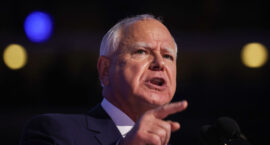
Democratic vice presidential nominee Tim Walz introduced himself to the country with a rousing acceptance speech at the DNC. He used blunt, evocative language as one might expect from a man who’s been a high school teacher, Army master sergeant, football coach and politician.

Once he had established himself as a powerful, confident man and assertive leader, Walz was ready to pivot to Kamala Harris’ qualities of leadership and why he supports her, helping her to rebuild her identity as a tough prosecutor. Perhaps more than anything, this is the role that Walz plays on the Democratic ticket. His very presence and persona says to men—including some fairly traditional white men in the Midwestern battleground states—that Kamala Harris is someone they, too, can and should support. 

LIVE UPDATES From Ms. @ DNC: Harris Makes a Compelling Case for Her Presidency and for America’s Future

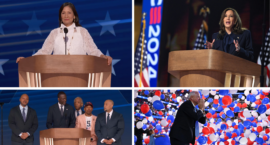
For those seeking an inside look at the intersection of politics and feminism, Ms. writers and editors are on the ground in Chicago, delivering real-time insights and reflections from the heart of the DNC, capturing the narratives and voices shaping the future of U.S. politics.

Explore: a roundtable with Democratic women governors and Julia Louis-Dreyfus; freedom-themed evening programing includes appearances from reproductive rights leaders, Oprah, Jan. 6 survivors and Minnesota Gov. Tim Walz; what’s driving women voters; and more.